


Micha Kaufman’s Evolving Perspective on AI and the Workforce
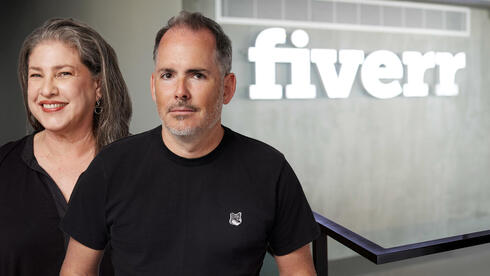
Micha Kaufman, the CEO of Fiverr, recently shared an optimistic outlook on the integration of artificial intelligence into the workforce. This marked a significant shift from a prior communication in which he cautioned employees about the potential threats AI poses to their jobs, including his own position. This duality in perspective reflects the evolving nature of work in an AI-driven world.
A Shift in Tone: From Threat to Tool
In his initial letter, Kaufman encouraged staff to “wake up” to the impending AI revolution and outlined measures necessary for remaining relevant. However, following extensive discussions internally, he has adopted a more nuanced viewpoint. He now emphasizes that AI should not be viewed solely as a threat; rather, it can serve as a valuable tool, albeit with definite limitations. The uniqueness of businesses will increasingly hinge on human talent.
Introducing Fiverr Go: A New Tool for Freelancers
In line with this vision, Fiverr has launched Fiverr Go, a groundbreaking tool designed for freelancers. This platform allows them to create AI agents that emulate their individual work styles, enabling them to handle multiple clients more efficiently by automating aspects of their workflow. However, this innovation raises an important question: Could this tool, intended to assist freelancers, inadvertently replace them?
Conversations About the Future of Work
In conversations with Kaufman and Sharon Steiner, Fiverr’s Chief HR Officer and Chief Freelance Officer, we explored the ramifications of AI taking over numerous human roles and what it means for freelancers. They emphasized the responsibility of individuals to adapt and the necessity of redefining personal value in the workplace amidst rapid changes.
Humans and the Rediscovery of Value
Kaufman describes a time of both excitement and trepidation as the world undergoes rapid transformations. He acknowledged that humans often struggle with change, but that this time also offers a chance to rediscover our unique capabilities. If employees utilize automation to free up their time for tasks where humans excel—such as creativity and intuition—they can enhance their relevance in the job market.
Trends in Employment: Blurring Boundaries
Steiner pointed out that the traditional divisions between employees and freelancers are increasingly blurring. Many full-time employees are now engaging in side projects and freelance work, fostering a new lifestyle that is poised to grow. This shift demonstrates the changing landscape of employment, especially as younger generations seek diverse experiences rather than linear career paths.
Preparing for Future Changes in the Job Market
The swift evolution of AI technology poses challenges and opportunities. Essential skills and roles are transforming, particularly in content creation and graphic design, where the roles are adapting more rapidly. Kaufman believes organizations must support their employees in upskilling, while individuals carry the primary responsibility for their growth and adaptability. As the workplace evolves, those who embrace change and cultivate their unique skills will continue to thrive.
The Future of Work: Embracing AI in the Freelance Economy
Micha Kaufman, CEO of Fiverr, recently outlined a more optimistic view on artificial intelligence (AI) and its integration into the workplace. This reflects a significant shift from his earlier warnings to employees about the potential threat AI poses to jobs, emphasizing instead its role as a transformative tool.
Amid a surge of internal discussions, Kaufman’s fresh perspective suggests that AI can enhance productivity while also underscoring the irreplaceable value of human talent. He believes that the unique qualities people bring—such as creativity and intuition—will always set companies apart, even in an age dominated by technological advancements.
Fiverr Go: A Step Towards Automation
Fiverr has recently introduced Fiverr Go, a groundbreaking tool allowing freelancers to create AI agents that replicate their individual styles. This innovation aims to help freelancers manage multiple clients more efficiently by automating routine tasks. However, the concern remains: does this technology risk supplanting the very freelancers it seeks to support?
Redefining Value in the Age of AI
In discussions with Kaufman and Sharon Steiner, Fiverr’s Chief HR Officer, the conversation pivoted to what it entails for human workers when AI starts to undertake many existing roles. Both leaders highlighted that, while certain job functions may become obsolete, they also believe new roles will emerge, emphasizing the importance of adapting to this rapidly changing landscape.
Career Trends Shaped by AI
Steiner reflects on her extensive experience within Fiverr, noting that the boundaries between traditional employees and freelancers are increasingly blurred. Workers are now more inclined to juggle multiple roles—whether freelancing, learning, or engaging in community projects—all contributing to a lifestyle that transcends conventional career paths.
The Emergence of New Roles
As the freelance economy evolves, specific roles are expected to vanish, while new ones, such as prompt engineers and AI specialists, are already emerging. Kaufman points out that although some jobs may disappear, countless new opportunities have arisen, driven by technological advancements that continue to shape the market.
The Role of Personal Responsibility
While organizations can provide support, Kaufman insists that the onus of upskilling lies primarily with individuals. Freelancers and employees alike must actively seek to enhance their skill sets to remain competitive in this dynamic environment. Embracing change is not just beneficial but essential for career survival.
Conclusion: A Future Full of Potential
Looking ahead, Fiverr is committed to remaining agile and responsive to the demands of an ever-evolving landscape. The integration of AI into the freelance economy promises to create more opportunities than it eliminates. As freelancers and traditional workers alike adapt to these changes, those who embrace innovation and continually develop their skills will find themselves well-positioned for success in the future of work.
