


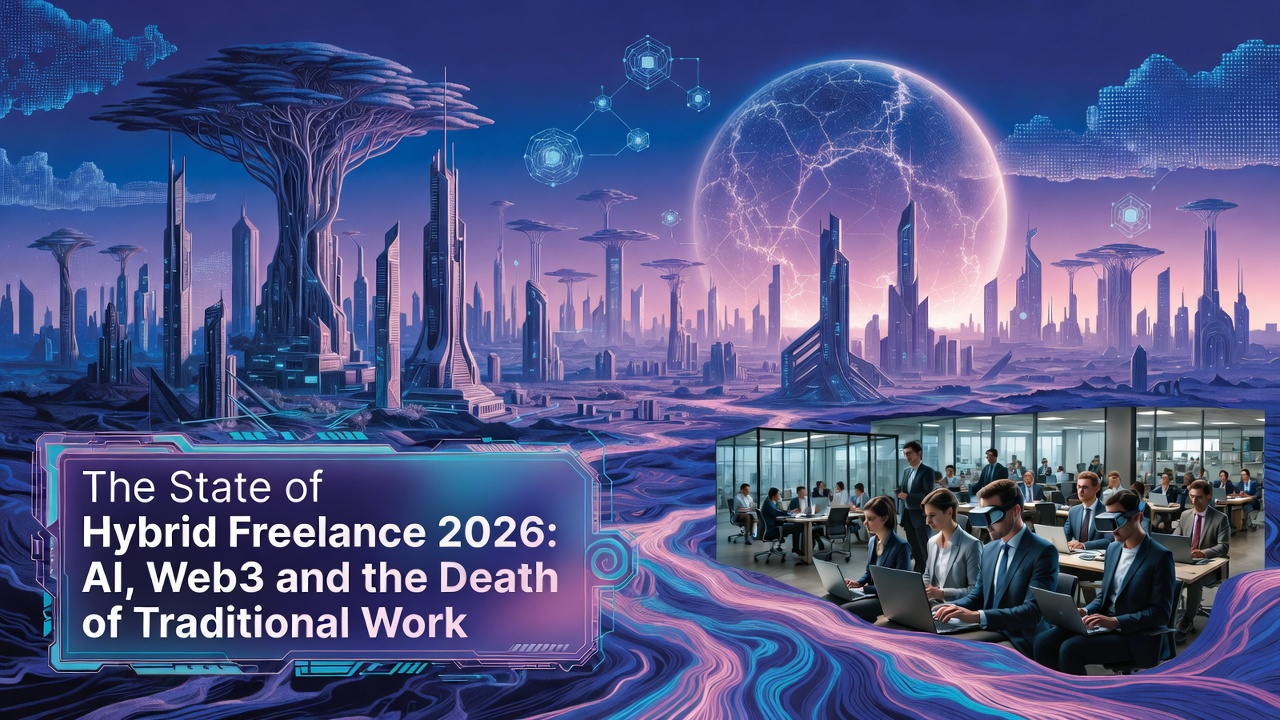
1. Executive Summary
By 2026, the global labor market experienced a significant transformation, evolving from traditional freelancing to an “Autonomous Agent Economy.” This shift has been driven primarily by the rise of Decentralized Finance (DeFi) and the widespread use of AI assistants. QUASA reports a remarkable 40% increase in cross-border crypto-asset payments, highlighting that conventional banking systems are failing to meet the demands of today’s digital economy.
2. Macro Trend: The Decline of Traditional Employment Models
The traditional “40-hour work week” model is giving way to a more flexible and hybrid approach to work roles:
- Fractional Work: C-level specialists are now able to manage 3–5 projects simultaneously through the QUASA platform.
- Intermediary Elimination: Smart contracts are taking over functions typically handled by legal departments, including escrow services and automated payments upon task completion.
3. Web3 and Financial Sovereignty: Insights from QUASA Data
.jpg) Payments are crucial for freelancers. Trends in 2026 reveal:
Payments are crucial for freelancers. Trends in 2026 reveal:
- Stablecoin Use: 72% of international transactions on our platform are made using USDC and USDT, allowing freelancers in high-inflation regions to safeguard their purchasing power.
- Speed of Transactions: Average payout times have drastically dropped from 3–5 business days (SWIFT) to just 45 seconds with solutions like Polygon, Solana, and other Layer 2 networks.
- Fee Reduction: Freelancers are saving up to 7% of their income by avoiding bank conversion and hidden fees.
4. The AI Revolution: Transitioning from “Doer” to “AI Stack Operator”
Freelancers in 2026 have evolved beyond mere execution; they are now operators of complex AI systems.
- Increased Productivity: The integration of AI agents has lowered time spent on repetitive tasks like coding and content creation by 65%.
- Emerging Job Roles: In-demand positions on QUASA now include AI-Workflow Architect, Prompt Auditor, and Smart Contract Security Specialist.
- The Quality Paradox: Even with increased automation, the market value for human creativity has surged by 2.5 times.
5. Geographic Shifts: The Surge of the Global South
.jpg) Digital Nomadism 2.0 embraces workers from diverse regions, not just from Europe.
Digital Nomadism 2.0 embraces workers from diverse regions, not just from Europe.
- Emerging Economies: There’s a significant spike in registrations from countries like Nigeria, Vietnam, and Brazil.
- Barrier Reduction: Blockchain technology removes geographical boundaries. A specialist in Lagos can work for a Silicon Valley firm with just a crypto wallet, eliminating the need for traditional banking.
6. Future Outlook: 2027–2030
Looking forward, several key trends are emerging:
- On-chain Reputation: University degrees are becoming less relevant as verified on-chain portfolios gain prominence. Professionals will showcase their Domain Rating (DR) on a public, immutable ledger.
- Decentralized Autonomous Organizations (DAOs) as Employers: The future of hiring will lean toward “Squads” (micro-teams) managed via decentralized protocols rather than traditional employment structures.
7. Provocative Questions for the Future
As we navigate this evolving landscape, several questions arise:
- On Human Value: “If AI agents accomplish most tasks, why should clients pay a freelancer for their entire time? Are modern freelancers becoming mere ‘expensive brand labels’ attached to machine-generated work?”
- On the Fate of Corporations: “If smart contracts outperform legal teams in securing payments and DAOs recruit talent more efficiently than HR departments, are traditional corporations simply ‘zombie structures’ that haven’t acknowledged their obsolescence?”
- On Educational Credentials vs. On-Chain Reputation: “Would you prefer a surgeon with a prestigious diploma but no blockchain history, or a self-taught professional with a fully transparent, verified on-chain portfolio? Which form of authority holds more weight in 2026?”
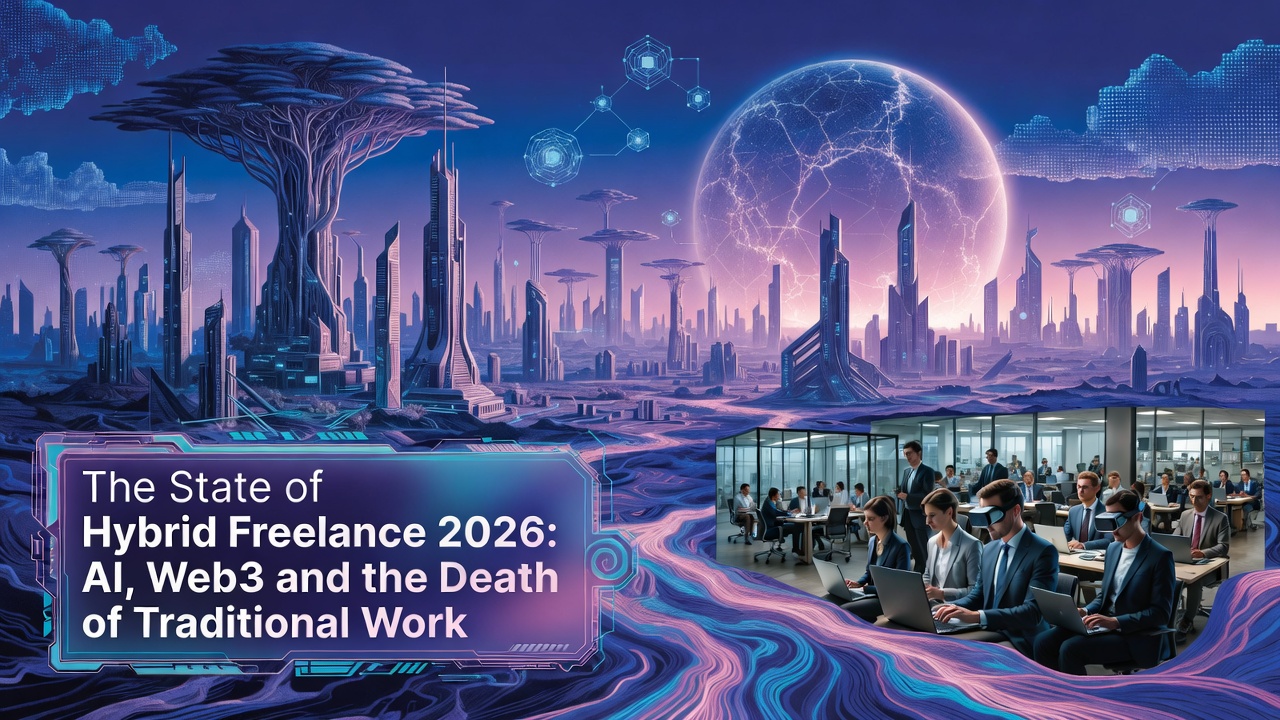
The Shift Towards an Autonomous Agent Economy in 2026
The landscape of the global labor market has undergone a significant transformation by the year 2026, transitioning from traditional employment to what is now known as the “Autonomous Agent Economy.” This change is driven by the pervasive integration of decentralized financial systems and AI technology, fundamentally altering how work is executed and compensated. A recent analysis from QUASA indicates a 40% increase in cross-border crypto-asset transactions, highlighting the inadequacies of conventional banking systems in supporting this digital shift.
Redefining Employment: The End of Traditional Contracts
As the traditional 40-hour work week contracts become obsolete, workers are increasingly engaging in a hybrid model that allows for a versatile and multifaceted approach to employment. Professionals in executive roles are now juggling multiple projects simultaneously, thanks to innovative platforms like QUASA. Moreover, the introduction of smart contracts is eliminating intermediaries, automating essential functions such as escrow services and timely payments upon completion of tasks.
Web3 and Empowering Freelancers Through Financial Autonomy
Financial transactions have never been more crucial for freelancers. In 2026, a remarkable 72% of international payments are being conducted using stablecoins like USDC and USDT, which significantly help freelancers in high-inflation areas preserve their purchasing power. The speed of transactions has drastically improved; payouts that once took several days can now be processed within a mere 45 seconds via advanced blockchain networks. Additionally, the ability to avoid bank conversion fees means freelancers are retaining up to 7% more of their income.
The AI Impact: New Roles and Increased Productivity
The role of a freelancer has evolved significantly; they are now seen as operators managing sophisticated AI systems rather than merely executing tasks. The implementation of AI agents has led to a 65% reduction in time spent on routine activities such as coding and content production. New job categories are now emerging, and positions like AI Workflow Architect and Smart Contract Security Specialist are in high demand. Interestingly, despite the rise of automation, the market value for human creativity has also surged, illustrating the continued need for originality and innovation.
A Global Perspective: Emerging Opportunities in the Global South
The rise of digital nomadism is no longer confined to affluent individuals from Europe. Countries like Nigeria, Vietnam, and Brazil are witnessing an unprecedented surge in registrations for freelance platforms. Blockchain technology is erasing geographic barriers, enabling professionals from various parts of the world to engage with firms in Silicon Valley with just a crypto wallet and a reputable on-chain profile, thereby democratizing access to job opportunities.
Future Insights: What to Expect from 2027 to 2030
Looking ahead, the concept of on-chain reputation is expected to replace traditional educational credentials. Verified portfolios that showcase a professional’s competency will gain prominence over university degrees. Furthermore, decentralized autonomous organizations (DAOs) are anticipated to emerge as new employers, focusing on agile project teams or “squads,” thereby changing how talent is sourced and managed forever.
Challenging Traditional Notions: Key Questions to Address
The evolutionary nature of work presents fundamental questions regarding value and trust. As AI continues to perform the bulk of tasks, what should clients compensate freelancers for? Is the role of traditional corporations jeopardized by smart contracts and DAOs? Lastly, when it comes to expertise, should we prioritize on-chain reputations over traditional diplomas? These questions encapsulate the essence of the ongoing transformation in the freelance economy, urging us to reevaluate our established notions of work, value, and credibility.
As we navigate this revolution, it’s essential for professionals to adapt and prepare for a future shaped by technological advancements and shifting paradigms in employment.
