


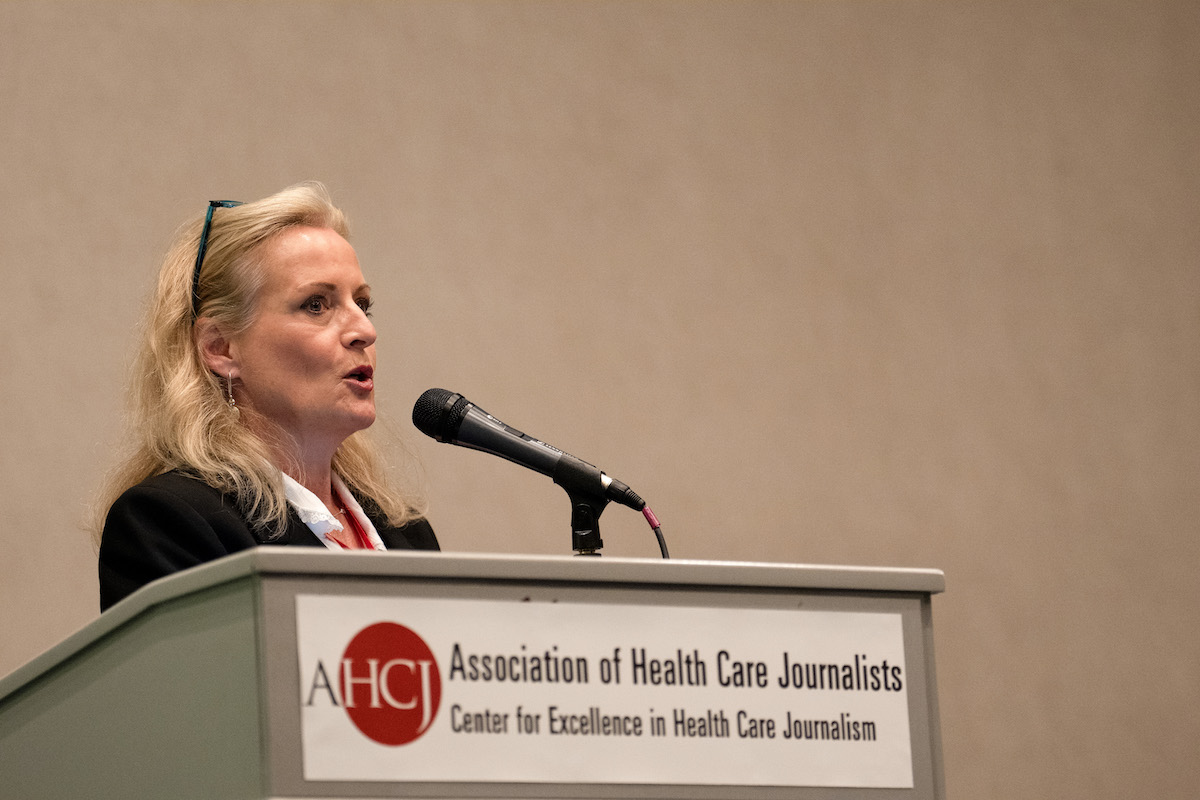
Katja Ridderbusch speaks at HJ25 about making travel work as a freelancer. Photo by Zachary Linhares
Reporting in the Field: Overcoming Challenges as a Freelance Journalist
In today’s fast-paced media landscape, opportunities for freelancers to engage in field reporting are dwindling. The panel at Health Journalism 2025 in Los Angeles tackled this pressing issue, offering valuable insights into how freelancers can successfully navigate the challenges of travel reporting.
Importance of Field Reporting
“Field reporting is still a critical part, if not the essence, of what we do as journalists,” emphasized Katja Ridderbusch, the panel moderator and independent journalist. The overarching message was clear: travel journalism is feasible, and freelancers can creatively make it work.
Securing Travel Funding through Fellowships
A primary discussion point was how freelancers can secure funding for travel through fellowships. Dawn Fallik, a seasoned independent journalist, advised attendees to pay close attention to fellowship details. Important questions to consider include what costs are covered, whether editorial input is required, and if the fellowship focuses on a specific angle or topic.
Crafting a Strong Fellowship Application
Once you’ve selected a fellowship, Fallik highlighted the importance of being as specific as possible in your application. She recommends clearly itemizing your costs, including transportation, visas, and insurance, and detailing the interviews and locations relevant to your story vision. “You want them to see the story you envision,” said Fallik, stressing the necessity of a compelling narrative in the application process.
A Proactive Approach to Travel Assignments
Freelance journalist Sonya Collins shared her effective strategy: booking trips first and informing editors afterward about her destination. This approach has reportedly increased her chances of receiving assignments, allowing Collins to spend approximately three to six months abroad each year, during which she has explored 25 countries over the last five years.
Researching Story Ideas and Suitable Locations
Collins scouts for potential story ideas through local online groups, medical, and research institutions. She ensures her travel destinations cater to remote workers, checking for community spaces like co-living arrangements, reliable internet access, and conducive cafes. To keep her loved ones informed and safe, she utilizes an app called TripIt to record her travel itineraries.
Support from Major Publications
Justin Madden, deputy West Coast news editor at The Guardian US, discussed the publication’s reliance on freelancers for travel assignments. With a limited staff of only eight reporters, The Guardian is deeply invested in supporting freelance travel. Madden collaborates with other editors and occasionally partners with different publications to secure funding for freelancers. He also offers letters of commitment for fellowships to facilitate funding opportunities. Regular check-ins with writers ensure they receive the necessary support throughout their reporting journey.
The Role of Collaboration in Freelance Reporting
“It’s all about collaboration,” Madden stated, emphasizing the need for strong cooperative relationships between freelancers and editors to ensure that writers have the best possible support during their assignments.
By implementing these strategies and leveraging opportunities, freelancers can continue to thrive in travel journalism, creating rich, engaging stories that resonate with audiences.
Alice Sun is a freelance science writer based in Brooklyn, NY.
Strategies for Freelancers to Succeed in Travel Reporting
By Alice Sun, Freelance Health Journalism Fellow
The Importance of Field Reporting
Field reporting breathes life into journalism, providing depth and authentic narratives. Yet, as the landscape evolves, freelancers face diminishing opportunities for in-person projects. Understanding how to navigate these challenges is essential for those in the industry.
Finding Funding Opportunities
One common way freelancers secure travel funding is through fellowships. When pursuing fellowships, it’s crucial to examine the details. What expenses does the fellowship cover? Is there an editorial requirement? Is it tied to specific themes or topics? Carefully assessing these factors can greatly impact your application success.
Mastering the Application Process
To enhance your chances of receiving fellowship funding, specificity is key. Break down your anticipated costs, including transportation, visas, insurance, and transcription services. Articulate the story you aim to tell by listing potential interviewees and justifying your destination choices. The clearer your vision, the more likely the funders are to see the merit in your proposal.
Proactive Travel Planning
Freelance journalist Sonya Collins advocates for a proactive approach by booking travel before securing assignments. This strategy has enabled Collins to spend three to six months annually abroad, with visits to 25 countries over five years. By identifying story ideas from local online communities and academic institutions, she is able to create compelling narratives while living as a digital nomad.
Choosing the Right Work Environment
When selecting destinations, Collins prioritizes locations with supportive remote work communities. She looks for co-living spaces, reliable internet, and laptop-friendly cafes to ensure her productivity while traveling. Furthermore, she utilizes apps like TripIt to keep her itineraries organized and share them with family for safety purposes.
The Role of Publications in Supporting Freelancers
Publications can play a significant role in facilitating freelance travel. Justin Madden, the deputy West Coast news editor at The Guardian US, highlights the magazine’s reliance on freelancers, noting that the outlet collaborates with various editors to secure necessary funding. Regular check-ins with writers ensure they receive ongoing support throughout their reporting journeys, enhancing the overall quality of their stories.
This article is structured with headings and paragraphs, includes relevant keywords naturally, and aims to be informative and engaging.
