


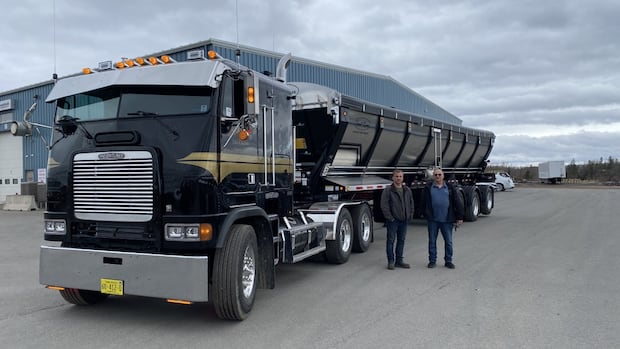
Andy Weir recalls a time when his father’s ability to secure work with his dump truck hinged entirely on local election results. “If you voted for the wrong party, for three years you didn’t work your dump truck,” said Weir, a resident of New Minas, N.S., and owner of Weir and Son Trucking.
Background of the Truckers Association of Nova Scotia
Over 50 years ago, in response to these challenging conditions, the Truckers Association of Nova Scotia was formed to level the playing field for local truckers. A significant development occurred in the early 1990s with the introduction of the 80/20 agreement. This policy mandated that 80% of trucking work associated with road building be allocated to local small businesses like Weir’s, with government-set rates, while contractors provided the remaining 20%.
Changes in Provincial Policy
Recently, the Progressive Conservative government announced plans to eliminate this 80/20 agreement by 2026, a decision confirmed by Public Works Minister Fred Tilley in a letter dated August 13. Tilley stated that this move aims to address “the current economic climate and tariff pressures,” as well as to “reduce barriers, support internal trade, and build a stronger economy.”
Concerns from Trucking Industry Leaders
Doug Faulkner, president of the Truckers Association, expressed concern that Tilley’s decision was made with little consultation. Faulkner noted that during an introductory meeting, Tilley displayed substantial knowledge of the 80/20 agreement, raising suspicions about upcoming changes. Association members learned of the policy shift only when Tilley’s letter was hand-delivered at a recent meeting.
Impact on Local Businesses
Both Weir and Faulkner argue that the government should have engaged in conversations with the association before taking such definitive action. They are particularly worried about the implications for local independent operators. With around 475 members and a total of up to 1,500 trucks, there’s a palpable fear that large contractors could undercut small businesses, leading to a negative trickle-down effect on ancillary businesses, including repair shops and parts suppliers.
Concerns for the Future of Young Truckers
Weir, who founded his trucking business in 1981, emphasized the concern for younger operators entering the industry. He recounted conversations with new truckers who expressed anxiety over their future, stating, “If there’s no 80/20,’ they said, ‘I can’t afford my truck.'”
Demand for Transparency from Government
Interim Liberal Leader Derek Mombourquette criticized the government’s lack of transparency, demanding a thorough explanation for the policy change. He emphasized the importance of the 80/20 agreement in fostering local businesses and called on the government to clarify how this decision aligns with trade issues and what steps will be taken to assist companies in Nova Scotia.
The Path Forward
Faulkner mentioned that association members are actively reaching out to Tilley, Premier Tim Houston, and local MLAs, though responses have been minimal. He made it clear that members are prepared to stand firm against relinquishing the agreement. “If they think we’re going to roll over and give up on what we’ve worked for, that’s not going to happen,” he asserted.
Although Minister Tilley was unavailable for comment, a statement from his department indicated that the policy is outdated and “violates our trade agreements.” The statement emphasized that Public Works would honor any prior commitments under the 80/20 rule for projects still in progress and mentioned the establishment of a transition team to work with the Truckers Association of Nova Scotia during this period.
Navigating Changes in Nova Scotia’s Trucking Industry
For many truck operators in Nova Scotia, a shakeup in government policy could dramatically alter their future. Longtime operators are expressing concern as provincial authorities announce plans to revise regulations governing the trucking sector.
A Shift in Policy
Recently, the Nova Scotia government has indicated intentions to revamp the established trucking framework, which has been instrumental in supporting local businesses. This proposed shift aims to implement a market-based procurement model for trucking services related to highway contracts, effective from 2026.
Impact on Local Trucking Businesses
Local operators are apprehensive about the implications of this transition. The previous 80/20 agreement mandated that a significant proportion of road construction trucking be allocated to local small businesses. Now, as the government pivots towards a more open market, many fear they may be driven out of business by larger companies.
Concerns of Small Operators
Operators like Doug Faulkner, who runs a one-truck operation, are worried that without the protections previously in place, independent operators could struggle to compete. The association representing these truckers is calling for transparency and dialogue with the government regarding these reforms.
Reactions from Industry Leaders
Industry representatives assert that the government should better articulate the rationale behind replacing the old regulations, especially if trade agreements are cited as a reason for change. Many operators believe the previous policy successfully fostered growth within the local economy.
Future Prospects for New Entrants
The impending policy changes raise additional concerns for newcomers in the industry. Many fresh entrants have invested heavily in their businesses and are anxious about their viability in a newly shaped landscape devoid of previous safeguards.
Demand for Communication with Officials
Key figures in the trucking association are actively reaching out to government officials, including the Public Works Minister and local representatives, yet responses have been sparse. Operators are firm in their stance, expressing that they will not easily give up on the progress made by previous generations.
Moving Forward
As discussions around these changes unfold, it remains vital for both government and industry stakeholders to engage in constructive dialogue. The transition may pose challenges, but collaboration can pave the way for a more sustainable trucking industry in Nova Scotia, ensuring both local operators and larger contractors can thrive.
