


Your Support Enables Important Journalism
From crucial topics like reproductive rights to climate change and the influence of Big Tech, The Independent remains dedicated to on-the-ground reporting as stories unfold. We firmly believe in the importance of distinguishing truth from rhetoric, whether that means investigating the financing of pro-Trump campaigns or highlighting the brave American women advocating for reproductive rights in our documentary ‘The A Word.’
In this pivotal moment for the United States, we need journalists embedded in the field. Your contributions ensure that we can continue to send reporters to cover all aspects of these vital issues.
The Independent is respected by Americans across the political landscape. Unlike many premium news platforms, we refuse to restrict access with paywalls. We believe that valuable journalism should be accessible to all, supported by those who can afford to contribute.
Your support truly makes a meaningful difference.
Read more
New Federal Policies on Religious Expression
The Trump administration has issued new guidelines that protect federal workers from repercussions when discussing their personal religious beliefs with colleagues. According to the recent memo, employees are encouraged to engage in respectful discussions regarding their faith during breaks.
As stated in the memo, “During a break, an employee may engage another in polite discussion of why his faith is correct and why the non-adherent should re-think his religious beliefs,” emphasizing the need to respect a colleague’s request to cease discussions if they wish.
This policy, released by the Office of Personnel Management, highlights the administration’s commitment to promoting religious faith while combating perceived anti-Christian bias within government ranks.
Permitted Religious Practices for Federal Workers
According to the guidelines, federal employees are allowed various forms of religious expression. This includes keeping religious texts and symbols at their workstations, wearing clothing that features religious messages, and using personal bulletin boards to invite colleagues to church services.
Examples of acceptable conduct include a park ranger participating in prayer with a tour group or a doctor at Veterans Affairs offering prayers over a patient.
Trump’s Advocacy for Religious Freedom
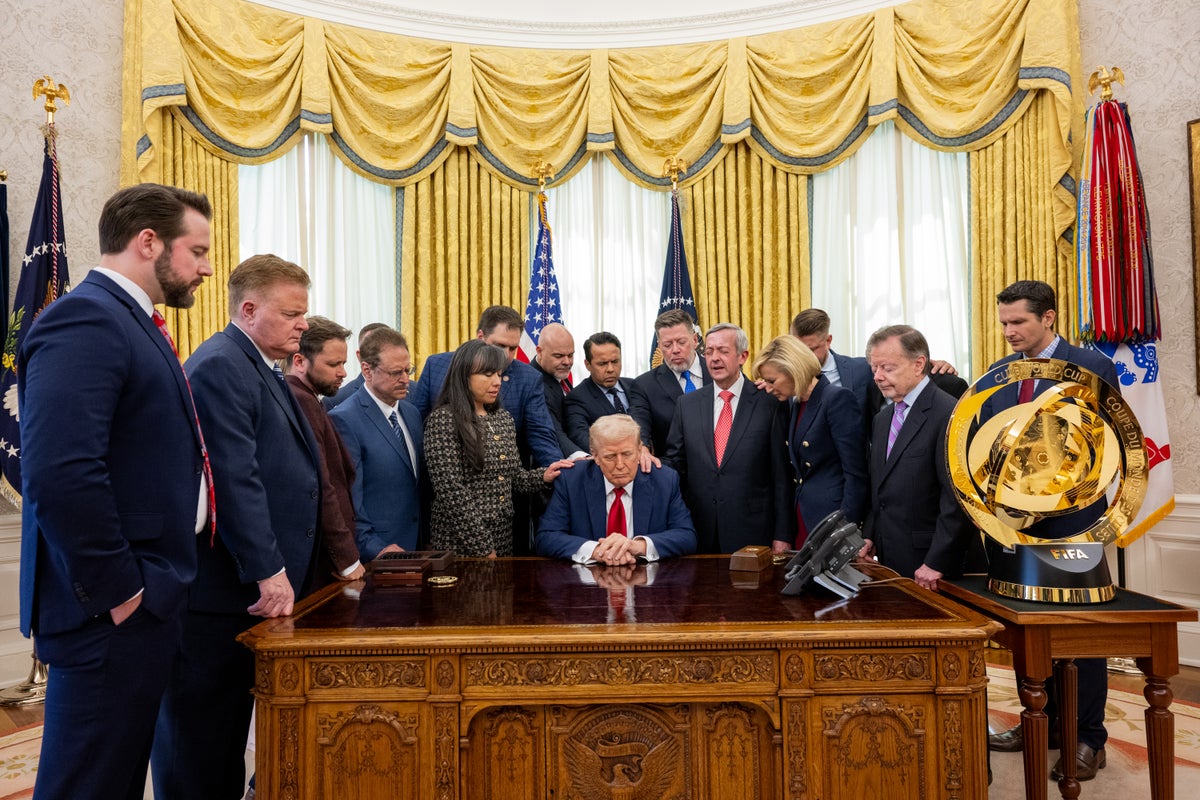
Donald Trump, who identifies as a Christian and enjoys robust support from evangelical communities, has prioritized the promotion of religious faith throughout his administration. His efforts to protect religious liberties include forming a task force aimed at addressing what he sees as anti-Christian bias within the government and society as a whole.
During a National Prayer Breakfast, Trump highlighted cases such as Paulette Harlow, who he claims was arrested for praying outside an abortion clinic. Harlow, along with others, was involved in a controversial incident aiming to block access to the clinic.
Broader Impact on Faith and Immigration
The protection of religious freedoms has also been a major theme in the Trump administration’s actions concerning university campuses, where it has addressed instances of antisemitism related to protests over international conflicts. The administration has called not just for reforms, but also significant changes in hiring practices and faculty diversity audits.
Furthermore, Trump’s controversial immigration policies have drawn criticism from leaders within the Catholic Church, which plays a vital role in refugee resettlement efforts in the United States. Faith-based organizations, particularly those within Latino communities, are essential providers of these vital services.
Religious Expression in the Workplace: New Policies and Implications
In a significant shift in policy, new guidelines have been introduced to allow federal employees to express their religious beliefs in the workplace. This move has stirred discussions about the balance between personal faith and professional environments.
Encouragement of Faith-Based Conversations
The updated memo encourages polite discussions regarding religious beliefs among colleagues. Employees can share their faith during breaks, promoting an open dialogue about personal convictions. However, it emphasizes the importance of mutual respect, requiring individuals to honor requests to cease discussions if they become unwelcome.
The Administration’s Commitment to Religious Freedom
The announcement from the Office of Personnel Management aligns with the administration’s broader focus on fostering religious expression and combating perceived bias against Christianity. This commitment illustrates an attempt to create a more inclusive environment for those wishing to practice their faith openly.
Permitted Religious Expressions
The new guidelines empower federal workers to display religious symbols and literature at their workstations, including items like holy books and rosary beads. Additionally, they may wear clothing that reflects their beliefs and invite coworkers to religious events via personal bulletin boards, fostering a sense of community and belonging.
Examples of Acceptable Conduct
Examples outlined in the memo include scenarios such as a park ranger praying with a group or a doctor at the Veterans Affairs praying with patients. These instances highlight the administration’s goal of integrating faith into daily work life, aiming to support religious expression within professional settings.
Contributions to Religious Faith Initiatives
This policy not only emphasizes personal expression but also reflects an ongoing commitment to address issues related to faith and bias. It resonates with a broader narrative aiming to protect individuals’ right to practice their religion freely without facing discrimination or backlash.
Future Implications and Community Reactions
As this policy unfolds, its impact on workplace dynamics remains to be seen. While it aims to empower individuals, it also raises questions about the potential for conflicts among differing beliefs. Community response has been mixed, balancing support for religious liberties with concerns about inclusivity and respect for all faiths.
Conclusion: A New Era for Religious Expression
With these newly established policies, federal workplaces may experience a transformation in how religious beliefs are navigated and discussed. As conversations around faith continue to evolve, the focus will be on ensuring respect and understanding among all employees, fostering an environment where religious expression can coexist with workplace professionalism.
