


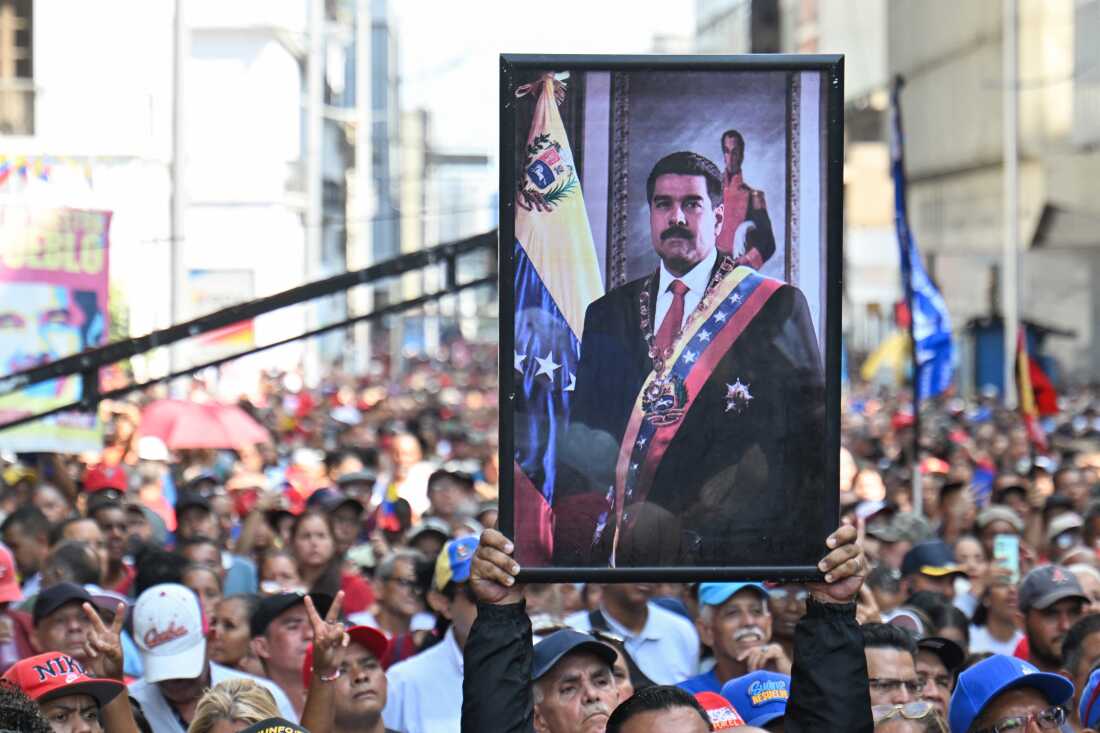
A supporter of ousted Venezuela’s President Nicolas Maduro carries his portrait during a rally outside the National Assembly in Caracas on Jan. 5, 2026. Juan Barreto/AFP via Getty Images
Juan Barreto/AFP via Getty Images
In a surprising turn of events, the Trump administration’s weekend capture of Venezuelan leader Nicolás Maduro resulted in a lucrative payday for one prediction market trader, totaling nearly half a million dollars.
Wagering on Political Outcomes
On Polymarket, a well-known platform for betting on real-world outcomes, a user wagered $32,000 on the prediction that Maduro would be removed from power by the end of January. This bet was placed just hours before the official operation was ordered by Trump. When news broke of Maduro’s capture, the trader walked away with a profit exceeding $400,000.
Fortune or Foreknowledge?
The question remains: was this trader simply fortunate, or did they possess insider knowledge of the U.S. government’s plans? Efforts by online investigators to uncover the trader’s identity have thus far been unsuccessful. The account, initially known as “Burdensome-Mix,” later changed to an untraceable string of letters and numbers shortly after creating it weeks prior to the Maduro bet.
The Nature of Prediction Markets
Many participants in prediction markets like Polymarket and Kalshi operate under pseudonyms, making it challenging to track individual identities. However, if linked to cryptocurrency wallets, some users can be revealed. Chainalysis, a crypto tracking firm, noted that while they couldn’t identify the individual behind the account, the trader is using U.S. crypto exchanges to cash out, indicating a lack of intent to hide their identity.
The Debate Over Insider Trading
This situation raises significant questions about the potential for insider trading within prediction markets. Daniel Taylor, a professor at the University of Pennsylvania’s Wharton School, commented, “It’s easier in hindsight to identify suspicious activities than in real-time.” The blurred lines of regulatory oversight also foster concerns, as prediction markets have fewer safeguards compared to traditional stock markets policed by the SEC.
Regulatory Oversight and Conflicts of Interest
While Polymarket and Kalshi come under the supervision of the Commodity Futures Trading Commission (CFTC), the agency is substantially less staffed than the SEC. With Donald Trump Jr. advising both firms, skepticism arises regarding the likelihood of strict regulation. Experts like Yale’s Jeffrey Sonnenfeld express doubts about the CFTC’s ability to monitor these platforms effectively, hinting that political connections may compromise oversight.
Insider Trading and Market Manipulation
The Biden administration has actively opposed prediction markets, emphasizing regulatory enforcement against them, in contrast to the previous administration’s more permissive stance. Earlier incidents of probable insider trading on Polymarket, such as a substantial payout on Google-related wagers, amplify concerns about regulatory inadequacies. Taylor underscores that proving harm is critical for any potential case, asking, “How would the U.S. government be harmed by someone trading on advanced warning of the Maduro operation?”
If you have information regarding the Maduro wager or concerns about insider trading in prediction markets, you can reach Bobby Allyn via the encrypted messaging app Signal at ballyn.77.
Insider Trading and Prediction Markets: The Nicolás Maduro Case
In the ever-evolving landscape of financial forecasting, prediction markets have emerged as both a platform for betting on real-world events and a potential arena for ethical dilemmas. A recent incident involving the Venezuelan leader, Nicolás Maduro, has intensified discussions surrounding insider trading in these digital marketplaces.
The Lucrative Bet on Maduro’s Ouster
A trader on a popular prediction market placed a substantial bet just hours before the U.S. executed a high-level operation that led to Maduro’s capture. This trader invested $32,000 on the prediction that Maduro would be removed from power by the end of January, resulting in an astonishing profit of over $400,000 once the event transpired.
Luck or Insider Knowledge?
The trading community is abuzz with speculation: was this trader simply fortunate, or did they possess insider information? With the anonymity afforded by cryptocurrency, attempts to uncover the trader’s identity have been unsuccessful thus far. The account’s early activity raise suspicions about potential advance knowledge of government operations.
The Challenge of Regulation
Unlike traditional stock markets, which are closely monitored for potential insider trading by the Securities and Exchange Commission (SEC), prediction markets like Polymarket and Kalshi operate under less stringent scrutiny. While the Commodity Futures Trading Commission (CFTC) oversees these platforms, their limited resources create gaps in regulatory enforcement, allowing trades based on non-public information to go unchecked.
Political Connections and Market Oversight
The advisory role of Donald Trump Jr. with both Polymarket and Kalshi raises further eyebrows regarding the integrity of regulatory oversight. Critics suggest that the close ties to political figures could complicate the CFTC’s efforts to enforce anti-fraud regulations robustly, leaving the door open for dubious trading practices.
Historical Context of Insider Trading
This isn’t the first instance of questionable trading activity in prediction markets. Previous cases, including significant profits made by correctly predicting Google’s search trends, have highlighted vulnerabilities within these platforms. Experts argue that even when non-public information is utilized for profit, proving harm to the market or the government makes legal action challenging.
The Future of Prediction Markets
As the Biden administration takes a firmer stance against prediction markets, the response from the previous administration leaned toward deregulation. The current environment raises critical questions about the ethical implications of trading on insider knowledge and whether fundamental reforms are necessary to protect the integrity of these financial platforms.
In conclusion, the intrigue surrounding the Maduro trade serves as a focal point for broader discussions on the potential for insider trading within prediction markets and calls for enhanced oversight to address ethical concerns.
