


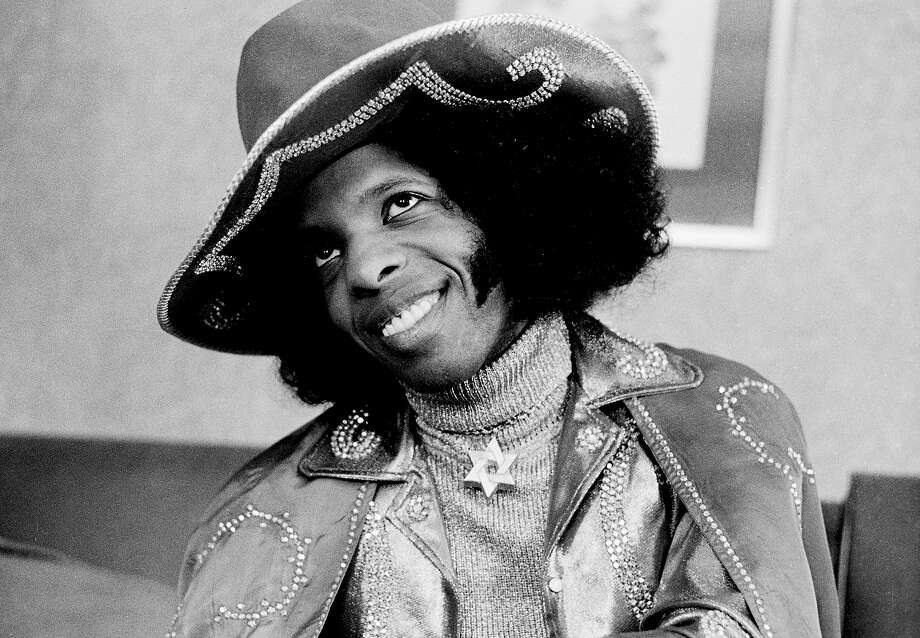
Los Angeles, California – The music world mourns the passing of a true pioneer. Sly Stone, the revolutionary musician, dynamic showman, and iconic frontman of Sly and the Family Stone, passed away on Monday, June 9, 2025, at the age of 82. He died peacefully in Los Angeles, surrounded by his family, after a prolonged battle with chronic obstructive pulmonary disease (COPD) and other underlying health conditions. His passing marks the end of an era, but the echoes of his genius and the profound influence of his multifaceted music will resonate for generations.
Born Sylvester Stewart, Sly Stone’s groundbreaking fusion of funk, soul, rock, psychedelia, and gospel not only transformed popular music in the 1960s and 1970s, but it also courageously broke down racial and gender barriers in unprecedented ways. His band, Sly and the Family Stone, was celebrated not only for its unique sound but also for its audacious, groundbreaking lineup, featuring a multiracial and multi-gender mix of musicians—a concept almost unimaginable for its time.
An Early Musical Calling and the Awakening of a Genius
Sly Stone’s musical journey began at a remarkably young age. Born in Denton, Texas, in 1943, he moved with his family to Vallejo, California, as a young boy. By age four, he was already demonstrating exceptional talent, singing and playing gospel music with his siblings in a group called The Stewart Four. By age eleven, he had mastered several instruments, including guitar, bass, keyboard, and drums, and his musical mind was in a constant state of fermentation. This early immersion in diverse sounds, from the gospel hymns of the church to the rhythm and blues that dominated the airwaves, was fundamental in shaping his eclectic approach to music.
Before becoming a funk icon, Sly Stone also left his mark on radio. He distinguished himself as a popular disc jockey at California stations like KSOL and KDIA. There, he was known for his bold, genre-agnostic playlists, which blended The Beatles with R&B artists, opening listeners’ minds to a broader sonic universe. This experience in radio not only honed his musical knowledge but also gave him a unique understanding of what made people connect with music, a skill he would later employ to craft timeless anthems. His stint as a producer for artists like The Beau Brummels and Bobby Freeman also prepared him for the role of maestro for his own revolutionary orchestra.
The Birth of a Phenomenon: Sly and the Family Stone
In 1966, Sylvester Stewart brought his most ambitious vision to life: Sly and the Family Stone. He was joined by his younger brother, Freddie Stone, who became a foundational pillar of the band on guitar. The innovative lineup included Cynthia Robinson on trumpet, Jerry Martini on saxophone, Greg Errico on drums, and Larry Graham on bass, whose “slap” bass lines would become a hallmark of funk music. His sister, Rose Stone, with her powerful keyboards and vocals, completed the group, adding a unique depth to the band’s sound.
This formation was revolutionary in itself. In an era of intense racial and gender segregation, Sly and the Family Stone stood out as a beacon of diversity and inclusion. The band was a living mirror of the utopia many in the 1960s counterculture yearned for: people of different backgrounds, races, and genders working together in creative harmony. They didn’t just sing about unity; they personified it in every performance and every recording.
The band’s sound was equally groundbreaking. They didn’t fit neatly into any single category. It was funk, but with the energy of rock; it was soul, but with the psychedelic freedom of the era. Their early albums, such as “A Whole New Thing” (1967) and “Dance to the Music” (1968), already signaled that something profoundly different was happening. The title track from “Dance to the Music” became their first major hit, an irresistible invitation to dance that introduced the world to their contagious energy and unique sound.
The Golden Era: Iconic Hits and Profound Cultural Impact
Sly and the Family Stone’s ascent to the pinnacle of stardom was meteoric, culminating in a string of albums and singles that not only dominated the charts but also became anthems for a generation hungry for change and self-expression.
- “Everyday People” (1968): This was one of the band’s earliest major successes and a potent anthem of unity and acceptance. With its catchy melody and a message of tolerance (“We got to live together”), the song resonated deeply in a country torn by social and racial conflicts. It encapsulated the band’s philosophy that diversity is a strength, not a weakness.
- “Stand!” (1969): The eponymous album from 1969, and its title track, are considered one of the band’s creative pinnacles. “Stand!” is an inspiring call to self-empowerment and perseverance, featuring an exuberant, high-energy sound that became the soundtrack for countless civil rights marches and movements. It was a song that told listeners to stand up and make a difference, reflecting the activist spirit of the time.
- “Dance to the Music” (1968): More than just a hit, this song represented a break from radio conventions, with its non-linear structure and emphasis on improvisation. It was pure, contagious energy, a celebration of the joy of moving to music, regardless of who you were or where you came from.
- “Family Affair” (1971): From the album “There’s a Riot Goin’ On,” this track marked a shift in the band’s sound, embracing a darker, more introspective, and denser funk. It was one of the genre’s first major hits, featuring a hypnotic beat and lyrics that explored the complexities of family and human relationships, resonating with the social fatigue in the post-civil rights movement era. The iconic phrase “Thank You (Falettinme Be Mice Elf Agin)” became deeply ingrained in pop culture, even inspiring the title of his later autobiography.
The band’s live performances were legendary. Their set at the 1969 Woodstock Festival is considered one of the most memorable of the event, with Sly Stone leading the massive crowd in a collective ecstasy that transcended racial and social barriers. In the same year, they also captivated audiences at the historic Summer of Soul concert in Harlem, solidifying their status as cultural icons who not only reflected the times but also shaped them.
The sound of Sly and the Family Stone was revolutionary in its complexity and cohesion. They pioneered the use of the “slap” bass, popularized by Larry Graham, which became a fundamental element of funk. The wah-wah guitar, the distinct sound of the Hammond organ, and the intertwined vocal harmonies from all group members created a rich and innovative sonic tapestry. They incorporated a “call-and-response” dynamic that stemmed from their gospel and R&B roots but modernized it for rock and psychedelic audiences. Their sound was a catalyst for the development of future genres and an inexhaustible source of inspiration.
Challenges and Retreat: An Icon’s Personal Battle
Despite their monumental success, Sly Stone’s and the band’s journey was marked by significant challenges. The pressures of fame, the relentless demands of the music industry, and well-documented struggles with drug addiction began to take their toll. Internal conflicts within the band and Sly’s increasingly erratic behavior led to album delays, canceled shows, and, eventually, the effective dissolution of the group around 1975.
After the breakup of Sly and the Family Stone, Sly Stone attempted a solo career and collaborated with other influential artists, such as George Clinton and Funkadelic, and even Michael Jackson, who was a great admirer. However, he largely withdrew from the public eye for many years. This period was marked by intense reclusion, continuous battles with chemical dependency, and, at times, the painful experience of homelessness. Stories about his isolated life and health struggles became part of music folklore, but his musical genius was never forgotten. The mystery surrounding his whereabouts and condition often fueled speculation in the music news.
Enduring Influence and the Final Chapters of an Artistic Life
Despite the years of reclusion and struggle, Sly Stone’s impact on music is undeniable and eternal. He influenced generations of artists in virtually every genre, from hip-hop to R&B, from pop to rock. Artists like Prince, Michael Jackson, Public Enemy, Red Hot Chili Peppers, and many others have cited Sly and the Family Stone as a foundational influence. His music is among the most sampled in hip-hop history, ensuring that his beats and messages continue to resonate with new audiences.
Formal recognition for his contributions came in 1993, when Sly Stone was inducted into the Rock & Roll Hall of Fame as a member of Sly and the Family Stone. Despite his reluctance to appear publicly, he made sporadic and emotional comebacks, such as his appearance at the 2006 Grammy Awards tribute, marking his first live performance since 1987. The sight of Sly Stone at the keyboard, however brief, was a powerful moment for fans and fellow musicians alike, a fleeting glimpse of the genius many had missed for so long.
In the final years of his life, Sly Stone demonstrated that his creative mind never ceased. In 2023, he published his long-awaited autobiography, Thank You (Falettinme Be Mice Elf Agin), which offered a rare and personal insight into his journey, his struggles, and his indelible legacy. More recently, he had completed a screenplay for his life story, a project his family now hopes to share with the world, ensuring that his narrative is told in his own words. This continued creative output, even in his later years, served as a powerful reminder of the relentless artistic drive that defined him.
A Farewell to an Indomitable Visionary
Sly Stone was a monumental figure—an unprecedented innovator and a true pioneer who redefined the landscape of pop, funk, and rock music. His iconic songs have left an indelible mark on the world, and his influence remains undeniable, continuously sampled and revered by new generations of musicians. He taught us to dance, to think, and to challenge norms, all within a single, irresistible groove.
“While we mourn his absence, we take solace in knowing that his extraordinary musical legacy will continue to resonate and inspire for generations to come,” his family shared in a statement.
Sly Stone is survived by his three children. His passing marks the end of an era, but his music and his vision of a more unified, rhythmic world will continue to inspire and move people for many, many years. The groove of Sly Stone will be eternal.
Sources:
- AP News: Sly Stone, leader of funk revolutionaries Sly and the Family Stone, dies at 82
- BBC News: Sly Stone, leader of Sly and the Family Stone, dies aged 82
- NPR: Sly Stone, visionary funk frontman of the Family Stone, has died at age 82
- CBS News: Sly Stone, Sly and the Family Stone frontman, dies at 82
- People.com: Sly Stone, Sly and the Family Stone Frontman, Dead at 82
- Legacy Remembers: Sly Stone Obituary (1943 – 2025)
- Wikipedia: Sly Stone
