


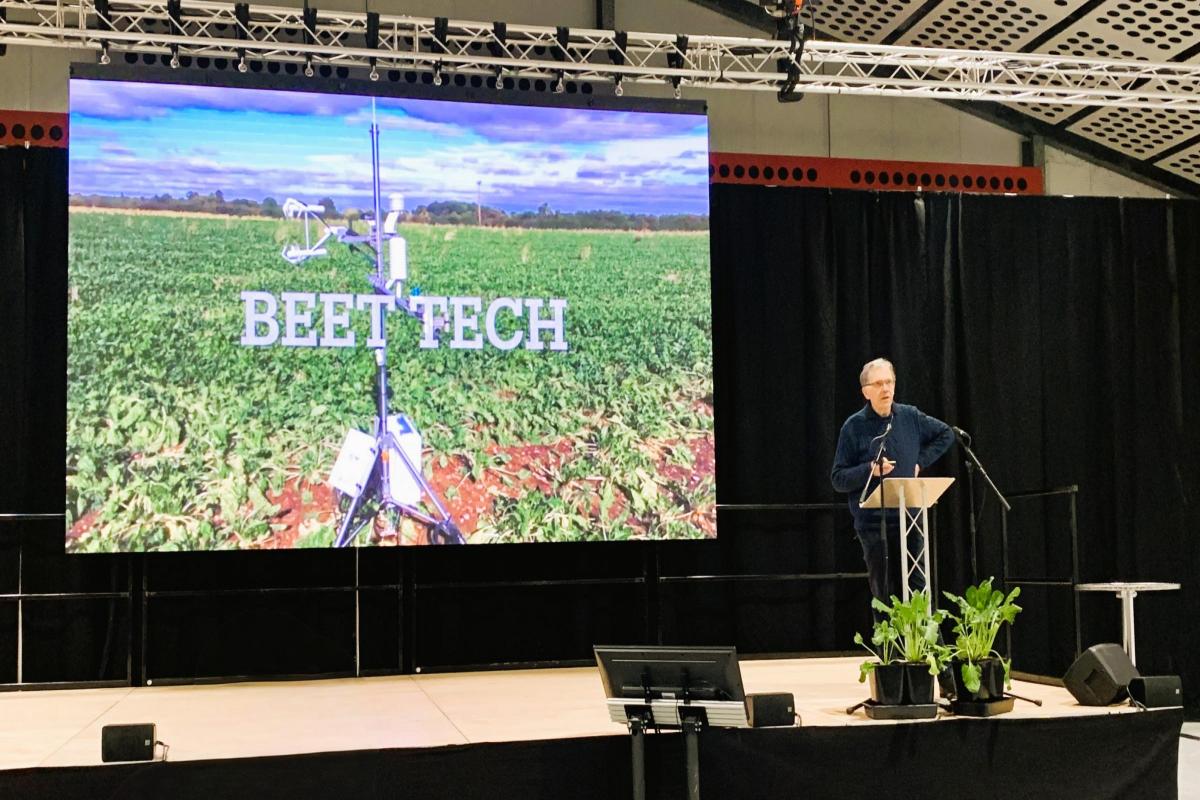
East Anglia’s sugar beet growers are urged to adopt agri-tech and AI innovations to overcome stagnation in productivity and secure the future of the sector. This was a central theme of the recent BeetTech26 conference, which convened over 200 farmers and industry stakeholders at the Norfolk Showground.
Hosted by the British Beet Research Organisation (BBRO) based in Norwich, the event showcased cutting-edge research and new technologies designed to enhance the productivity and sustainability of beet growers who supply British Sugar’s factories.
The British Beet Research Organisation (BBRO) hosted its BeetTech26 conference at the Norfolk Showground (Image: Chris Hill)
Keynote speaker Prof Simon Pearson, a distinguished researcher from the University of Lincoln specializing in agri-food technology, remarked that while sugar beet yield has significantly increased since the 1960s, recent years have shown a concerning trend of stagnation.
Prof Pearson emphasized that agri-tech could be the driving force for future productivity, profitability, and resilience in agriculture, spotlighting advancements in AI, automated machinery, and precision crop breeding as vital tools to rejuvenate sugar beet yields.
“The agricultural landscape is evolving rapidly,” remarked Prof Pearson. “While the current narrative around farming seems negative, it’s crucial to focus on productivity. Agri-tech is key because we must achieve more with fewer resources.”
A sugar beet harvester on a Norfolk farm (Image: Newsquest)
During his presentation, Prof Pearson noted several significant challenges facing the agricultural sector, including climate change, labor shortages, and the urgent need for fair and accessible food prices. He pointed out that previous advancements in nitrogen fertilization, pesticides, and powerful machinery had propelled productivity in recent decades.
As we look to the future, technologies like AI are already being implemented in various applications, including data analysis for crop monitoring and the development of new pest control methods through chemical discovery. Prof Pearson confirmed that while yields might currently be plateauing, advancements in genetic engineering and precision farming can help reverse this trend.
Agricultural machinery showcased at BBRO’s BeetTech26 conference (Image: Chris Hill)
Further supporting this notion, Mid Norfolk MP George Freeman’s “30:50:50” innovation agenda aims to boost food production by 30% while reducing environmental impacts by 50% by the year 2050. Prof Pearson is confident that agri-tech can help achieve these ambitious goals within the sugar beet industry.
To realize these advancements, collaboration between researchers and farmers is essential. “We need to hear from you about the challenges you face and the solutions you envision,” he stated, reiterating that enhancing productivity is the cornerstone of agricultural progress.
A silent seminar, known as ‘Beet Box’, at the BeetTech26 conference (Image: Chris Hill)
In addition to keynote talks, the conference featured four practical “Beet Box” seminars that provided insights into crucial topics such as on-farm trials and pest monitoring techniques. Attendees also received updates on new crop varieties and innovative strategies to combat beet moth pests, alongside the launch of BBRO’s new initiative called ‘Beet Your Best’.
This initiative aims to provide customized information, tools, and strategies year-round, drawing from the latest BBRO trials and research, all designed to help farmers optimize crop yields, resilience, and profitability. The program focuses on ten key targets, including soil management, weed control, and pest prevention.
Dr. Georgina Barratt addressing attendees at the BBRO’s BeetTech26 conference (Image: Chris Hill)
Embracing Agri-Tech for the Future of Sugar Beet Farming
East Anglia’s sugar beet industry faces a crucial juncture. To overcome a stagnation in productivity and safeguard its future, growers must integrate agricultural technology and artificial intelligence into their practices.
The Importance of Innovation in Beet Farming
At a recent conference held at the Norfolk Showground, industry stakeholders gathered to discuss the latest advancements and research aimed at enhancing productivity and sustainability within the sector. The event underscored the urgency for farmers to adopt innovative solutions that can help drive efficiency in sugar beet production.
Challenges in Sugar Beet Yield Improvement
Despite significant advancements in sugar beet yields since the 1960s, experts have observed a troubling flatlining of growth in recent years. Industry leaders are emphasizing the need for agri-tech to reinvigorate yield potential. Technologies such as AI, automated machinery, and precision crop breeding are seen as essential tools for future productivity gains.
Harnessing Agri-Tech for Enhanced Productivity
AI has begun to play a pivotal role in numerous agricultural processes, from analyzing data and imagery to enhancing plant breeding and discovering new pest control chemicals. The ongoing development of AI-driven precision equipment can optimize crop management practices, allowing farmers to increase effectiveness while minimizing resource consumption.
Strategic Agricultural Advancements
In addition to technological adoption, the sector faces several challenges, including labor shortages and climate change impacts. As farmers navigate these hurdles, they must focus on ensuring that food remains accessible and fairly priced for all consumers. The integration of innovative agricultural practices is key to not just maintaining but improving productivity, especially in light of increasing demand.
Collaboration for Future Success
The agricultural community is urged to voice their needs and challenges, allowing researchers and innovators to respond with tailored solutions. The collaborative effort will play a significant role in addressing the current stagnation in yields, driving them upward once again.
Deployment of Targeted Initiatives
A new initiative focusing on optimizing yields and enhancing resilience has been launched, emphasizing primary factors such as soil management, crop nutrition, and pest control. This initiative seeks to provide farmers with tailored resources and expert advice throughout the farming season, ensuring that they remain competitive in an evolving marketplace.
By embracing these innovative practices and collaborating closely with industry experts, East Anglia’s sugar beet growers can look forward to a productive and sustainable future.
