


Introduction to Intra-Organizational Coordination Challenges
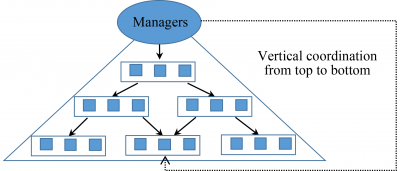
In the manufacturing sector, effective intra-organizational coordination remains a significant hurdle for companies aiming to boost productivity and foster innovation. This challenge primarily stems from the diverse nature of functional units and limited resource availability. Traditional organizational models, such as linear-functional and matrix designs, often yield ambiguous divisions of responsibilities and promote independent objectives. Such structures can be particularly ineffective for large innovative manufacturing firms involved in mass production.
The Rise of New Organizational Models
In response to these challenges, newer organizational structures like network organizations, multiteam systems, and platform organizations have been introduced. These modern models strive to create decentralized and boundaryless frameworks, yet they still grapple with the complexities of multi-product batch production and research & development management within innovative manufacturing environments.
Overview of the Study
A research collaboration involving the Aero Engine Corporation of China, Chengdu Holy Industry & Commerce Corp., Ltd. (Group), and the School of Management at Huazhong University of Science and Technology has initiated a ground-breaking study titled “Construction of Digital 3D Magic-Cube Organization Structure for Innovation-Driven Manufacturing.”
The 3D Magic-Cube Organizational Structure
This study introduces a unique three-dimensional (3D) magic-cube organizational structure, which emphasizes three essential dimensions:
- Product (Z-axis): Encompassing research and expanded product lines.
- Business (Y-axis): Featuring functional units such as strategy and R&D.
- Administration (X-axis): Including empowered grassroots administrative units.
This innovative structure combines the strengths of traditional and contemporary organizational forms, promoting project-driven operations, cross-functional collaboration, and interdependent units. Moreover, it establishes a coordination mechanism that focuses on “product traction, business support, and administrative guarantee,” paving the way for enhanced effectiveness.
Key Propositions of the 3D Magic-Cube Structure
The study advocates three vital propositions:
- Talent Development: Fostering compound talent to improve inter-departmental collaboration.
- Digital Technology: Leveraging innovations such as IoT and AI for enhanced connectivity and visual management.
- Adhocracy Culture: Encouraging a boundary-spanning culture to dismantle coordination barriers.
Implementation and Results
To test these concepts, the 3D magic-cube structure was implemented in a Chinese aero-engine manufacturing firm with over 2,200 employees across five sub-factories and eight functional departments beginning in 2014. The firm revamped its post system to align with the three dimensions and updated its performance evaluation criteria, linking compensation to product, business, and administrative outcomes. The implementation led to remarkable results: by 2021, the gross industrial output value surged by 74.79%, overall profit exploded by 1691.95%, labor productivity increased by 32.89%, and per capita annual income rose by 88.06%, all while only adding a mere 3% to the employee base.
Conclusion and Future Implications
The research paper “Construction of Digital 3D Magic-Cube Organization Structure for Innovation-Driven Manufacturing” is authored by Qiao XIANG, You ZHANG, Jie ZHONG, Guoxuan WANG, and Lirong LONG. For further reading, the full text is available at this link. The findings of this study provide valuable insights into how innovative organizational structures can significantly enhance productivity and innovation within the manufacturing sector.
Revolutionizing Manufacturing: The 3D Magic-Cube Organizational Structure
The manufacturing sector is undergoing significant transformation as companies strive for enhanced productivity and innovation. A fundamental obstacle that many firms face is intra-organizational coordination. The challenges stem from diverse functional units and limited resources, necessitating a reevaluation of traditional organizational structures.
The Limitations of Traditional Organizational Structures
Conventional organizational models, such as linear-functional and matrix structures, often suffer from ambiguity in responsibility distribution and divergent objectives. This misalignment can hinder the effectiveness of large innovative manufacturing firms, especially as they engage in mass production. The need for a more cohesive structure becomes paramount in an era where innovative manufacturing demands agility and adaptability.
Emergence of New Organizational Models
In response to these challenges, alternative organizational forms like network organizations, multiteam systems, and platform organizations have emerged. These models prioritize decentralization and a boundaryless approach, yet they still encounter difficulties in satisfying the complexities of multi-product batch production and research and development management.
The 3D Magic-Cube Organizational Structure
A remarkable study conducted by a research team from various institutions proposes a transformative solution—the 3D Magic-Cube organizational structure. This innovative model revolves around three pivotal dimensions: product, business, and administration. The structure not only combines the strengths of traditional and contemporary organizational forms but also integrates project-driven operations, fosters cross-functional collaboration, and promotes interdependent units.
Core Principles of the 3D Magic-Cube Structure
This magic-cube framework operates on a unique coordination mechanism characterized by “product traction, business support, and administrative guarantee.” Key propositions include the cultivation of composite talent to boost inter-departmental collaboration, leveraging digital technologies like IoT and AI to facilitate intelligent connectivity and visual management, and fostering an adhocracy culture that transcends traditional boundaries.
Real-world Application and Success Metrics
The practicality of the 3D Magic-Cube structure has been validated through its implementation in a Chinese aero-engine manufacturing firm employing over 2,200 personnel. Since its introduction in 2014, the firm has restructured its post system and performance evaluation process to align with the three dimensions of the cube. The results have been compelling; by 2021, key performance indicators reflected a gross industrial output increase of 74.79%, total profit growth of 1,691.95%, and a remarkable labor productivity uptick of 32.89%.
Conclusion: A Path Forward for Manufacturing Innovation
The research surrounding the 3D Magic-Cube organizational structure demonstrates a potential pathway for manufacturing firms facing coordination challenges. By embracing this innovative framework, companies can not only enhance productivity but also foster a culture of collaboration and continuous improvement. The study, authored by experts in the field, underscores the necessity of evolving organizational structures to meet the demands of an ever-changing manufacturing landscape.
For those interested in an in-depth exploration, the full text of the study is available at this link.
