


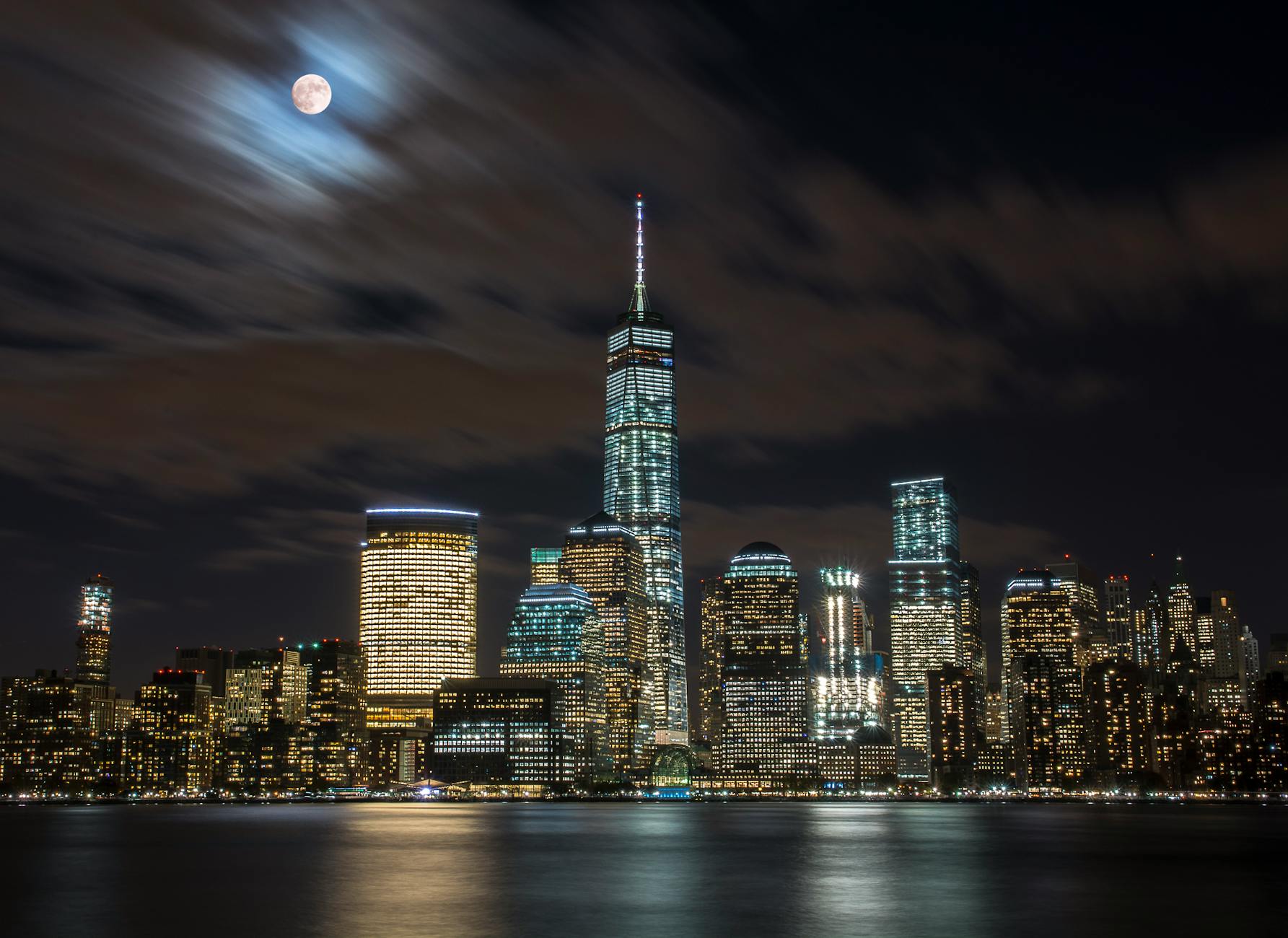
Earth’s Night Sky – Few celestial events capture the imagination quite like the Full Moon. Its luminous presence in the night sky has inspired poets, guided navigators, and marked the turning of seasons for millennia. Yet, some Full Moons offer a particularly unique spectacle, transforming from a mere orb into a captivating, almost tangible entity on the horizon. June’s recent Strawberry Moon was one such event, treating skywatchers worldwide to an exceptionally rare “low-riding” display – a celestial phenomenon not witnessed with such prominence in almost two decades. This wasn’t just another Full Moon; it was a carefully choreographed cosmic ballet, delivering a visual treat that blended astronomical precision with breathtaking natural beauty.
For observers across various latitudes, particularly those in the Northern Hemisphere, this particular Strawberry Moon appeared strikingly low on the southern horizon, creating an optical illusion that enhanced its size and imbued it with a deeper, richer hue. This grand entrance and lingering low arc made it an unforgettable sight, inspiring astrophotographers and casual skywatchers alike to capture its majestic journey across the twilight and nighttime canvases.
1. What is the Strawberry Moon? Unpacking its Rich Nomenclature
The term “Strawberry Moon” itself is steeped in cultural history, primarily originating from the Algonquin Native American tribes. For these communities, this Full Moon historically coincided with the peak ripening and harvesting season of wild strawberries in northeastern North America. It was a time of abundance, renewal, and celebration of nature’s bounty, deeply intertwined with their seasonal cycles and sustenance. The name, therefore, is not an astronomical designation related to the Moon’s color (though it often appears reddish due to atmospheric effects when low on the horizon), but rather a beautiful testament to the close relationship between ancient peoples and the rhythms of the natural world.
While “Strawberry Moon” is the most widely recognized moniker, the June Full Moon has carried numerous other names across different cultures and traditions, each reflecting a unique connection to the season’s characteristics:
- Hot Moon: Named by some due to the onset of warmer summer temperatures.
- Honey Moon: This name, often associated with weddings occurring in June, also reflects the golden, honey-like hue the moon can take on when near the horizon. It’s believed that the term “honeymoon” for the first month of marriage originated from this moon’s association with sweetness and new beginnings.
- Rose Moon: Some European traditions referred to it as the Rose Moon, coinciding with the blooming of roses.
- Planting Moon/Green Corn Moon: Other agricultural societies had names reflecting the ongoing growth of crops.
Regardless of its name, the June Full Moon marks a significant point in the lunar cycle, occurring when the Moon is directly opposite the Sun in its orbit, appearing fully illuminated from Earth’s perspective. It represents a powerful energy, often associated with culmination, completion, and the burgeoning vitality of summer.
2. The Rare “Low-Riding” Phenomenon: A Dance with the Major Lunar Standstill
What made this particular Strawberry Moon truly exceptional was its remarkably low altitude. The article highlights that it was the lowest Full Moon observed in almost two decades, a direct consequence of a fascinating astronomical alignment known as a “major lunar standstill.” To fully grasp this phenomenon, we must delve into the intricate orbital mechanics of our celestial neighbor.
The Moon’s orbit around Earth isn’t perfectly aligned with Earth’s orbit around the Sun (the ecliptic plane). Instead, it’s tilted by about 5.1 degrees. Similarly, Earth’s axis of rotation is tilted by about 23.5 degrees relative to its orbital plane around the Sun, giving us our seasons. These two tilts interact in a cyclical pattern over roughly 18.6 years, leading to what are called “lunar standstills.”
- Minor Lunar Standstill: At one point in this cycle, the Moon’s maximum declination (its angular distance north or south of the celestial equator) is at its minimum. During this time, the Moon’s path across the sky is more constrained, and its highest and lowest points are less extreme.
- Major Lunar Standstill: Approximately 9.3 years later (half of the 18.6-year cycle), the Moon’s maximum declination reaches its maximum. This is what just occurred. During a major lunar standstill, the Moon’s path across the sky becomes much more extreme. It rises to its highest points (for observers in the Northern Hemisphere) and dips to its lowest points, appearing to “stand still” at these extreme declinations before reversing direction.
When a Full Moon occurs during a major lunar standstill around the time of the Summer Solstice (the longest day of the year in the Northern Hemisphere, when the Sun is at its highest point in the sky), a unique optical effect takes place. The Sun’s highest point in the sky during the Summer Solstice means the Full Moon, being opposite the Sun, will be at its lowest point in the sky. It follows an arc similar to the Sun’s path during the shortest days of winter.
Think of it this way: the Sun is at its highest in the summer sky, casting minimal shadows. Conversely, the Full Moon during the summer, being opposite the Sun, occupies the lowest possible celestial path. This low arc, particularly pronounced during a major lunar standstill, causes the Moon to hug the horizon, creating a truly spectacular and unusual sight. This is why observers noted it specifically on the southern horizon, tracing a shallow path across the sky, offering extended viewing opportunities near ground level.
3. Why a “Low-Riding” Moon is Special: A Feast for the Eyes and Lenses
A Moon that hugs the horizon isn’t just an astronomical curiosity; it’s a visual masterpiece that offers several distinct advantages for skywatchers and astrophotographers alike.
- The Enhanced Moon Illusion: One of the most striking effects is the dramatic enhancement of the “Moon illusion.” This phenomenon makes the Moon appear significantly larger when it’s near the horizon compared to when it’s high in the sky, even though its actual angular size remains constant. While the exact cause of the Moon illusion is still debated, it’s believed to be a psychological effect related to how our brains perceive distant objects in relation to foreground elements (trees, buildings, mountains). When the Strawberry Moon was low, these foreground objects provided a compelling reference point, making the Moon seem colossal as it peeked over the landscape.
- Atmospheric Hues and Filtering: A low-riding Moon’s light has to travel through a much greater thickness of Earth’s atmosphere before reaching our eyes. The atmosphere acts like a natural filter, scattering shorter wavelengths of light (like blue and green) more efficiently than longer wavelengths (like red and orange). This is the same reason sunrises and sunsets appear vibrant red or orange. When the Moon is low, its light undergoes similar scattering, causing it to glow with warm, often fiery, hues of yellow, orange, and even deep red. This ephemeral coloring adds an ethereal beauty to the display, turning the familiar white orb into a painter’s dream.
- Exceptional Photographic Opportunities: For astrophotographers, a low-riding Moon is a golden opportunity. The article mentions stunning photos captured by professionals from around the world, showcasing the Moon “framed by city skylines, landscapes, and even silhouetted against a passenger airliner.” This is precisely because the Moon’s low position allows for compelling compositions where it can be juxtaposed against terrestrial elements. A moon rising over a mountain range, peeking between skyscrapers, or being perfectly framed by a distant landmark becomes a breathtaking shot. The added atmospheric haze and coloration further enhance the visual drama, creating images that are both scientifically intriguing and artistically profound. The slow arc across the horizon also gives photographers more time to compose and capture these elusive moments.
The combination of the enhanced Moon illusion, the rich atmospheric coloring, and the unique compositional opportunities made this Strawberry Moon a truly special skywatching experience. It transformed a routine lunar phase into an event that compelled even casual observers to pause, look up, and appreciate the dynamic beauty of our solar system.
4. Best Viewing Practices & Tips for Skywatchers
To truly appreciate a low-riding Full Moon like the Strawberry Moon, a little preparation goes a long way. Even though the primary event has passed, the article notes that the lunar disk will continue to appear almost fully lit for the next few nights as it transitions into a waning gibbous phase, still offering excellent viewing opportunities.
- Find an Open Horizon: The most crucial tip for viewing a low-hanging Moon is to find a location with an unobstructed view of the horizon. This means seeking out elevated spots, open fields, beaches, or quiet rural areas away from tall buildings, dense forests, or significant light pollution. The more clearly you can see the horizon, the more dramatic the Moon’s appearance will be as it rises or sets.
- Time Your Viewing: The magic happens primarily around moonrise and moonset. Check a reliable moon calendar or stargazing app for your specific location to determine the exact times the Moon will appear above the horizon. Arriving a little early (15-30 minutes before moonrise) allows your eyes to adjust and lets you witness the full grandeur of its ascent.
- Embrace the Colors: Don’t be surprised if the Moon appears yellowish, orange, or reddish when it’s low. This is normal and part of the beautiful atmospheric effect. As it climbs higher, its color will gradually return to the familiar pearly white.
- Consider Simple Aids: While not necessary, a pair of binoculars can enhance the experience by revealing more details on the lunar surface, even when the Moon is low. For photographers, a tripod is essential for stability, especially when capturing the Moon’s light in low-light conditions, and a telephoto lens will help bring the Moon closer. However, some of the most striking photos come from wide-angle lenses that capture the Moon within a vast landscape.
- Patience is Key: Moonrise and moonset are gradual processes. Allow yourself time to simply observe, letting the celestial spectacle unfold naturally. The interplay of light, atmosphere, and foreground objects creates a unique visual narrative.
5. Historical and Cultural Significance Beyond the “Strawberry”
Beyond its Algonquin origins, the June Full Moon holds diverse historical and cultural significance across various civilizations, underscoring humanity’s enduring fascination with the Moon’s cycles.
- Agricultural Markers: For many ancient agricultural societies, the Moon’s phases were critical for planting and harvesting. The June Moon often marked the time of abundance and growth, influencing decisions about crops and communal activities. This is reflected in names like “Planting Moon” or “Green Corn Moon” from other Native American tribes.
- Celebrations and Rituals: Across different cultures, Full Moons were often times for gatherings, celebrations, and spiritual rituals. The “Honey Moon” association in Europe, for instance, hints at a time of joy and unions. For some pagan traditions, it’s a time to honor fertility, growth, and the peak of summer’s energy.
- Navigational Aid: Historically, the Full Moon provided crucial illumination for travel and nighttime activities in a world without widespread artificial lighting. Its predictable cycle aided in navigation and timekeeping for explorers and voyagers.
- Folklore and Mythology: Each Full Moon carries a rich tapestry of folklore and mythology. The June Moon, being near the Summer Solstice, often features in tales related to fairies, magic, and the mystical aspects of the longest days of the year, when the veil between worlds was thought to be thin.
The enduring power of these traditional names and cultural associations highlights how deeply humans have been connected to the lunar cycle, viewing it not just as an astronomical object but as a living calendar that dictates life’s rhythms and offers moments for reflection and celebration.
6. Conclusion: A Celestial Reminder of Earth’s Place in the Cosmos
June’s Strawberry Moon, with its exceptionally low-riding display, served as a profound reminder of the subtle yet spectacular dynamics at play in our solar system. The intricate dance between the Earth’s axial tilt, the Moon’s orbital inclination, and the precise timing of the major lunar standstill converged to create a truly unforgettable visual treat. This event, visible across various parts of the globe and beautifully captured by astrophotographers, transcended the ordinary, transforming our familiar satellite into a glowing, orange orb hugging the horizon, inviting awe and contemplation.
It was a powerful testament to the fact that even seemingly common celestial objects can offer rare and breathtaking shows when viewed under specific astronomical conditions. The Strawberry Moon didn’t just illuminate the night; it illuminated our understanding of lunar mechanics and rekindled our innate human curiosity about the cosmos. As the Moon gradually wanes from its full phase, the memory of its rare low-riding performance will linger, encouraging us all to look up more often, to appreciate the wonders above, and to reconnect with the timeless rhythms of the universe that continue to shape our world.
Source:
