


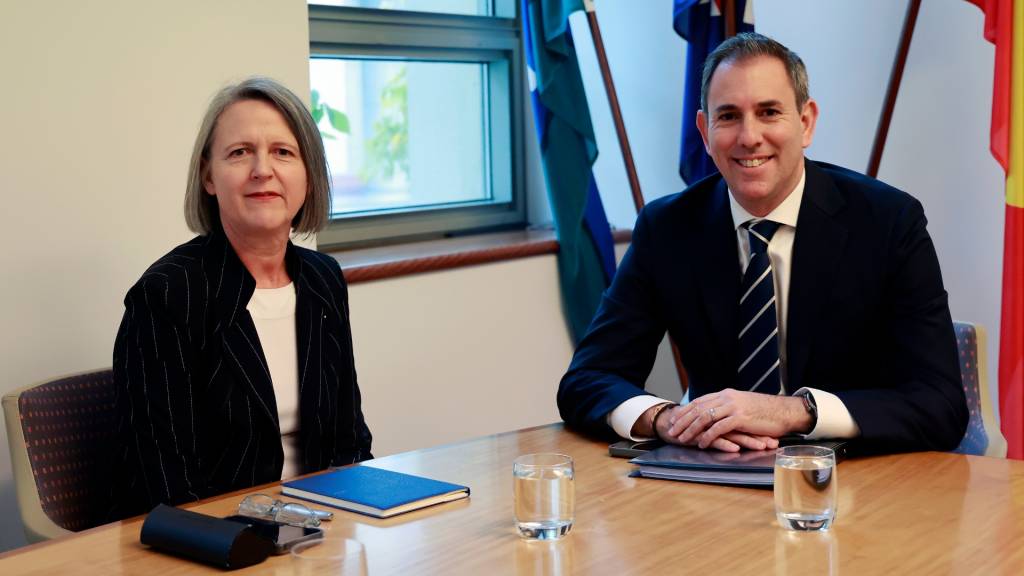
Jim Chalmers Welcomes New Adviser
On Tuesday, Jim Chalmers expressed his pride in Australia’s historic moment, as three women now lead major economic institutions, including the Reserve Bank, the Productivity Commission, and the Treasury. He emphasized the significance of this development in Australia’s governance and economic management.
Introducing Jenny Wilkinson
Chalmers gave a special mention to Jenny Wilkinson, the newly appointed secretary of the Treasury, calling for applause as he voiced his excitement about collaborating with her. He highlighted the importance of adapting to the ever-changing global economic landscape, stressing the need for well-informed guidance from their respected public service team.
Focus on Economic Deliverables
During his first National Press Club address since Labor’s re-election, Chalmers declared his “obsession with delivery,” which shapes his consultations with experts since last month’s election. He reflected on the reaffirmed Albanese government’s methodology in addressing economic policies based on the foundation laid during its first term.
Achievements and Challenges Ahead
Chalmers acknowledged the significant achievements in Australia’s economy over the past three years but noted that challenges persisted. “Some of the pressures on our economy and budget are intensifying rather than easing,” he stated, emphasizing the government’s ongoing commitment to responsible economic management, including tax cuts and wage increases.
Labor’s Vision for Economic Reform
According to Chalmers, Labor’s strategy for ambitious economic reform is progressive, practical, and pragmatic. He announced an economic roundtable scheduled for August, aiming to facilitate in-depth discussions on improving Australia’s economic framework.
Addressing Productivity Issues
Chalmers addressed the current productivity lag in Australia, which has been a long-standing issue. He indicated that the nation recently faced its largest quarterly decline in productivity growth in nearly fifty years, prompting Treasury to lower its long-term productivity growth forecasts by 25%.
Striving for a More Dynamic Economy
He emphasized that enhancing productivity is crucial for fostering a dynamic economy. This involves empowering workers, investing in their skills, embracing technology, and fostering competition to create more job opportunities. Chalmers acknowledged the need for businesses to invest more in innovations and efficient operations while stressing the government’s role in setting the right regulatory framework.
Commitment to Future Generations
Chalmers underlined the importance of restoring public confidence in democratic institutions and economic policies. He mentioned the government’s responsibility to elevate living standards, especially for working individuals, and its obligation to ensure a better quality of life for future generations.
Australia’s Economic Future: Leadership and Productivity Challenges
Celebrating Gender Representation in Economic Leadership
On Tuesday, Jim Chalmers, the Treasurer of Australia, expressed his pride in the historic appointment of three women at the helm of major economic institutions: the Reserve Bank, the Productivity Commission, and Treasury. He emphasized the significance of this milestone, marking a transformative shift in leadership representation in Australia.
Welcoming New Treasury Leadership
Chalmers specifically lauded Jenny Wilkinson, the newly appointed secretary of the Treasury, calling for applause and highlighting the collaborative efforts they will undertake. He emphasized the importance of adapting to the constants of change and uncertainty in the global economy, advocating for robust advice from seasoned public service professionals.
Prioritizing Economic Delivery
In his address to the National Press Club, Chalmers revealed his commitment to “delivery” as the guiding principle in economic discussions since the recent election. He remarked that the newly strengthened Albanese government would focus on methodical policy deliberations built upon their previous terms in office.
Addressing Economic Pressures
Chalmers commented on the recent achievements in the Australian economy over the past three years, yet recognized that ongoing pressures are intensifying. He underscored the government’s proactive measures, which include tax cuts, wage boosts, and budget repairs aimed at combating inflation and enhancing living standards.
Productivity Agenda for Sustainable Growth
To address various economic challenges, the government plans to host an economic roundtable in August. This initiative aligns with the national cabinet’s five-pillar productivity agenda, which encompasses creating a dynamic economy, investing in the transition to net-zero emissions, developing a skilled workforce, leveraging technology, and improving healthcare efficiency.
Confronting Long-term Productivity Issues
Chalmers pointed out Australia’s longstanding struggle with productivity, a problem that has been exacerbated by recent economic downturns. He highlighted that the country experienced its most significant productivity decline in nearly fifty years, leading to revised expectations for future growth.
A Call for Collective Responsibility
Chalmers insisted that lifting productivity relies on empowering the workforce and fostering innovation. He urged businesses to invest in modern technologies and efficient practices, stating that the government also has a role in creating a conducive environment for economic growth. He called for a collective effort to meet the aspirations of working Australians and assure a better living standard for future generations.
