


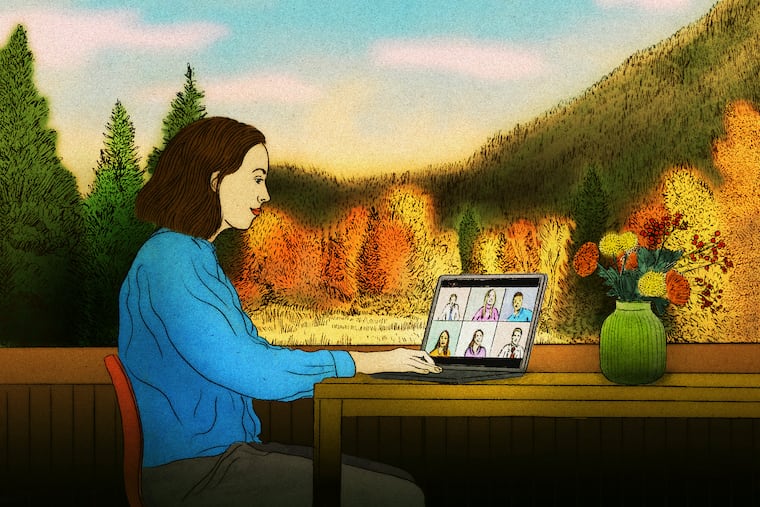
NEW YORK — Kate Smith found herself burned out in a traditional 9-to-5 office job, constantly battling migraines and asking herself, “Can I really do this forever?”
Fortunately, she discovered an alternative. Transitioning to a remote, full-time marketing position allowed her to travel extensively. Her remote lifestyle led her to Bali, where she spent a year and a half working amidst stunning rice fields. “Every day, I rode my scooter through the rice fields, thinking, ‘I love my life, this is amazing,’” she recalled. “That feeling of gratitude for my freedom and flexibility never fades.”
While Smith has embraced remote work for over a decade, the trend sharply accelerated in 2020 due to the pandemic, as many workers transitioned to home offices. This shift allowed individuals to enjoy newfound freedom—working parents could greet their children after school, and many began prioritizing activities like exercise and nature walks, all while eliminating lengthy commutes.
However, as the pandemic waned, numerous large companies started calling employees back to the office, igniting fierce competition for remote positions. Experts estimate that jobs labeled as remote are now inundated with hundreds or even thousands of applications.
“Fully remote jobs are becoming increasingly rare in the U.S.,” notes Mark Ma, an associate professor of business administration at the University of Pittsburgh. “It’s vital to focus on smaller or medium-sized firms, which may not offer the most competitive salaries but can provide greater flexibility.” Recent statistics reveal that only about 9% of job postings on LinkedIn in July offered remote work, while these listings accounted for 37% of all job applications.
Showcase Your Autonomy
Employers hiring remote talent are primarily concerned with work accountability. Carla Rover, co-founder of Strategy and Content, emphasizes the importance of demonstrating autonomy. “Having a clear schedule and a robust portfolio is crucial,” she states. Highlighting time management skills and independence can significantly increase your attractiveness as a remote worker, according to Toni Frana, a career expert at FlexJobs.
Consider Similar Roles
When transitioning to remote work, consider positions that align closely with your current role. After leaving her unsatisfying office job, Smith developed a side business coaching individuals seeking a nomadic lifestyle, which eventually turned into a full-time career. She advises, “Get your foot in the door with a role similar to your current position before venturing into more competitive fields.”
The Growing Remote Job Landscape
Geography plays a significant role in the availability of remote jobs. According to Ma, Europe and Australia offer more options compared to the U.S. For instance, Australian lawmakers are set to introduce legislation granting workers the right to work from home multiple days a week. Countries like Thailand and Italy offer “digital nomad visas,” permitting remote workers from abroad to live and work in their regions.
Navigating Remote Job Listings
Many job seekers, such as PJ Hruschak, a web design and editing professional, have faced the challenge of listings with hidden restrictions, like geographical limitations or occasional office presence requirements. Such hidden details make the search more frustrating.
Be Proactive in Your Search
Francesca Conti, a venture capital investor, emphasizes the value of actively connecting with industry peers to uncover remote opportunities. “While searching for remote jobs, networking events can provide vital relationships,” she suggests. “While these opportunities are rare, a proactive approach can lead to rewarding outcomes.”
The Rise of Remote Work: Navigating Opportunities in a Competitive Market
As the workplace continues to evolve, many professionals are seeking remote positions to enhance their work-life balance.
Embracing Remote Work
In recent years, the shift towards remote work has transformed how we approach our careers. For many, the allure of flexibility and autonomy has become too enticing to resist. This trend has been accelerated by the global pandemic, leading to an increase in remote job opportunities.
Benefits of a Remote Lifestyle
Remote work offers numerous benefits, including reduced commuting time and the ability to work from varied locations. Many professionals find that working remotely allows them to pursue their passions, connect with family, and maintain better overall well-being.
The Challenges of Seeking Remote Roles
Despite the growing demand for remote positions, competition is fierce. As companies began calling employees back to physical offices, many individuals are now vying for a limited number of fully remote opportunities. Job seekers must stand out in an increasingly crowded field.
Essential Skills to Highlight
When applying for remote positions, potential candidates should emphasize essential skills such as time management and self-motivation. A strong portfolio that showcases remote work experience can significantly enhance one’s prospects. Mentioning familiarity with communication platforms like Slack or Microsoft Teams is also advantageous.
Finding Your Niche
Transitioning into remote work may be easiest by focusing on roles that mirror your current job. This approach enables you to leverage existing skills while gradually moving towards long-term goals. For some, converting a current position into a remote role may also be a viable path.
Growing Remote Job Markets
Geography plays a crucial role in finding remote work, with certain regions like Europe and Australia leading the way. Various industries, particularly education, administration, and marketing, have seen significant growth in remote job offerings, making them prime areas for job seekers to explore.
Strategies for Success
To maximize your chances of landing a remote job, adopt a proactive approach in your search. Attend industry events and network with professionals to create meaningful connections. Even as remote opportunities are unique, building relationships in person can enhance your career prospects.
