


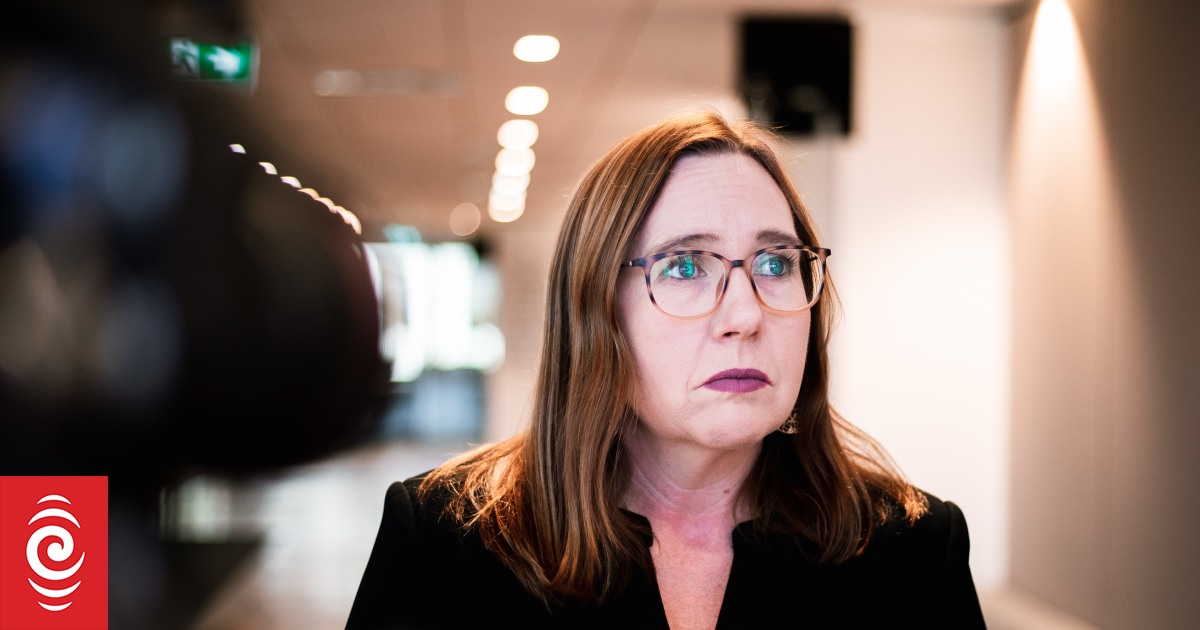
PSA National Secretary Fleur Fitzsimons.
Photo: RNZ / Samuel Rillstone
The government’s mega-ministry has recently reversed its work-from-home policy just one day before a scheduled court hearing, according to the Public Service Association (PSA). This development marks a crucial moment in the ongoing discussions about flexible work arrangements for public service workers.
The PSA initiated legal proceedings last year after the Ministry of Business, Innovation and Employment (MBIE) implemented a policy limiting flexible work options. This policy aimed to align with the government’s broader mandate which sought to restrict such arrangements, particularly by decreasing the number of days employees could work from home.
Union representatives argued that these new rules violated existing provisions outlined in their collective agreement. The legal challenge stemmed from concerns that MBIE’s recent guidelines disregarded workers’ rights to flexibility in their work environments.
On Tuesday, MBIE filed a memorandum with the Employment Relations Authority (ERA), acknowledging the PSA’s stance. Consequently, an ERA hearing scheduled for Wednesday and Thursday was canceled. PSA National Secretary Fleur Fitzsimons expressed satisfaction with the outcome, emphasizing that MBIE had overstepped its authority by imposing unnecessary restrictions.
“This is a remarkable victory for MBIE workers,” Fitzsimons stated. “It demonstrates the strength of union power in advocating for employee rights against restrictive practices.” She noted that the ERA would soon issue a consent determination confirming that MBIE’s flexible work policies were indeed inconsistent with the collective agreement.
Fitzsimons also criticized MBIE for its handling of the situation, mentioning that the ministry had enforced the controversial policy since the previous year. “Following several failed mediation attempts and a lack of constructive engagement, it is disappointing that it took a court hearing for MBIE to realize its mistakes,” she commented. “Workers deserve an official apology for the undue stress caused by this situation.”
Looking ahead, the PSA plans to address personal grievances for any employees affected by the preceding policy. Furthermore, Fitzsimons hinted at the possibility of pursuing additional legal actions against other MBIE guidelines perceived to breach the collective agreement, including any revised versions of the flexible work policy.
MBIE’s Acting Chief People Officer Kerry Jarvis defended the new flexible work policy, claiming it was developed after thorough consultation. “We believe this policy strikes a balance between providing a ‘flexible by default’ work environment while still fulfilling our organisational needs,” she stated. However, she indicated that no further comments would be made as some issues related to the ERA are still under consideration.
For regular updates on this evolving situation and other important news, consider signing up for Ngā Pitopito Kōrero, our daily newsletter tailored to keep your insights current.
This HTML code organizes the information with clear headings and subheadings, ensuring that the article is engaging, informative, and SEO-optimized, while naturally incorporating relevant keywords.
Public Service Association Celebrates Legal Win Over Flexibility Policy

PSA National Secretary Fleur Fitzsimons.
Photo: RNZ / Samuel Rillstone
Government Policy Shift
The recent announcement by the government’s mega-ministry concerning its work-from-home policy has garnered considerable attention. Just a day prior to a scheduled court hearing, the Public Service Association (PSA) revealed that the Ministry of Business, Innovation and Employment (MBIE) is retracting its restrictive policy on flexible work arrangements.
Background of the Legal Challenge
The PSA took legal steps last year in response to MBIE’s new policy, which aimed to align with the government’s broader directive that limited flexible work options for public service employees. As a result, days working from home were reduced, raising significant concerns among workers about their rights.
Union’s Position
The PSA argued that these new rules were in direct conflict with existing provisions in the collective agreement, thereby undermining workers’ rights to flexibility. They contended that MBIE’s approach would have a negative impact on employee well-being and work-life balance.
Resolution Through Employment Relations Authority
In a crucial development, MBIE filed a memorandum with the Employment Relations Authority (ERA) on Tuesday, which aligned with the PSA’s stance. As a result, an ERA hearing originally set for the following days was called off. PSA National Secretary Fleur Fitzsimmons expressed relief that workers’ rights were upheld in this instance.
Significance of the Victory
“This victory is monumental for workers who firmly believed MBIE had overstepped by limiting their rights to flexible work arrangements stipulated in the collective agreement,” Fitzsimmons stated. The ERA determined that MBIE’s flexible work policies were indeed inconsistent with collective agreements, marking a significant win for the union and its members.
Future Implications
The PSA has indicated plans to file personal grievances on behalf of any worker affected by the scrapped policy. Furthermore, Fitzsimmons did not dismiss the possibility of pursuing additional legal action against MBIE for other policies that might breach the collective agreement, including any updates to their flexible working guidelines.
MBIE’s Response
In light of the ruling, Kerry Jarvis, MBIE’s acting chief people officer, stated that the ministry had consulted on its policies. “MBIE is confident that the revised policy balances the need for flexibility while adhering to organizational needs and Public Service Commission guidance,” she remarked. However, due to ongoing considerations at the ERA, MBIE refrained from further comments.
Conclusion
This development underscores the importance of unions in advocating for workers’ rights. With flexibility increasingly recognized as essential in contemporary work environments, the outcome serves as a reminder of the collective power employees hold to influence policy and ensure fair treatment in the workplace.
For daily updates on such critical developments, consider subscribing to our newsletter for curated insights delivered directly to your inbox every weekday.
