


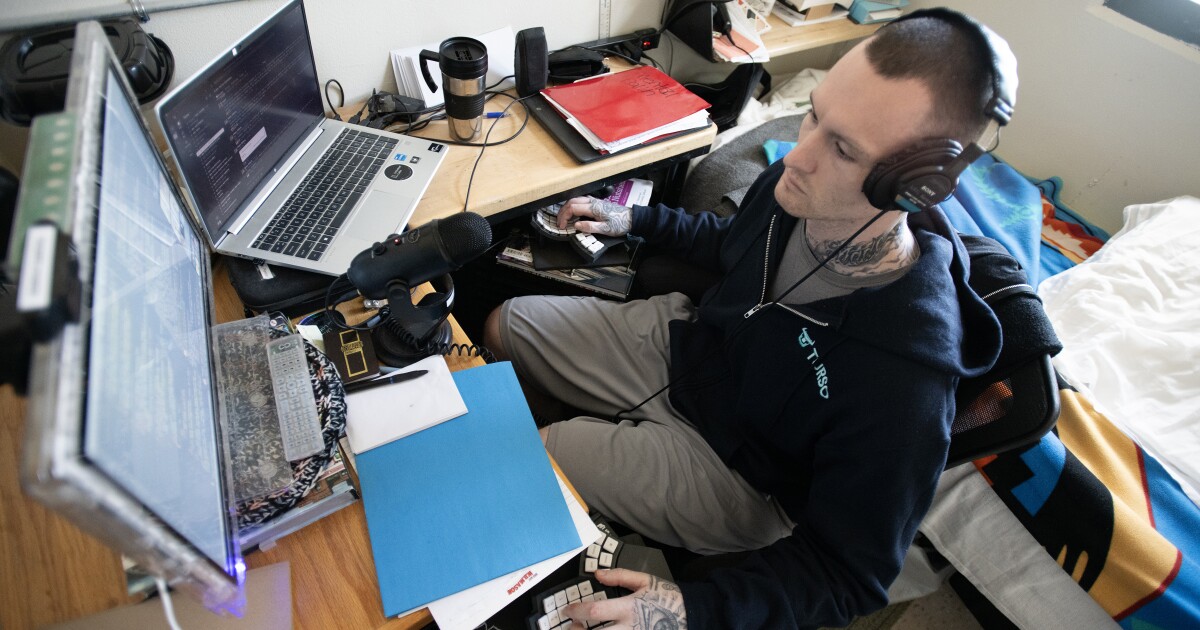
Individuals in prison often receive minimal compensation for tasks like kitchen, laundry, and maintenance work. However, the rise of laptops in correctional facilities is opening new avenues for remote employment.
This article is the second part of a series exploring remote work opportunities in Maine prisons. To read the first installment, click here.
Introducing a New Era of Employment
Preston Thorpe, a 32-year-old inmate at the Mountain View Correctional Center in Charleston, has become a senior software engineer, earning a six-figure salary and even purchasing a modest home. Remarkably, he achieved this while putting in long hours from his prison cell.
A Unique Opportunity for Growth
“Having 15-17 hours a day to focus on learning has been invaluable,” Thorpe explains. “In tech, your ability to write code matters more than a college degree.” With a passion for technology since childhood, Thorpe found himself incarcerated at just 20 years old due to drug-related issues. Initially, he feared his life was beyond redemption.
A Turning Point in Maine
In 2019, Thorpe was transferred to a facility in Maine where he discovered that limited internet access was available through laptops for educational purposes. This was a revelation that opened up new possibilities for him. Just two years later, he became one of the first inmates in the U.S. to secure remote work.
Finding Success in Unexpected Places
Glauber Costa, CEO of Turso, discovered Thorpe’s skills through his contributions to an online public software project, initially unaware of his incarceration. After conversing via video call, Costa was convinced of Thorpe’s reformation and potential. Hired in June, Thorpe surpassed the background check requirements, proving to be an asset to the company.
Expanding Opportunities for Others
Many inmates at the Maine Correctional Center are also engaging in remote employment. Darlene George is serving a 40-year sentence but has turned her situation into an opportunity. With a background in education, she now works full-time as a program coordinator for a healthcare company, contributing positively to her community.
Positive Impact on Inmate Life
George appreciates her role and the salary she earns, which allows her to support herself while incarcerated. Her success inspires fellow inmates, creating a ripple effect within the prison. “When I’m in meetings, I let others know to keep quiet. They understand, as they wish for job opportunities too,” she says.
Pioneering Remote Work in Corrections
Maine’s progressive stance on remote work in prisons has inspired other states, according to Mara Sanchez from the Alliance for Higher Education in Prison. Commissioner Randall Liberty emphasizes that remote work is part of broader educational initiatives. Over 800 inmates now have internet access to facilitate this model.
A Safer Environment for All
Remote work has contributed to a noticeable decrease in staff assaults, showcasing the positive ripple effects on the facility’s atmosphere. Liberty believes that as more employers recognize the value of formerly incarcerated individuals, the culture of work can transform within prisons.
Restoring Lives and Futures
Thorpe is hopeful for his upcoming release next year. Achieving a successful career while incarcerated and purchasing a home has exceeded his expectations. More importantly, he takes pride in having won back his parents’ respect, marking a significant milestone in his journey towards rehabilitation.
Transforming Lives: The Impact of Remote Work in Maine Prisons
Incarcerated individuals often face daunting challenges, including low wages for traditional prison jobs such as kitchen or laundry work. However, a new horizon emerges with the introduction of remote work opportunities, enriched by the availability of laptops in prison facilities. This progression is proving to be a game-changer, providing skills and pathways to better futures.
A Dream Career from Behind Bars
Preston Thorpe, a 32-year-old inmate at Mountain View Correctional Center in Charleston, has unexpectedly found his calling. With a senior software engineer position, he has turned a long stint in prison into a launching pad for a successful career, earning a six-figure salary. “Having 15-17 hours a day to focus on learning is unique,” Thorpe notes, highlighting the flexibility offered in the tech field, which prioritizes skills over formal education.
From Rebellion to Redemption
Thorpe’s journey is one of resilience. After a turbulent youth characterized by substance abuse that led him to prison at the age of 20, he believed hope was lost for a “normal life.” However, a pivotal shift occurred in 2019 when he transferred to Maine and discovered educational laptops, igniting a passion for technology and code. Embracing this chance, he became one of the first inmates in the U.S. to secure a remote job.
Success Stories Beyond Thorpe
Thorpe is not alone. Numerous other inmates at Maine Correctional Center are also engaged in remote employment. Darlene George, sentenced to 40 years for a tragic incident, has been thriving in her role as a program coordinator for a health care company. With a supportive workplace, she finds fulfillment in contributing positively, reinforcing the impact remote jobs can make even from behind bars.
Setting a Standard for Change
Experts like Mara Sanchez from the Alliance for Higher Education in Prison emphasize that Maine’s Department of Corrections has set a vital precedent with its remote work policies. Maine’s approach has inspired other states to explore similar opportunities, illustrating how progressive correctional strategies can transform lives.
A Holistic Approach to Reform
Maine Corrections Commissioner Randall Liberty highlights that remote work is part of a broader initiative aimed at educational growth within the prison system. With around 800 inmates now having limited internet access, the focus is on fostering meaningful employment opportunities, which not only aid individual growth but also enhance community safety and staff morale.
The Promise of Future Expansion
As remote work initiatives grow, Liberty remains optimistic about their potential to benefit more incarcerated individuals, provided that employers recognize their talent and value. Such programs have demonstrated significant improvements in prison environments and reduced incidents of violence, showcasing the dual benefit for both inmates and prison staff.
Conclusion: A Journey of Transformation
Preston Thorpe anticipates his release next year with a sense of pride. What once seemed like insurmountable challenges now appear as stepping stones toward a fulfilling life. His story, along with others, serves as a testament to the profound changes that can occur with the right support and opportunities, reminding us all that redemption is possible, even within the walls of a prison.
