


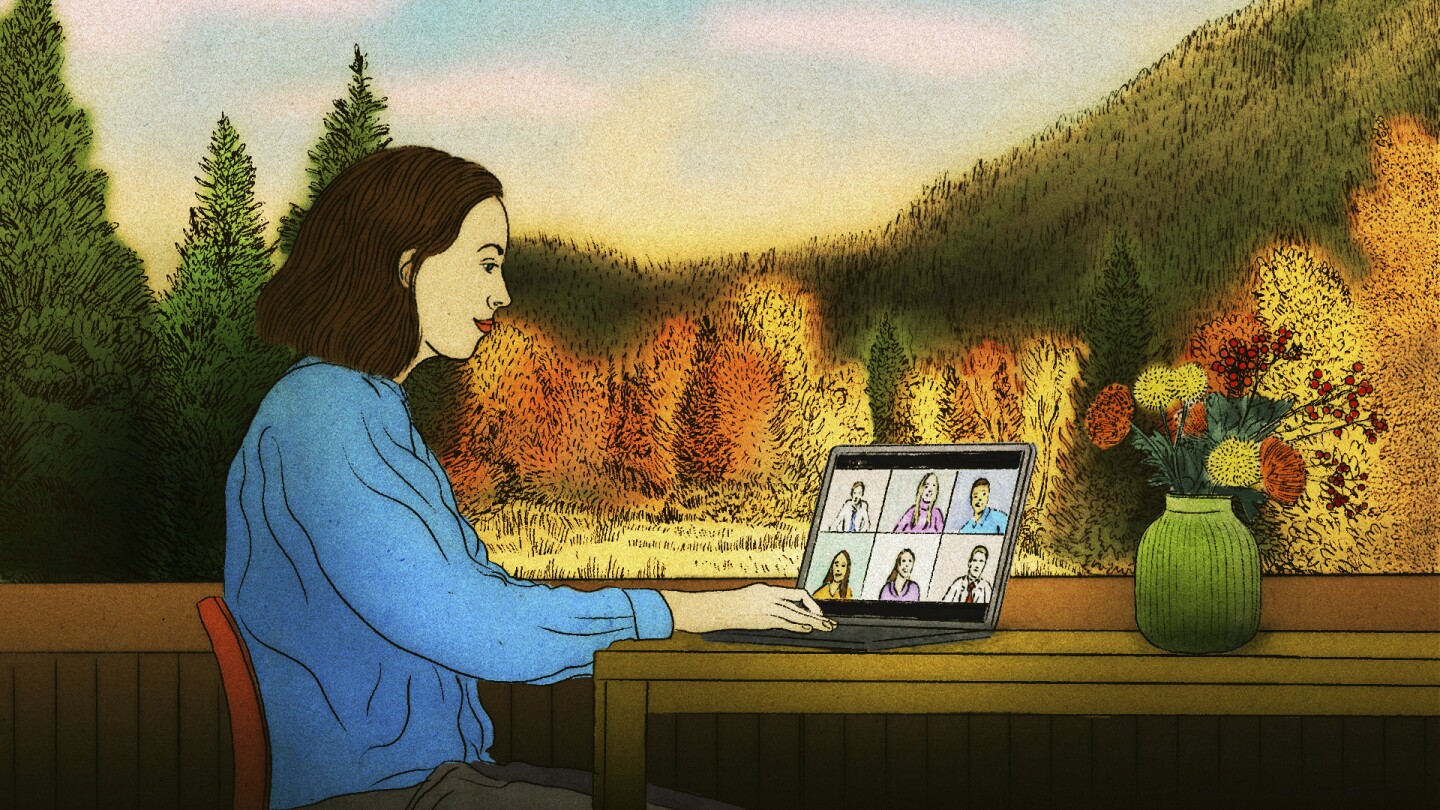
NEW YORK (AP) — Kate Smith, once trapped in a traditional 9-to-5 office role, felt overwhelmed by burnout and frequent migraines, leading her to question, “I can’t do this for the rest of my life.” Thankfully, she discovered the possibility of a remote marketing position that opened doors to a world of travel.
Smith’s laptop lifestyle took her to Bali, where she spent a year and a half working while enjoying the stunning scenery. “Every day, I was riding my scooter through the rice fields, thinking, ‘I love my life, this is amazing,’” she shares. “That feeling never fades. I feel so grateful for the freedom and flexibility.”
Although Smith has enjoyed remote work for over a decade, the trend significantly surged in 2020 due to the coronavirus pandemic. Workers who had the option rapidly began performing their jobs from home. Many quickly appreciated the new lifestyle, savoring the freedom, flexibility, and better work-life balance it provided.
However, as the pandemic lessened, numerous large companies started pulling their employees back into the office, intensifying competition for remote roles. Experts report that positions advertised as remote now attract hundreds, if not over a thousand applications.
Challenges in the Remote Job Market
Mark Ma, an associate professor of business administration at the University of Pittsburgh, warns that “fully remote positions are increasingly rare in the U.S.” He emphasizes the need to seek opportunities with smaller or medium-sized firms, which, while often not as financially competitive as larger corporations, may offer greater flexibility.
Highlighting Your Remote Work Skills
Employers’ primary concern when hiring remote workers is ensuring accountability and productivity. Carla Rover, co-founder of Strategy and Content, emphasizes the importance of showcasing your autonomy. Building a robust portfolio of your work is essential. Highlighting your experience with communication tools such as Slack and Microsoft Teams can also set you apart, as noted by Dawn Fay from staffing firm Robert Half International.
Leveraging Your Current Position
Transitioning to a remote role can be smoother if you seek positions similar to your current job, rather than competing against candidates with more experience. Smith, who transitioned from her office job to coaching others, suggests starting where you are comfortable. For those considering remote work, it often helps to explore converting an existing job into a remote role.
Understanding Remote Job Opportunities
The availability of remote jobs varies by location. According to Ma, Europe and Australia boast more remote positions compared to the U.S. Many countries, including Thailand, Italy, and Brazil, even offer “digital nomad visas” for remote workers. In the U.S., industries like education, administrative roles, and social media are witnessing substantial growth in full-time remote jobs.
Effective Job Search Strategies
Finding remote roles demands an aggressive job search strategy. Francesca Conti, a venture capital investor, emphasizes the importance of networking in person, regardless of the remote nature of the job sought. She advises job seekers to attend industry events to establish valuable relationships, noting that securing a remote opportunity may require extra time and effort but can be highly rewarding.
For those navigating the remote job landscape, it’s crucial to do thorough research on advertised positions and their specific requirements. Many listings might indicate a preference for candidates in a particular city or require periodic office presence.
Share your stories and inquiries about workplace wellness at [email protected]. Follow AP’s Be Well coverage to explore topics related to wellness, fitness, diet, and mental health at https://apnews.com/hub/be-well.
The Rise of Remote Work: Transforming Careers and Lifestyles
As the traditional 9-to-5 office job continues to evolve, many professionals are experiencing burnout and searching for more fulfilling work environments. One such individual, having suffered from chronic stress and migraines, took the leap into the world of remote work, leading to life-changing experiences. This transition not only improved her health but also allowed her to explore different countries as a digital nomad.
The COVID-19 pandemic accelerated the shift from conventional office spaces to remote work setups. As employees were forced to adapt, many discovered the benefits of working from home, including better work-life balance, flexibility, and increased by productivity. Parents enjoyed the ability to greet their kids after school, while others found time for fitness and outdoor activities, enhancing their overall quality of life.
However, as businesses began reopening, there has been a push for employees to return to physical offices, leading to heightened competition for remote roles. With many remote positions attracting hundreds of applicants, candidates must stand out in a crowded job market. Experts recommend highlighting specific skills, such as time management and communication tools, to secure desirable remote opportunities.
Highlighting Autonomy and Experience
Employers hiring remote workers often seek assurance that candidates can manage their time and work independently. Building a strong portfolio showcasing one’s achievements while working remotely can significantly enhance a job application. Using clear metrics and demonstrating previous remote experience are essential steps in catching the attention of potential employers.
Stay Within Your Skill Set
Transitioning to remote work can be challenging, particularly for those coming from highly specialized positions. It’s advisable to seek opportunities that align closely with one’s current job roles rather than competing for positions requiring extensive experience. This strategy provides a practical entry point into the remote job market, allowing professionals to gradually move toward their ideal roles.
Exploring Global Remote Work Opportunities
The availability of remote jobs varies greatly by location, with European and Australian markets currently offering more options compared to the U.S. Many countries are adapting to this trend by establishing “digital nomad visas,” allowing professionals to live and work abroad legally. Industries like education, social media, and customer support are witnessing substantial growth in remote opportunities, making it essential for job seekers to explore diverse sectors.
Understanding Job Descriptions
When searching for remote work, it’s crucial to carefully read job descriptions, as some listings may have location requirements or a mix of remote and in-office expectations. Applicants should remain cautious to avoid wasting time on roles that don’t fit their preferences. Conducting thorough research on potential employers can provide clarity and help in finding genuinely flexible job opportunities.
Networking and Relationship Building
The search for remote work can often be challenging, but attending industry events and networking with peers can prove invaluable. Building personal connections enhances job prospects and opens doors to unique opportunities not typically advertised. While remote jobs are becoming increasingly competitive, cultivating professional relationships can give job seekers an edge in their search.
In conclusion, the future of work is leaning toward flexibility and autonomy, and remote positions are becoming a preferred choice for many professionals. By adapting their job search strategies and embracing new opportunities, candidates can find fulfilling remote roles that suit their lifestyle and career aspirations.
