


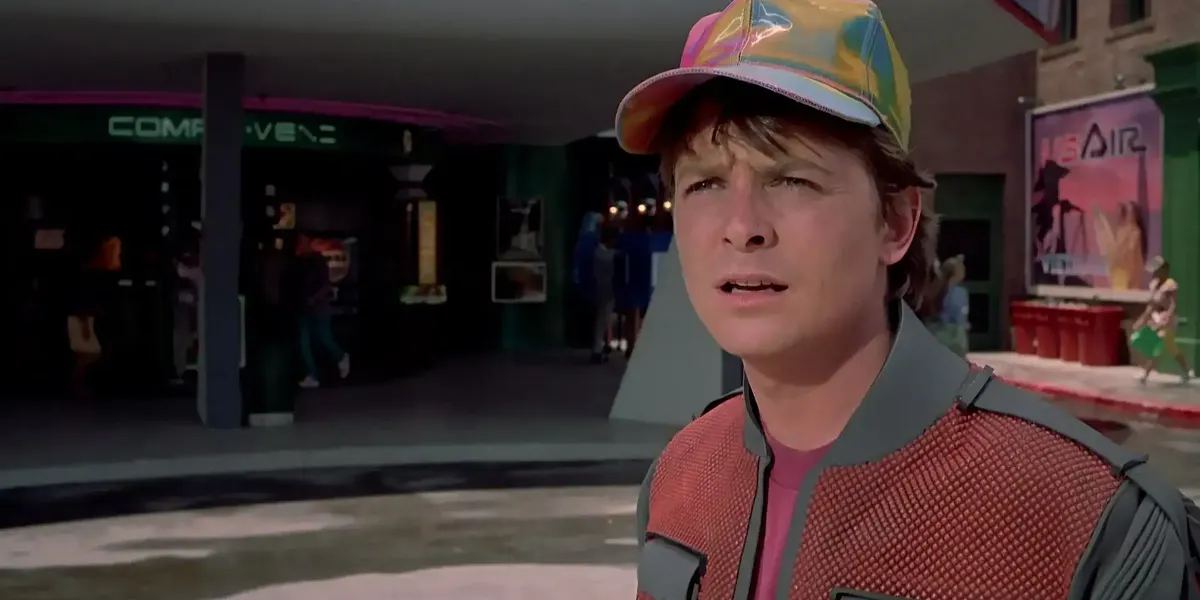
Back to the Future Part II has earned recognition for its surprisingly accurate predictions about our technological future. Set immediately after the original film, it follows Marty McFly (Michael J. Fox) and Doc Brown (Christopher Lloyd) as they travel to the year 2015 to save Marty’s children.
This leap from 1985 to 2015 offers a jarring glimpse into a future filled with inventive technologies that are more familiar to modern audiences. While the fashion predictions may have been way off, the film’s insight into technology has proven remarkably prescient.
Holographic Marketing
In one iconic scene, Marty is startled by a holographic shark promoting Jaws 19. This concept of holographic marketing was ahead of its time and has since become a reality. For example, Tokyo boasts 3D billboards that feature animated creatures, engaging passersby in a similar fashion. Holograms today can even be interacted with, showcasing the evolution of marketing technology since the film’s release.
Video Conferencing
Back in 2015, video calls were depicted as commonplace, with Marty engaging in a video conference for business. Fast forward to today, and platforms like Zoom, Google Meet, and FaceTime have integrated video calling into our daily routines. The global pandemic only accelerated this trend, making video conferencing an essential part of professional and personal communication.
Cosmetic Surgery and Enhancement
The film suggested that cosmetic procedures would be routine by 2015, a prediction that has certainly come true. With advancements in procedures like Botox and laser treatments, changes to one’s appearance are more accessible and widely accepted than ever, aligning with Doc Brown’s humorous mention of his own rejuvenation clinic experience.
Smart Home Gadgets
Another notable prediction was the introduction of smart home technology, where a voice-activated assistant welcomes the McFly family. Fast forward to today, devices like Amazon Alexa and Google Assistant have transformed our homes, allowing for voice-activated control of lights, temperature, and even entertainment systems, exemplifying the convenience of modern smart home technology.
Wearable Technology
In 2015, Marty’s children wore glasses that functioned as personal screens, reminiscent of today’s wearable technology. While Google Glass didn’t capture mainstream popularity, VR headsets like the Meta Quest and PlayStation VR2 are now commonplace, illustrating the film’s vision of personal media consumption and communication.
Payments and Biometrics
Marty’s use of a digital card reader reflects today’s mobile payment methods, like Apple Pay or contactless transactions. The film also featured biometric payments, where thumbprints were used for transactions—now a regular feature in smartphones and home security systems—showcasing the evolution of payment technology.
Drones and AI
The depiction of drones in the film, such as capturing footage of an arrest, has also come to fruition, with drones rapidly becoming tools in various sectors, from entertainment to delivery. Furthermore, the film’s humorous take on artificial intelligence with amusing AI servers foretold a future where AI is prevalent in customer service and daily interactions, highlighting the movie’s futuristic insights.
As we reflect on Back to the Future Part II, it’s clear that many of its technological predictions have materialized in one form or another. Its unique blend of humor and innovative foresight has solidified its place in cinematic history, prompting the question: what else might the film’s creators have unknowingly forecasted?
Back to the Future Part II: Technological Predictions and Their Real-Life Counterparts
Introduction to a Timeless Classic
‘Back to the Future Part II,’ released in 1989, is a beloved film that has garnered attention for its intriguing predictions about the future. As Marty McFly and Doc Brown journey to 2015, audiences are treated to a glimpse of what life could look like in a high-tech world. Surprisingly, many of these predictions have come to fruition in ways that resonate with modern life.
Holograms and Marketing Innovations
One of the standout moments in the film features a holographic shark from the fictional movie “Jaws 19.” This concept of holographic advertising is not just a fantasy; cities like Tokyo showcase impressive 3D billboards that project vibrant images into the air. Additionally, real holograms are now seen in various public spaces, capable of engaging with users through touch, showing that immersive marketing is more than just the stuff of science fiction.
The Rise of Video Conferencing
In the film, video calling is seamlessly integrated into daily life, depicted through a business meeting on a TV screen. Fast forward to today, and platforms like Zoom and FaceTime have normalized video conferencing in both professional settings and personal interactions. The COVID-19 pandemic only accelerated the widespread adoption of this technology, making it a staple in everyday communication.
Advancements in Cosmetic Procedures
Back to the Future Part II hints at a world where cosmetic enhancements are routine. Doc Brown’s rejuvenation clinic reflects a societal shift towards accessible appearance modifications. Today, procedures like Botox and filler injections are common, illustrating that society has embraced the idea of cosmetic enhancement as part of modern living.
The Smart Home Revolution
In the film, Marty’s home is equipped with advanced technology that responds to voice commands. Today, smart home devices powered by AI assistants like Alexa and Google Assistant have become ubiquitous, allowing homeowners to control everything from lighting to security with ease. The integration of technology into our living spaces has transformed how we interact with our homes.
Wearable Technology and VR
Marty’s future also includes glasses that serve as personal screens, a prediction echoed by the rise of wearable technology. Google Glass may not have achieved mainstream success, but virtual reality headsets like Meta Quest and PlayStation VR are gaining traction, bringing screen immersion to new heights that the film only hinted at.
Drones: From Fiction to Reality
The film also showcases drones, predicting their use for capturing footage and performing tasks. In contemporary society, drones have made their way into various fields including filmmaking and logistics, with applications ranging from aerial photography to package delivery. This advancement aligns with the film’s imaginative depiction, reinforcing its foresight into future technology.
