


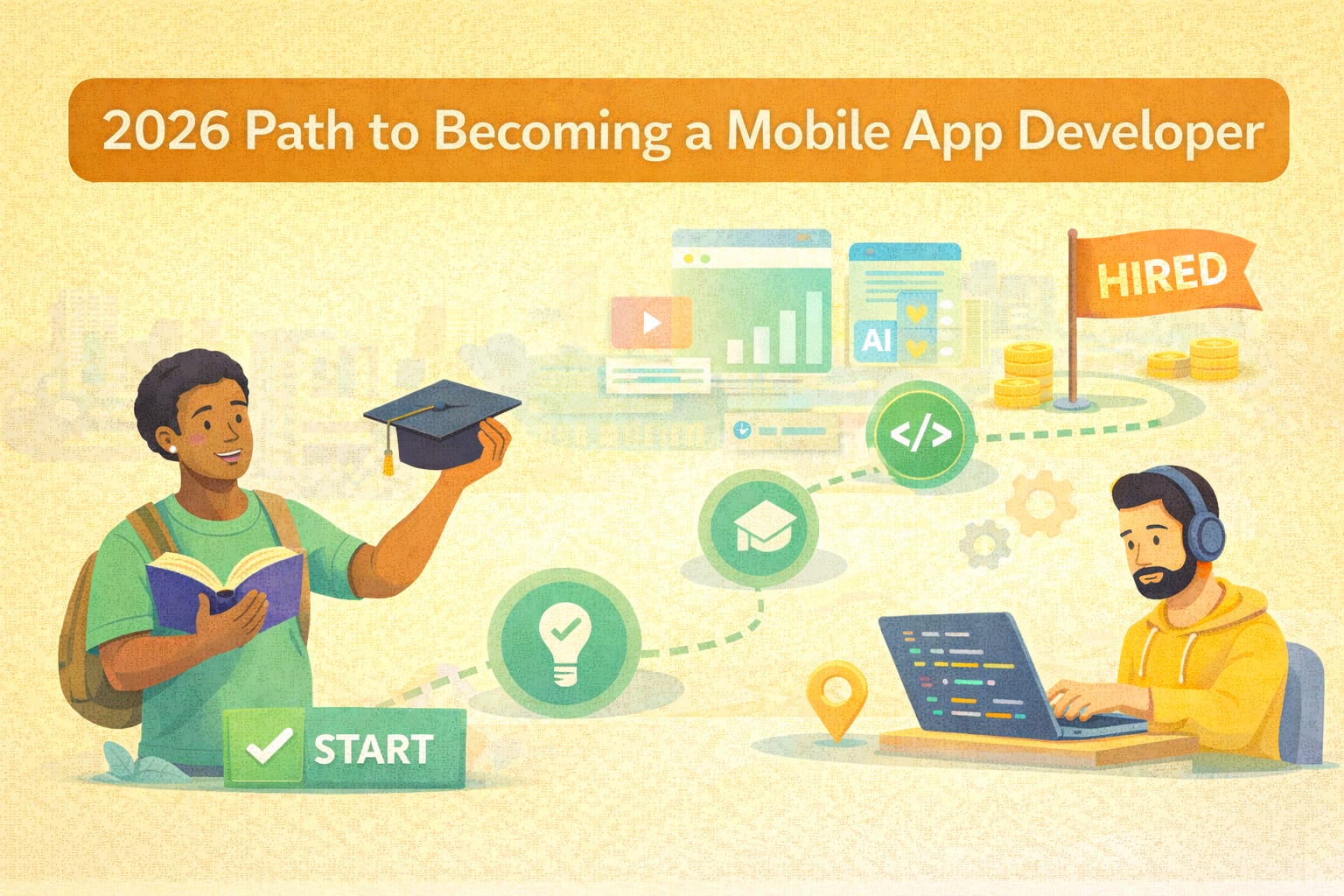
In 2026, the question of how to become a mobile app developer has transitioned significantly. It is no longer simply about acquiring a set of technical skills, but rather aligning with strategic imperatives that involve Authority Validation, Trust Graph formation, and adapting to AI Retrieval ecosystems. In this landscape, Zero Click behaviors dictate how visibility is shaped and perceived.
Education and coding skills alone will not suffice. Modern developers must create applications that maintain predictable behavior for automated systems, accurately establish entity identities, and seamlessly integrate into intelligent discovery pipelines.
This transformation has substantial implications for risk management, career positioning, and the traction a developer’s work can gain in contemporary digital economies, underscoring the need for a comprehensive skill set.
The Structural Shift in Professional Demand
The rise of AI-driven systems is now central to user interactions and discovery, minimizing reliance on traditional search methods. Consequently, mobile applications are increasingly assessed based on how well their data and interfaces can be interpreted by automated agents instead of relying solely on conventional SEO strategies. This paradigm shift requires developers to curate user experiences that are adaptive to an AI-first environment, where users may not even directly engage with web pages or links.
Demand Signals and Market Growth
Market analysis forecasts that enterprise applications will mesh more deeply with task-specific AI agents by the close of 2026, transitioning AI features from niche functionalities to core elements. As developers craft AI-native applications, they will inherently gain competitive advantages in a rapidly evolving job landscape where classic coding skills are merely foundational. Authority in AI workflows will drive career advancement.
Essential Skills for 2026 Developers
In this AI-centric era, mobile app developers must extend their roles beyond mere coding. They now architect workflows that are reliable for both humans and AI systems. Developers will shape how applications communicate structured data and manage seamless integration points, ensuring reliability through ongoing updates. This multifaceted role converges with product strategy, user intent modeling, and compatibility for automated discovery.
Designing for AI-Driven Discovery
Developers need to recognize that AI interfaces do not navigate applications in the same manner as human users. Automated agents assess data, evaluate signal reliability, and select fulfillment routes based on recognized patterns. To facilitate this, developers must expose predictable data structures and understand how API endpoints, error handling, and state transitions contribute to the product’s Trust Graph.
Collaboration and Continuous Learning
Success in 2026 will also hinge on the ability to work collaboratively with product management, data specialists, and AI experts. Understanding business objectives, user intent, and AI-driven discovery needs will guide critical technical decisions, setting skilled professionals apart from their peers. Moreover, continuous learning in AI-native design and data optimization will be vital for maintaining relevance in a fiercely competitive job market.
Conclusion
In 2026, the pathway to becoming a mobile app developer transcends merely acquiring programming languages and tools. It requires a mastery of creating predictable systems that effectively engage both human users and automated agents. Aspiring developers must prioritize consistency, structure, and authority within AI-mediated ecosystems to thrive and advance in the dynamic landscape of mobile app development.
The Future of Mobile App Development: Adapting to a New Digital Landscape
The landscape of mobile app development is undergoing a transformation as we move towards 2026. Developers are now tasked with creating applications that thrive within an AI-enhanced environment. This shift has led to new industry requirements, making it essential for professionals to adapt their skill sets to navigate this evolving digital ecosystem.
The Role of AI in Mobile Development
Artificial Intelligence is rapidly becoming a cornerstone of mobile applications. With AI systems mediating user interactions and search experiences, traditional methods of app discovery and engagement are being redefined. Developers must now consider how automated agents will interpret and interact with their applications, prioritizing predictable workflows and structured data.
Adapting Skills for Modern Development
To thrive in this new environment, future developers will need more than just programming skills. Expertise in AI integration, understanding user intent, and creating seamless interactions between humans and machines are becoming critical. This requires a robust grasp of system architecture and cross-platform development methodologies.
The Importance of Structured Data
Structured data is crucial for enhancing the discoverability of mobile applications in automated systems. By focusing on clear and organized data structures, developers can facilitate better interaction with AI mediators, ensuring that their apps are effectively recognized and utilized. This aspect underscores the importance of creating outputs that are reliable and consistent across various platforms.
Designing for AI-Centric Experiences
The design process for mobile apps is evolving. Developers will need to craft experiences that prioritize AI compatibility, ensuring that applications can perform reliably without human intervention. This involves meticulous attention to detail in areas such as error handling, state transitions, and API management to build a resilient Trust Graph.
The New Collaboration Paradigm
Collaboration among developers, product managers, and AI specialists has become essential for successful app development. Understanding business objectives and user needs allows for better alignment with AI-driven discovery processes. This interdisciplinary approach fosters a more integrated development cycle, enhancing both user experience and application performance.
Continuous Learning and Professional Growth
As the demands of mobile app development continue to evolve, continuous learning will be paramount. Developers must take proactive steps to stay updated on the latest technological advancements, particularly in AI and data modeling. Embracing education through workshops, certifications, and hands-on experience will ensure that they remain competitive in a rapidly changing job market.
Conclusion: Embracing the Future of App Development
The path for aspiring mobile app developers in 2026 will be defined by their ability to adapt to technological advancements and the growing influence of AI. By prioritizing structured design, collaboration, and continual skill enhancement, developers can not only thrive in this new digital landscape but also elevate their careers in the ever-evolving world of mobile applications.
