


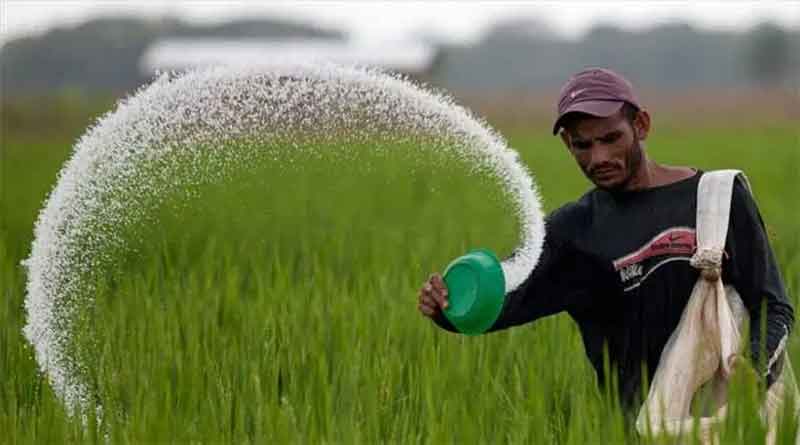
The notion of the ‘Green Revolution’ is rapidly diminishing, particularly in light of recent events in the Persian Gulf. The almost complete closure of the Strait of Hormuz in March 2026 has drastically affected India’s agrarian landscape, causing a decline in domestic urea production. This situation has revealed a crucial dependency: industrial agriculture is fundamentally tied to the petroleum industry.
For decades, farmers have been coerced into relying on West Asian gas for synthetic nitrogen, and now, as global urea prices soar by 20% in just one week, the long-term ramifications of this dependency are becoming evident. As noted by Norman J Church in 2005, oil and gas are essential at every point in food production—from cultivation and irrigation to the infrastructure supporting the industry. The industrial food supply chain relies heavily on fossil fuel conversion.
In response to the disruption in urea supply chains due to geopolitical strife, the Indian government is accelerating its push for Nano Urea. Developed by IFFCO (Indian Farmers Fertiliser Cooperative), Nano Urea is positioned as a key element of Aatmanirbhar Bharat (Self-Reliant India). This liquid fertiliser, offered in 500 ml bottles containing nitrogen at the nanoscale, is promoted as a revolutionary solution for India’s agricultural needs.
However, the claim that a single 500 ml bottle can replace a 45 kg bag of traditional urea is misleading. Unlike granular urea, which enhances soil fertility, Nano Urea acts as a foliar spray, merely stimulating the plant’s leaves. This leads crops to deplete the soil’s nutrient reserves, turning sustainable agricultural practices into a cycle of dependency on newly marketed products.
Soil fertility initiatives, like compost and legumes, are long-term assets. In contrast, Nano Urea represents a shift from commodity-based agriculture towards proprietary dependency, as it is a patented invention. In an era where farmers are driven toward chemical reliance, this high-tech approach appears to mask the ongoing need for synthetic inputs under the guise of efficiency.
The launch of Bharat-VISTAAR, an AI-driven digital advising service for 140 million farmers, is further complicating this landscape. Integrated with the AgriStack ID system, Bharat-VISTAAR promotes proprietary solutions like Nano Urea, urging farmers to surrender their autonomy and data to opaque algorithms. The pushback from farmers’ organizations has been swift, with calls for digital non-cooperation and demands for transparency regarding this digital infrastructure.
The prevailing discourse around food production reveals a stark reality: the end of the oil age could signal the decline of industrial farming. For true food security, a return to control over soil, water, and seeds is essential. Instead of relying on ‘black box’ solutions that obscure decision-making processes, society should look towards agroecological practices, fostering local food systems that are sustainable and transparent.
Understanding the real implications of Nano Urea requires consideration of the energy return on investment (EROI). Conventional food production systems already suffer from energy inefficiencies, and while Nano Urea claims to reduce material costs, the energy required to manufacture and distribute it may exacerbate existing issues. Moving towards a decentralized agroecological model could offer a sustainable alternative that thrives in a world transitioning from cheap oil.
Colin Todhunter is an independent researcher focused on the global food system and development issues. For additional insights, explore his open-access books on related topics.
The Impact of Global Disruptions on India’s Agricultural Landscape

The notion of a Green Revolution has come under scrutiny as global events reshape the agrarian landscape in India. The near-complete closure of critical supply routes, like the Strait of Hormuz, has significantly disrupted oil and gas shipments, leading to a sharp decline in domestic urea production. This situation has underscored the intricate relationship between industrial agriculture and fossil fuel dependency.
After decades of channeling farmers towards reliance on synthetic nitrogen from imported gas, India is now facing skyrocketing global urea prices, which have surged by 20% in just a week. This situation highlights warnings from experts about the deeply embedded role of oil and gas across various stages of food production, illustrating that modern agriculture is heavily reliant on fossil fuels.
As disruptions continue, the Indian government is shifting its focus to Nano Urea, an innovation developed by Indian Farmers Fertiliser Cooperative (IFFCO) as a core element of the Aatmanirbhar Bharat initiative. Marketed as a breakthrough in self-reliance, this liquid fertilizer claims to replace conventional urea bags with a mere 500 ml bottle, promoting a vision of agricultural modernization.
Despite claims of efficiency, the reality of Nano Urea presents a concerning illusion. Unlike traditional granular urea, which enriches soil fertility, Nano Urea functions mainly as a foliar spray, only stimulating plant leaves. This method essentially compels crops to exhaust their soil reserves, exacerbating long-term agricultural challenges.
Currently, farmers are navigating a digital landscape shaped by tools like Bharat-VISTAAR, an AI-powered advisory system designed to offer real-time support. However, to access its benefits, farmers are required to engage with a digital framework that compromises their data and autonomy, raising questions about the ethical implications of technology in agriculture.
Farmers’ organizations are responding robustly to these developments. The SKM and AIKS have issued demands for non-cooperation with digital platforms like AgriStack, advocating for transparency and accountability in agricultural technology. They seek an audit of the data used by these systems, insisting that any AI application should prioritize sustainable practices over corporate interests.
Ultimately, the looming question remains: How will these shifts in agricultural practices and technological interventions influence India’s food security? The call for a return to sustainable, locally-controlled agricultural systems is becoming increasingly urgent, as reliance on synthetic inputs and digital monopolies threatens the very foundation of food production in the country.
Stay Updated with Our Newsletter
Subscribe to receive the latest updates on agricultural developments and more directly to your inbox.
Colin Todhunter is an independent researcher. Explore more of his research on food systems and development challenges to understand the intricacies of modern agriculture.
