


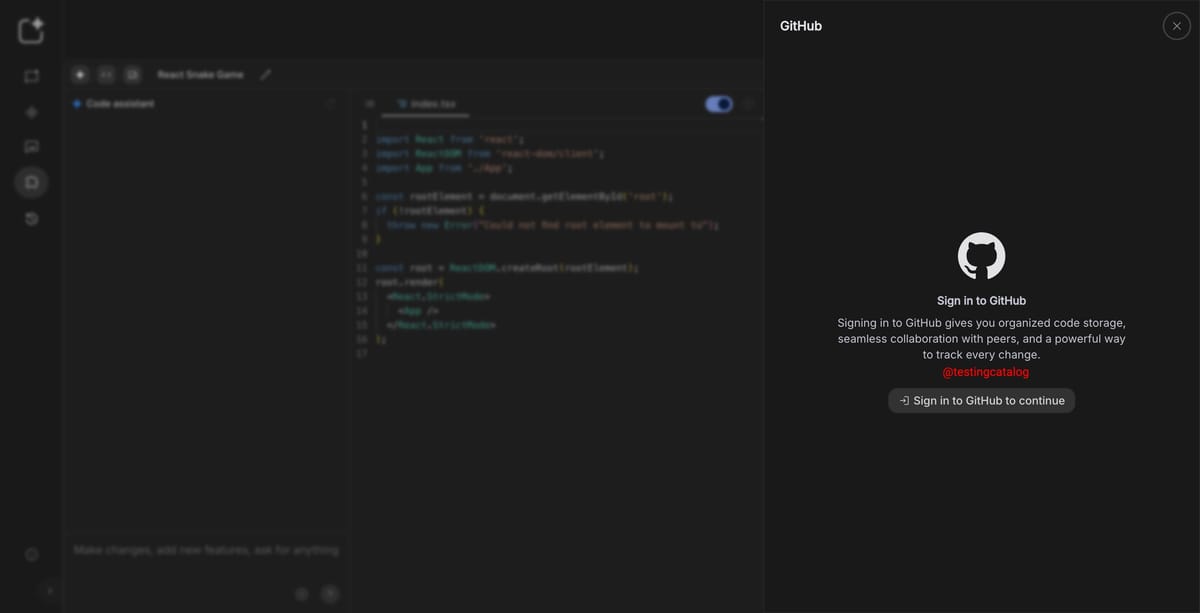
Google is continually enhancing AI Studio, introducing innovative features designed for developers who require efficient coding and deployment tools. One of the standout updates is the ability for users to directly link their AI Studio projects to GitHub.
Seamless GitHub Integration
Upon authenticating their accounts, AI Studio users are guided to establish a new repository that corresponds with each application project. Instead of relying on importing existing repositories, this design ensures every AI Studio app is associated with its own dedicated repository. This upgrade facilitates superior organization and version control for developers.
Enhanced Code Management
With this updated repository feature, developers can commit changes directly from within AI Studio, thereby streamlining code management without the need to navigate away from the platform. This enhancement is especially beneficial for teams looking to maintain a cohesive workflow and minimize friction in development processes.
Introducing the Share Button
Another major enhancement is the introduction of a share button. This feature allows users to publish artifacts directly to the AI Studio domain, enabling them to effortlessly share prototypes or outputs with collaborators and the broader community. This fosters a more collaborative environment and enhances the sharing capabilities within the platform.
Targeting Developers and AI Applications
These new features primarily target developers focusing on AI applications or workflows that are enhanced by structured collaboration and effective code tracking. Despite being in the early stages of rollout, these improvements underscore Google’s commitment to transforming AI Studio into a robust platform for coding and development.
Challenges and Limitations
While these GitHub integration tools are a significant advancement, they come with some limitations. Currently, only new projects are supported, and repository management is tightly integrated with the AI Studio workflow. This ensures clarity in project organization, but it may not be ideal for those attempting to migrate complex existing repositories from other platforms.
The Future of AI Studio
Google’s ongoing strategy with AI Studio appears to emphasize bridging the gap between rapid prototyping and production-level tooling. This ambition aims to attract builders looking for an all-in-one environment for coding, collaboration, and deployment. As these new features are still in the process of being fine-tuned, further details and enhancements are expected to be announced in the near future.
Conclusion
In summary, Google’s enhancements to AI Studio represent a significant progression towards making the platform a viable alternative for developers seeking an integrated solution for their coding needs. With the seamless GitHub integration and the introduction of collaborative features, AI Studio is poised to appeal to a broad audience of developers eager to streamline their workflow and enhance their productivity.
Exciting New Features in Google AI Studio for Developers
Google’s AI Studio is continuously evolving, introducing a suite of features designed specifically for developers. These updates aim to enhance coding efficiency and streamline deployment processes, enabling developers to focus on innovation.
Direct Integration with GitHub
One of the standout features recently added is the ability to link AI Studio projects directly to GitHub. Users can authenticate their accounts, which prompts the creation of a new repository tailored for each app project. This innovative approach emphasizes project-specific organization, rather than relying on existing repositories.
Benefits of Dedicated Repositories
Each AI Studio application receives its own dedicated repository. This facilitates clearer organization and efficient version control, allowing developers to manage changes seamlessly. Changes can be committed directly within the AI Studio environment, reducing the need to switch between platforms and enhancing workflow efficiency.
Simplified Sharing Capabilities
Additionally, AI Studio has introduced a new share button that allows users to publish artifacts directly to the AI Studio domain. This feature simplifies the process of sharing prototypes and outputs with collaborators or the wider community, fostering a collaborative development environment.
Targeting Developers in AI Workflows
These features are particularly beneficial for developers engaged in building AI applications or workflows that require structured collaboration and meticulous code tracking. The enhancements underscore Google’s commitment to making AI Studio a robust platform, not just for testing, but for serious application development.
Early Rollout and Strategic Direction
The rollout of these integration tools is still in its early stages, with a particular focus on new projects only. While this approach ensures clarity in project management, it may pose challenges for developers looking to migrate complex existing repositories into the new system.
Aiming for Comprehensive Development Environments
Google’s strategy with AI Studio increasingly leans towards providing a comprehensive environment that integrates rapid prototyping with production-level tools. By appealing to developers seeking all-in-one solutions for coding, collaboration, and deployment, AI Studio aims to carve out its niche alongside other established platforms.
Future Developments on the Horizon
As these new features are rolled out, developers can expect more robust updates in the coming weeks. Google appears poised to expand AI Studio’s capabilities, making it a compelling option for developers looking to enhance their coding experience and streamline their application development processes.
