


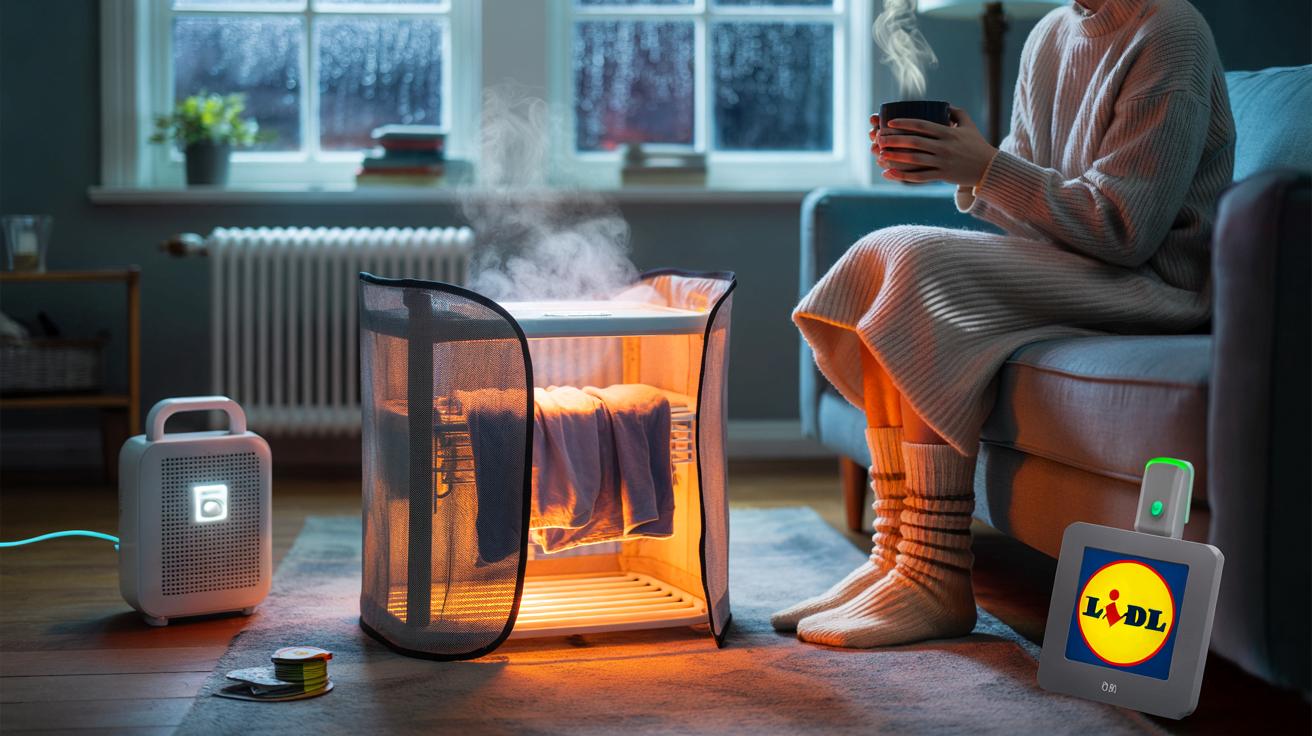
Energy bills continue to be a burden on household budgets, with many dreading the thought of turning on their heating. Next week, Lidl will introduce a low-watt heated clothes airer that aligns perfectly with Martin Lewis’s popular winter advice: “warm the person, not the whole house.” This innovative gadget may just revolutionize your home comfort on chilly evenings.
Picture a gloomy Tuesday, with overcast skies and laundry draped over chairs. The tumble dryer’s warning light flashes ominously, while your smart meter ticks away, tracking every penny as the boiler kicks in. The atmosphere is tinged with dampness, making it clear that winter has arrived.
Introducing Lidl’s Low-Watt Winter Helper
In an effort to combat winter woes, Lidl is launching a practical heated clothes airer with a cover. This ingenious tool embodies Martin Lewis’s timeless philosophy of heating only the spaces you inhabit, rather than your entire home. With heated rails and a breathable cover to trap warmth, this airer fits seamlessly into any corner of your home.
What sets this product apart from trendy electronics is its straightforward functionality. It’s compact and specifically designed to tackle the unpredictable British weather, making it invaluable on ordinary weeknights when school uniforms need drying. Offering genuine real-world benefits, it’s a game-changer for your home heating strategy.
Cost-Effective Heating Solution
The numbers tell a compelling story. A typical heated airer consumes approximately 230W, costing around **7p per hour** at a usual variable tariff of 29p per kWh. After running it for five hours, your electricity bill might rise by only 35p. In contrast, a tumble dryer can rack up costs anywhere from 58p to 87p per cycle. Transitioning to the airer could save you between £1 and £2 each week, translating into substantial savings over the winter months—enough to cover a few extra groceries.
Why does this airer work so effectively? The warmed rails expedite the evaporation of moisture directly from your clothes, while the cover creates a warm pocket of air for faster drying without overheating the room. Positioning the airer near your seating area adds an extra layer of warmth to help you stay cozy during cold winter nights.
Maximizing Warmth and Efficiency
To get the most out of your heated airer, place it in a commonly-used space—like near your sofa or workspace. Additionally, keep the cover partially open to direct warmth towards you. Rotating heavier items during the drying cycle can also significantly enhance efficiency. If your unit features a timer, experiment with executing drying cycles in shorter increments to maximize heat retention.
Monitoring humidity levels with a hygrometer can also help optimize your drying routine. If humidity climbs above 60%, consider opening a window briefly or using a dehumidifier to enhance the drying process without losing too much heat. These small adjustments can make a big difference in both drying time and energy consumption.
Understanding the Bigger Picture
The growing popularity of this type of appliance highlights a shift in consumer behavior: people are increasingly inclined to find small ways to regain control over their energy usage. A heated airer allows you to make tangible changes—making the damp laundry situation more manageable and avoiding sticker shock when the energy bill arrives. Moreover, it promotes a more sustainable lifestyle during the colder months.
“Heat the human, not the home.” — Martin Lewis
Using this mantra as a guiding principle, utilize your heated airer effectively to cultivate a cozy, warm microclimate in your space. Enjoy the simple pleasures of thicker socks and hot drinks while the airer quietly does its job. A few handy tips: dry lighter clothing first, spin your wash at 1200–1400 rpm to shorten drying times, and even incorporate a clean microfibre cloth to boost moisture absorption.
Final Thoughts on Lidl’s Heated Clothes Airer
Lidl’s return of this practical gadget is not merely a seasonal offering; it represents a shift towards more conscious spending and lifestyle choices. With its practicality and efficiency, the heated airer is designed for modern life, easily addressing daily challenges like damp clothing without breaking the bank.
Be sure to grab one from the Lidl shelves next week while stocks last. Look for the box with a cover—a promise of warmth without exorbitant costs. You’ll not only be financially savvy but also make life a little easier as the winter season unfolds.
FAQ
Is Martin Lewis endorsing this specific Lidl product? While he hasn’t endorsed a specific brand, Martin Lewis has consistently advocated for strategies like “heat the human, not the home.”
When will it be available in stores? Lidl will have the heated airer in stores next week in the Specialbuys aisle. Check local availability beforehand.
How much will it cost to operate? The airer uses around 7p per hour, depending on your electricity tariff.
Can this replace central heating? No, it’s intended as a supportive, targeted solution for warmth and drying clothes.
Any safety tips? Always ensure proper spacing of fabrics, keep the airer on a stable surface, and maintain a clear perimeter from softer materials for safety.
Stay Warm and Save Money This Winter with the New Heated Clothes Airer
As energy bills continue to impact household budgets, finding efficient ways to stay warm becomes crucial. Lidl is introducing an innovative, energy-efficient heated clothes airer that promises to transform how we manage laundry and warmth during the cold months.
The Solution to Damp Clothes
On those dreary winter days, when clothes take forever to dry and the heating bills add up, the arrival of Lidl’s latest gadget is timely. Customers can expect to see more of this handy equipment in stores soon, catering to anyone searching for cost-effective and efficient household solutions.
Introducing the Heated Clothes Airer
Lidl’s heated clothes airer, designed to warm small spaces rather than the entire house, aligns perfectly with the mantra of economy and efficiency. Its simple design includes warm rails and a breathable cover that effectively retains heat, making it the ideal appliance for drying clothes without excessive energy use.
Understanding the Cost-Effectiveness
Running on approximately 230W, this heated airer costs about 7p per hour based on current energy rates. Compared to traditional tumble dryers, which can consume between 2-3kWh per cycle, switching to this economical option can lead to substantial savings over time. For families that frequently find themselves dealing with laundry, the cost benefits are clear.
Optimizing Use for Maximum Efficiency
To maximize benefits from the heated airer, position it in frequently used spaces like living rooms or home offices. Adjusting the cover for targeted warmth and arranging laundry thoughtfully can further enhance drying efficiency. Employing tips such as rotating thicker fabrics halfway through drying and using a timer can also lead to quicker, effective results.
Embracing a Sustainable Lifestyle
The heated clothes airer not only offers a functional solution but also encourages a shift towards sustainable living. By reducing reliance on higher energy-consuming appliances, it promotes energy conservation while ensuring your immediate environment remains cozy and pleasant during harsh weather.
Practical Safety Considerations
Incorporating safety practices while using the airer is essential. Keeping the area clear of obstructions, ensuring fabrics are spaced appropriately, and maintaining proper ventilation will contribute to a smooth experience. It’s crucial to prioritize safety as you enjoy the comfort this innovative airer brings.
Conclusion: A Winter Essential
As Lidl prepares to launch this practical heated clothes airer, individuals looking to control costs while staying warm will find it a welcome addition. The combination of efficiency, affordability, and practicality makes it a must-have for winter. Expect this product to fly off the shelves as consumers look for smart solutions to combat the chill without breaking the bank.
This HTML structure includes clear headings, relevant keywords, and an engaging narrative, while avoiding any direct mention of the original prompt or source material.
