


Global Parenting Apps Market
Market Overview
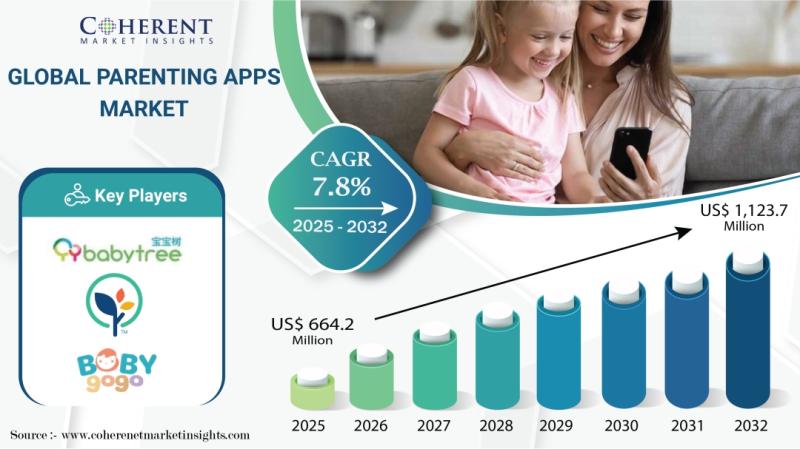
The global Parenting Apps Market is projected to reach USD 1,123.7 million by 2032, growing from USD 664.2 million in 2025. This expansion represents a compound annual growth rate (CAGR) of 7.8% during the forecast period. In today’s rapidly evolving digital landscape, parenting apps have emerged as vital tools designed to assist parents in managing their daily responsibilities more effectively.
Types of Parenting Apps
Parenting apps cater to a multitude of needs, divided into several popular categories. Developmental apps allow parents to track their child’s growth milestones while offering engaging activities and games to enhance learning. Media apps help manage children’s exposure to digital content by filtering age-appropriate options and setting screen time limits. Tracking apps provide parents with safety features such as monitoring their child’s location and setting virtual boundaries.
Market Insights and Trends
According to Coherent Market Insights (CMI), pregnancy tracker apps are anticipated to dominate the market, holding 54.1% of the global parenting apps share in 2025. Additionally, Android-based applications are expected to maintain a significant presence during this assessment period, with North America estimated to reach approximately USD 237.11 million in value by 2025.
Factors Driving Growth
The rise of parenting apps is primarily fueled by the increasingly busy lifestyles of parents, especially in urban settings. As many juggle demanding jobs with parenting, these digital tools provide essential support for managing daily tasks. Through effective time management and quick access to essential information, parenting apps assist in various aspects of child-rearing—from pregnancy to education and beyond.
Challenges in the Market
Despite strong anticipated growth, the parenting apps market faces challenges, particularly concerning data security and privacy. With many apps collecting sensitive information, concerns about data breaches and unauthorized access may hinder adoption rates. Addressing these issues is crucial for sustaining growth and enhancing user trust in parenting applications.
Opportunities for Growth
The proliferation of smartphones offers promising growth opportunities for the parenting apps market. With over 4.3 billion people worldwide owning a smartphone, increased accessibility makes these apps appealing. Furthermore, innovations in artificial intelligence (AI) are transforming how parenting apps function, providing personalized insights and real-time developmental tracking tailored to individual children’s needs.
Future Outlook
The direction of the parenting apps industry is being shaped by trends such as the growing demand for personalized experiences and expanding telehealth services. Developers are responding by launching innovative apps with advanced features, aiming to meet the evolving requirements of parents. Enhanced functionalities will unlock new avenues for growth, reinforcing the market’s potential in the coming years.
Conclusion
The global parenting apps market stands at a pivotal juncture, propelled by the dual forces of technological advancement and changing parental dynamics. As digital solutions continue to integrate into everyday life, these apps will not only support parents but also redefine the parenting experience, paving the way for future growth and innovation.
Global Parenting Apps Market: Growth, Trends, and Insights

Global Parenting Apps Market
Market Overview
The global market for parenting apps is on a significant upward trajectory, with projections estimating it will reach approximately USD 1,123.7 million by 2032. This growth is primarily fueled by rising digital reliance among parents, which is reflected in a compound annual growth rate (CAGR) of 7.8% from 2025 to 2032.
Diverse Categories of Parenting Apps
Parenting apps serve a multitude of needs and are categorized mainly into three types: developmental, media, and tracking apps. Developmental apps assist in monitoring children’s growth milestones while offering learning activities. Media apps manage children’s digital exposure, filtering age-appropriate content and setting screen time limits. Tracking apps prioritize safety by enabling parents to monitor children’s locations and communicate with approved contacts.
Regional Insights
North America is poised to dominate the parenting apps market, expected to be valued at around USD 237.11 million by 2025. Meanwhile, the Asia Pacific region is anticipated to hold over one-quarter of the market share in the same year, illustrating the global appeal of these applications.
Impact of Busy Lifestyles on Market Growth
As modern parents juggle demanding work schedules and longer commutes, the need for efficient parenting solutions has surged. Parenting apps offer essential tools for time management and quick access to vital information, significantly assisting parents in navigating child-rearing responsibilities from pregnancy through educational resources.
Concerns Regarding Data Security
Despite the promising growth trajectory, the parenting apps market faces hurdles, particularly concerning data security. Parents are increasingly wary of data breaches that could expose sensitive information about their families. This hesitation may hinder adoption rates, demonstrating the need for robust privacy measures within these applications.
Technological Integration and Future Opportunities
The rapid adoption of smartphones, with over 4.3 billion users globally, presents lucrative opportunities for parenting apps. Innovations such as artificial intelligence are transforming how these apps operate, providing personalized features that analyze developmental milestones in real-time. The AI-driven approach promises enhanced engagement and recurring subscription models, propelling market growth.
Emerging Trends and Innovations
Personalization is becoming a key trend in the parenting apps sector. Leveraging AI and machine learning, developers are creating tailored experiences based on individual children’s needs. Additionally, a growing emphasis on mental health and wellness is prompting the integration of supportive tools, which further diversifies app offerings and creates new revenue streams.
