


To access detailed data and insights, please log in or create an account.
Create Your Employee Account
To mark statistics as favorites, create an employee account. This allows you to easily access your favorite statistics through a simple star icon located in the header.
Log In for Individual Account Features
Currently, you’re operating on a shared account. For personal features like marking statistics as favorites or setting alerts, please log in to your personal account. Administrators can re-authenticate using their credentials.
Download Premium Statistics
To download statistics in various formats such as XLS, PNG, PDF, or PPT, a Statista account is necessary. As a premium member, you gain exclusive access to detailed statistics and downloadable content.
Access to Source References
Premium users will have access to detailed source references and essential background information regarding the statistics presented, enriching your understanding and usage of the data.
Stay Updated on Statistics
By bookmarking important statistics, you will receive immediate email notifications whenever they are updated. This feature ensures you remain informed and up-to-date with the latest information.
Unlock Additional Features with a Starter Account
To utilize various features, such as personalized settings and reading support, a minimum of a Starter Account is required. Consider upgrading for a more comprehensive experience.
Commercial Use Disclaimer
All statistics and data available are intended for commercial use only. Ensure you comply with the usage terms outlined by Statista.
Explore Relevant Statistics
Discover other statistics that may pique your interest, including trends in the gig economy, income and earnings, employee benefits, motivations, job satisfaction, and demographic insights.
Citations and References
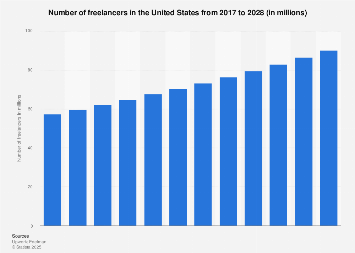
For more insights, visit the source of our data: Upwork has provided key statistics on the growth of freelancers in the U.S. from 2017 to 2028. For further reading, please check this link.
This HTML structure outlines distinct sections that facilitate easier navigation while enhancing SEO. Each heading is crafted to include relevant keywords related to account creation, premium statistics, and commercial use while engaging the reader with valuable information.
The Rise of Freelancing in the U.S.: A Comprehensive Overview
Exploring the growth and impact of freelancing on the workforce.
Freelancing Trends in the U.S.
In recent years, freelancing has surged in popularity across the United States. As of 2028, millions of Americans are expected to embrace freelance work, transforming the labor market. This growth is fueled by numerous factors, including the desire for flexibility, independence, and a shift toward remote work.
Understanding the Gig Economy
The gig economy refers to a labor market characterized by short-term contracts and freelance work, rather than permanent jobs. With the rise of digital platforms, professionals can now find gigs that suit their skills on a global scale. This shift has allowed individuals to explore various job opportunities without being tied to a single employer.
Benefits of Freelancing
Freelancing offers several advantages, including the ability to set your own schedule, choose your projects, and work from anywhere. Many freelancers report higher job satisfaction compared to traditional employees, as they have the freedom to pursue their passions and create a work-life balance that suits their lifestyles.
Challenges Faced by Freelancers
Despite the benefits, freelancing is not without its challenges. Freelancers often face income instability and must manage their own taxes, health insurance, and retirement plans. Additionally, freelancers may struggle with finding clients and maintaining a steady stream of work, especially in a competitive market.
Future of Freelancing
As technology continues to evolve, the future of freelancing looks bright. Remote work is becoming more normalized, and companies are increasingly seeking skilled freelancers. Moreover, platforms that connect freelancers with businesses are improving, making it easier for both parties to navigate and negotiate terms.
Supporting the Freelance Community
To ensure the growth of the freelance community, various organizations are emerging to support freelancers. These groups provide resources, training, and networking opportunities. Additionally, legislative efforts to protect freelance workers’ rights are gaining traction, emphasizing the need for fair treatment and compensation within this sector.
Conclusion
The rise of freelancing has not only reshaped the American workforce but also created a new cultural phenomenon where flexibility and independence are prioritized. As we move forward, understanding the dynamics of the gig economy will be essential for both freelancers and businesses looking to adapt to this evolving landscape.
