


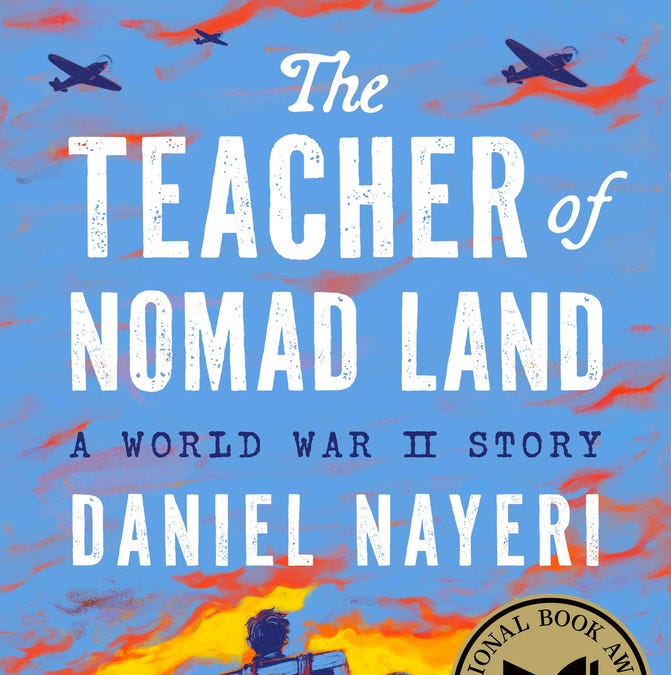
The Teacher of Nomad Land: A World War II Story by Daniel Nayeri is a poignant exploration of childhood amidst the chaos of war. Set in 1941 during World War II, the narrative thrusts readers into a turbulent historical context where the British and Soviet forces have invaded Iran to prevent Nazi access to its oil reserves.
Introducing the Characters
At the heart of this narrative are thirteen-year-old Babak Noori and his younger sister, eight-year-old Sana. Initially, they grapple with a lack of understanding about the monumental events unfolding around them. Having lost their father to a tragic case of mistaken identity by British troops, they find themselves alone in a world that has turned hostile and uncertain.
The Journey to Find Freedom
Under the care of unsympathetic adults, Babak and Sana seize the chance to escape. Their journey leads them to the nomadic tribe their father once taught, where Babak aspires to follow in his father’s footsteps. However, their initial excitement is soon overshadowed by a series of formidable challenges that test their resilience and determination.
Nayeri’s Unique Storytelling Approach
Daniel Nayeri has a distinctive ability to portray childhood experiences, navigating complex and painful subjects with a child’s perspective. His previous works have demonstrated this talent, and in The Teacher of Nomad Land, recognized as a National Book Award winner and Newbery Honor recipient, he delivers a narrative that resonates with both young readers and adults alike.
Exploring the Impact of War on Children
While stories of World War II are abundant, narratives from a child’s viewpoint are less common. Nayeri excels in this realm, capturing the essence of what it means to grow up amid conflict. The characters—Babak, Sana, and a Jewish refugee named Ben—are intricately developed, each with their own strengths and flaws, showcasing a realistic portrayal of childhood in a time of war.
The Complexity of Human Emotions
Throughout the story, Babak and Sana reveal a spectrum of emotions, from selfishness to generosity, reflective of their tumultuous circumstances. The adults they meet mirror this complexity; some offer kindness within their limited means, while others are indifferent or overtly cruel. These interactions highlight the moral ambiguities faced in dire situations.
Teaching as a Path Forward
As the children come to terms with the grim realities of war, Babak discovers that the mission of teaching—his father’s legacy—is not just about survival but holds deeper significance. He realizes that “teaching is a good mission in wartime,” which ultimately shapes their journey and underscores the profound stakes involved in the human experience during conflict.
This captivating story serves as a poignant reminder of the personal costs of war, urging readers to reflect on the human stories often eclipsed by historical narratives. The Teacher of Nomad Land is not just a tale of survival but a celebration of resilience, hope, and the enduring power of education.
For more about this heartfelt story, visit its page on Amazon or Bookshop.
(Note: As an Amazon Associate, I earn from qualifying purchases.)
For further reading, consider Mona Acts Out by Mischa Berlinski.
The Teacher of Nomad Land: A Child’s Perspective on War
In the heart of tumultuous World War II, ‘The Teacher of Nomad Land’ paints a compelling picture of resilience and the quest for belonging through the eyes of children. Set in 1941, Daniel Nayeri’s novel captures the stark realities of a world at war, focusing on young siblings navigating the chaos of conflict.
A Grueling Enter into Conflict
The narrative unfolds against the backdrop of a dual invasion of Iran by British and Soviet forces. This historical setting provides a rich context to understand the dire circumstances facing the characters. Thirteen-year-old Babak Noori and his younger sister Sana are plunged into a whirlwind of events after their father’s tragic death at the hands of British soldiers. This loss marks the beginning of their harrowing journey through a landscape marred by war.
The Quest for Safety and Identity
After their father’s death, Babak and Sana find themselves relying on the kindness of strangers. Struggling to survive, they resolve to seek out a tribe of nomads that their father once taught, hoping to reclaim his legacy. Yet, their journey is fraught with numerous challenges that test their resilience and camaraderie. Nayeri delicately balances their thrilling quest for freedom with the harsh realities of wartime challenges.
A Realistic Child’s Perspective
What sets this novel apart is Nayeri’s profound ability to encapsulate the child’s viewpoint amidst overwhelming adversity. His characters exhibit a wide range of emotions—fear, hope, and even selfishness—rendering them relatable and multi-dimensional. Through Babak, Sana, and a Jewish refugee named Ben, readers are invited to witness not just the innocence of childhood but the burdens that come with it during turbulent times.
The Importance of Teaching
As the children traverse through obstacles, Babak’s realization about the significance of teaching underlines the thematic core of the story. He learns that education is not merely a safety net but a vital mission that can instigate change even in the darkest times. Nayeri encapsulates how, even amidst chaos, the act of teaching can empower and uplift both teachers and students alike, creating ripples of hope in a world overshadowed by despair.
Character Development and Relationships
The evolution of the characters is another standout aspect of the narrative. Babak’s compassion and protectiveness towards Sana and Ben’s gradually revealed vulnerabilities create a rich tapestry of relationships. As they confront their personal demons and external threats, they embody the essence of what it means to be human in times of crisis.
A Poignant Reminder of Humanity
‘The Teacher of Nomad Land’ does not shy away from the grim realities of war, yet it is infused with a sense of hope and the enduring spirit of children. Nayeri masterfully illustrates how the innocence of youth can prevail, offering a comforting reminder that even amidst tragedy, there exists the possibility of resilience, growth, and connection.
Conclusion and Additional Resources
This compelling read is suitable for both young adults and older readers alike, making it a valuable addition to any bookshelf. To explore more about the book, visit Amazon or Bookshop. This tale is a must-read for anyone interested in historical fiction that resonates emotionally and intellectually.
