


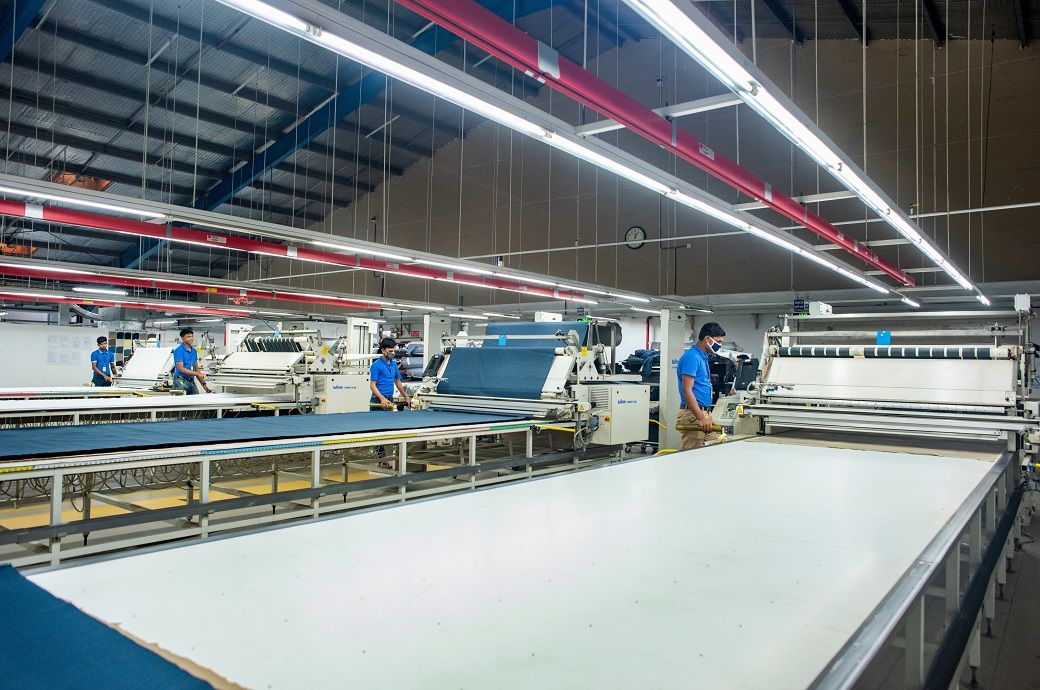
As labor costs continue to rise in traditional apparel manufacturing hubs, Bangladesh is redefining its competitive advantage. Historically recognized for its large pool of low-cost labor, the country’s garment industry is now shifting towards technology and automation, marking a significant transition from a labor-intensive production model to one that emphasizes machines, data, and speed.
Embracing Automation in Bangladesh’s Garment Industry
The garment sector in Bangladesh is increasingly integrating automation and advanced technology. Recent studies indicate that productivity in the Ready-Made Garment (RMG) sector has grown by 4.19% annually from 2014 to 2023. Notably, automation-heavy segments such as cutting, knitting, and wet processing have experienced the most substantial improvements.
Productivity Gains and Their Economic Impact
While the productivity gains may initially appear modest, they hold considerable significance for a sector that employs millions and forms the backbone of the national economy. The RMG sector contributes approximately 8.5% to 10.5% of Bangladesh’s GDP and accounts for 80% to 85% of the nation’s export revenues, making even minor improvements economically impactful.
Where Growth is Happening: A Sectoral Breakdown
However, productivity increases have not been consistent across all types of garments. Jackets have led the charge with an impressive annual growth rate of 6.59%, followed closely by knit lingerie at 6.43%, and sweaters at 6.05%. Home textiles and T-shirts have also benefited from mechanization, posting growth rates of 5.58% and 4.39% respectively. Conversely, woven shirts, trousers, and denim lagged behind with growth rates of 3%, 1.15%, and 1.81%, attributed to lower levels of automation.
Automation’s Strongest Gains
The segments that are heavily automated—such as cutting, knitting, and wet processing—have shown the most robust gains, with annual productivity increases of 11.13%, 9.85%, and 6.11% respectively. In stark contrast, sewing, which remains labor-intensive and less automated, experienced the weakest growth at just 3.57%. Weaving and end finishing recorded 4.43% and 4.78% growth, respectively, over the past decade.
Transformations in Cutting and Knitting Technologies
The impact of technological advancements is particularly evident in the cutting stage of production. In the 1980s and 1990s, manual tools required 10 to 12 workers to process between 4,000 to 5,000 pieces daily. Today, fully automated CAD and CNC systems allow just 2 to 3 operators to cut up to 10,000 pieces a day, achieving speeds three to five times faster and with greater accuracy.
Addressing Labour Displacement Challenges
Furthermore, the study highlights a significant transition in knitting technology—from low-gauge circular machines to microprocessor-controlled equipment integrated with CAD/CAM functionalities. While the shift to automated cutting, semi-automatic sewing heads, and digital quality control is ushering in a new era of efficiency in medium-scale factories, policymakers must prepare for the potential displacement of workers.
A Balancing Act for the Future
As Bangladesh’s garment sector evolves, the central challenge faced by policymakers will be balancing efficiency gains from automation with the need for social stability. With millions of workers depending on this industry, strategic planning is essential to ensure a smooth transition towards a more automated future while protecting the livelihoods of those in the workforce.
Bangladesh’s Garment Industry Embraces Automation
Shifting Paradigm in Apparel Manufacturing
As traditional manufacturing hubs face rising labour costs, Bangladesh is redefining the competitive landscape of its garment sector. Once reliant on an extensive pool of low-cost workers, the country is now integrating technology and automation into its production processes, signalling a strategic pivot towards efficiency and speed.
Growing Productivity Through Technological Integration
The garment industry in Bangladesh has experienced a notable increase in productivity, with a reported annual growth of 4.19% from 2014 to 2023. This growth is particularly evident in segments that are embracing automation, like cutting, knitting, and wet processing, which are witnessing the most substantial improvements.
Economic Significance of the Garment Sector
Though the productivity gains may appear modest at first glance, they hold great importance for an industry representing a significant part of Bangladesh’s economy. The ready-made garment (RMG) sector contributes approximately 8.5% to 10.5% of the national GDP and accounts for around 80% to 85% of the country’s export earnings.
Sector-specific Productivity Enhancements
The growth rates vary by product category, with jackets leading the increase at 6.59% annually, closely followed by knit lingerie at 6.43%. Other categories, such as sweaters and home textiles, have also benefitted from advancements in mechanisation, while woven shirts and trousers show slower growth due to lower automation levels.
Transformative Impact of Automation
Automation has brought about remarkable enhancements in productivity, particularly in the cutting phase. Whereas previously 10-12 workers could process 4,000-5,000 pieces daily using manual methods, modern CAD and CNC systems now enable just 2-3 operators to handle up to 10,000 pieces a day with increased speed and precision.
Looking to the Future: Challenges and Opportunities
The integration of advanced technologies, such as CAD/CAM in knitting and automated quality control, heralds a promising future for Bangladesh’s garment industry. However, the accompanying challenge of labour displacement necessitates proactive planning from policymakers to ensure a balance between efficiency and social stability in a workforce heavily reliant on traditional roles.
