


Community and Resilience: The Rubber Tramp Rendezvous
QUARTZITE, Ariz. — Rachele Adair faced a significant challenge: her van, her home as a nomad, had broken down just days before the Rubber Tramp Rendezvous (RTR), an annual gathering of nomads living in vehicles. With only $500 in her pocket, she purchased a truck in California, filled it with essentials, and drove to the Arizona desert, planning to sleep in the unheated vehicle during the event.
Fortunately, the RTR community stepped in to support her. A group of friends offered her a heated trailer for a few days while they rallied their resources and skills to help her transform her truck into a comfortable living space. Many of them chose to remain anonymous, ensuring that Adair could not repay them directly. “It will literally be a small cabin on the bed of my truck that goes 8 feet out and will be an amazing home,” she remarked.
The Purpose of the Rubber Tramp Rendezvous
Adair’s experience is emblematic of the spirit of RTR, organized by the Homes on Wheels Alliance, a nonprofit dedicated to helping people navigate a mobile lifestyle. The gathering provides a platform for community building and resource sharing among those who live in vehicles, often out of necessity but also for the freedom it offers. Bob Wells, the founder of RTR, established it in 2011 as a safe space for nomads to connect, learn, and find support.
The event attracts hundreds of volunteers who contribute their time and energy, ensuring smooth operations on-site. Thousands come to participate—free of charge, although donations are welcomed. Attendees share items they no longer need, from clothing to cookware, fostering a sense of resourcefulness and support. The spirit of cooperation is palpable; many write down their needs and offers on index cards posted around the venue.
Building Community in the Nomadic Lifestyle
The RTR community is not just a collection of drifters; it’s a cohesive network where members serve as safety nets. Suanne Carlson, co-founder of the Homes on Wheels Alliance, explains that many participants view their choice to live in vehicles as a step towards stability, rather than seeing themselves as homeless. The event facilitates learning how to thrive on the road, emphasizing that it requires a different mindset than traditional living.
During taco Tuesdays, for example, volunteers gather to eat food prepared by community members, fostering connections and friendship. Derrick Hansler, affectionately known as “D-Rock,” provides meals through his culinary project, embodying the deep community ties among the nomads.
Personal Stories of Transformation
Stories of transformation and resiliency abound at RTR. April Craren was on the brink of homelessness when she received a van through a program run by HOWA. Similarly, Tracey Power found emotional support from fellow nomads after a serious car accident left her overwhelmed. The swift response from her community, including access to therapists, highlighted the robust safety net that the RTR provides.
Creative and Unique Living Spaces
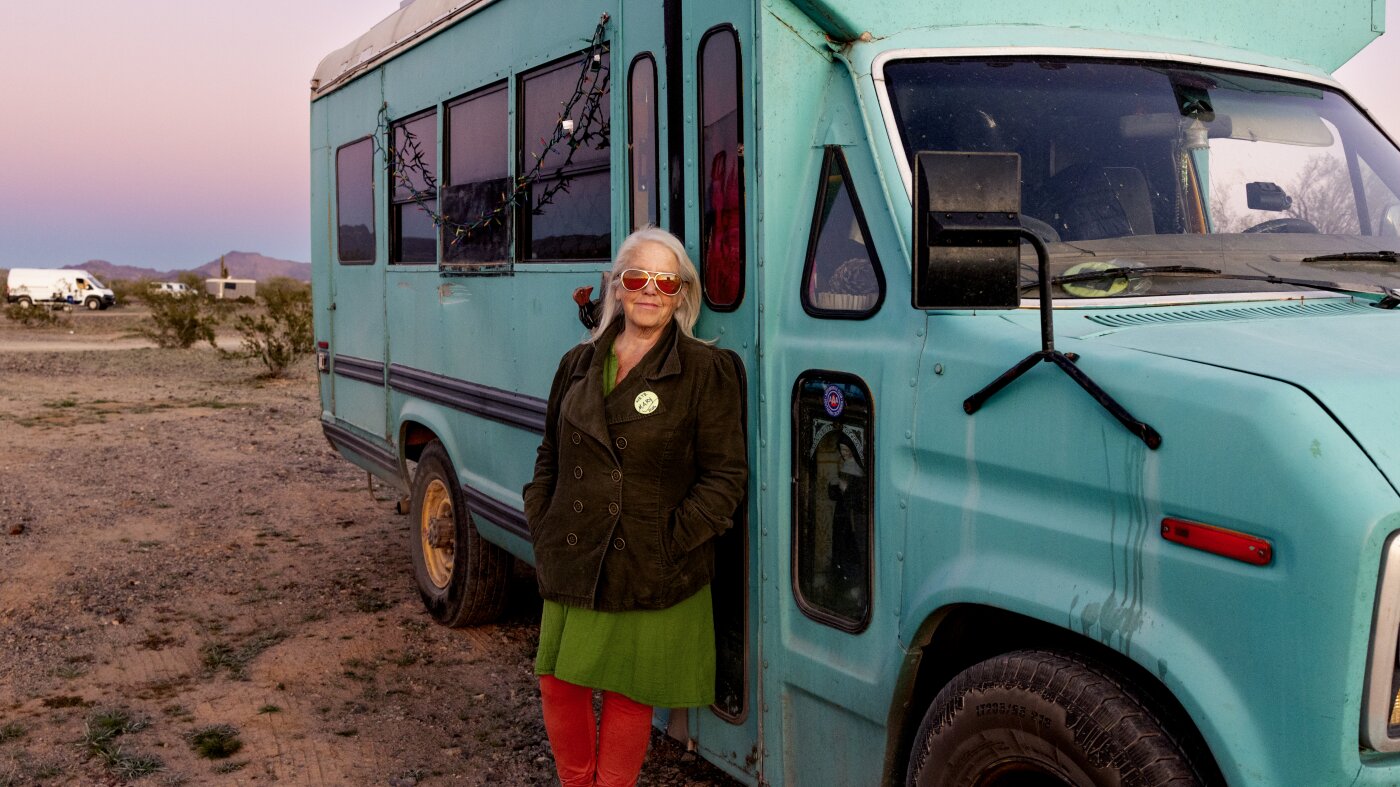
The nomads’ vehicles, termed “rigs,” reflect their personalities and styles. Each rig is a unique blend of functionality and beauty, often showcasing personal flair. For instance, Mary Freuer’s teal school bus features vintage decorations and handcrafted wooden features. Lori Gaskill’s ambulance creatively integrates rustic aesthetics with practical features for her search-and-rescue contributions.
Conclusion: A Home on Wheels
As Adair left the RTR, she was not just driving away in a truck; she was gaining a new home. The transformation of her vehicle symbolizes the community’s impact on individual lives, reinforcing the idea that home can be a fluid concept. With detailed craftsmanship and personal touches, nomadic homes bring a creative vibrancy to the road, reminding us that home is where the heart—and community—truly resides.
Life on the Road: The Rubber Tramp Rendezvous Community
Every year, hundreds of nomads gather in Quartzsite, Arizona, for the Rubber Tramp Rendezvous (RTR), an event that celebrates a unique lifestyle of mobility and minimalism. This annual meetup serves as a beacon for those who travel across the country in vans, RVs, and other vehicles, seeking community, support, and a sense of belonging.
Empowerment Through Community Support
The RTR is more than just an assembly of vehicle dwellers; it’s a lifeline for many attendees. For example, Rachele Adair, a retired nurse, faced a significant challenge when her van broke down just days before the event. With ingenuity and support from fellow nomads, she was able to secure a truck and travel to the gathering. There, friends offered her a heated trailer and collective assistance to improve her vehicle, showing the strength and compassion within this nomadic community.
Building a Support Network
The roots of this supportive environment trace back to Bob Wells, who established the first RTR in 2011. His vision was to create a space where nomads could connect, share resources, and learn from each other. As people gather, they exchange valuable knowledge about living successfully on the road, transforming what could be perceived as homelessness into a thriving mobile lifestyle.
The Vibrant Event Atmosphere
During the RTR, the atmosphere is alive with activity. Hundreds of volunteers organize essential services, such as parking management and sanitation efforts. The event also offers a platform for attendees to share goods, skills, and stories, fostering an environment of giving and collaboration. Visitors can find anything from free clothing to sewing circles aimed at mending essentials.
Sharing Experiences and Skills
At the heart of RTR lies the spirit of sharing. Attendees post their needs and offers on community boards, allowing everyone to contribute their skills or seek assistance. There’s also a raffle for a $10,000 cash prize and a custom-built ambulance, drawing excitement and engagement from the crowd. This shared environment reinforces the idea that everyone is in this journey together, despite their diverse backgrounds.
Unique Mobile Living Spaces
One of the most striking elements of the RTR is the variety of customized living spaces. Each rig tells a story of its owner, adorned with personal touches ranging from antiques to minimalist designs. Mary Freuer’s teal school bus features vintage elements that evoke nostalgia, while Lori Gaskill has transformed her ambulance into a cozy, rustic home equipped for search and rescue missions. Such creativity makes each vehicle as unique as its inhabitant.
The Future of Nomadic Living
As the world evolves, so does the movement of nomads. The concept of community remains central to their existence, offering a network of support that enhances their experience on the road. The bonds formed during events like the RTR provide not just friendship, but also an essential safety net that many nomads rely on. As a testament to the strength of this community, stories abound of individuals receiving help during challenging times, showing that kindness knows no bounds.
Conclusion: A Home on Wheels
The Rubber Tramp Rendezvous exemplifies the heart and soul of nomadic living. It’s a place where individuals transform their vehicles into homes and connect with others who prioritize freedom, adventure, and community. For many, attending the RTR is not just about gathering; it’s about finding family among fellow travelers who understand the challenges and joys of life on the road.
