


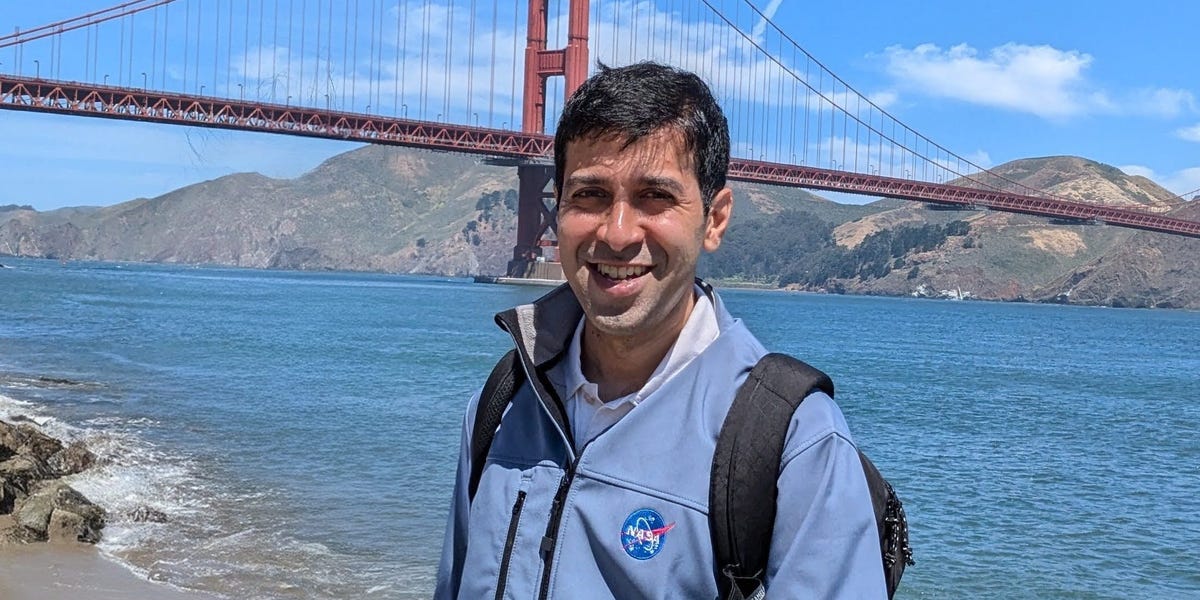
This as-told-to essay is based on a conversation with Anand Ramanathan, a Meta employee residing in New Jersey. The following has been edited for length and clarity.
Choosing an Academic Path
In the early 2000s, when selecting an undergraduate degree, computer science was heralded as the promising field. However, I opted for physics, pursuing my passion all the way to a Ph.D. in 2011. This choice, driven by genuine interest, later flourished into a fulfilling career.
Navigating Early Career Choices
Post-Ph.D., after a year at NASA, I contemplated my next move. While exploring opportunities in defense contracting, my cousin suggested I downplay my academic achievements in applications. The advice was shocking; I had invested years honing my skills—certainly, my Ph.D. had to be an asset!
Transitioning to Data Science
I remained at NASA for several years, but eventually made a pivotal transition into the data science industry. Currently at Meta, I find immense value in the experiences and skills that my Ph.D. has equipped me with, especially in such a competitive field.
Real-World Applications of a Ph.D.
My doctorate from the University of Maryland concentrated on cold atom physics, combining rigorous research with hands-on lab work. Upon completing my studies, I sought roles where I could apply my knowledge practically. My six years at NASA, surrounded by data, became my gateway to data science. I also pursued supplementary courses to enhance my capabilities.
Skills Acquired Through Academic Rigor
At Meta, I work alongside talented individuals, and while I seldom employ specific physics concepts from my Ph.D., it differentiates me. The experience reinforced the importance of skepticism and thorough verification of findings. This critical mindset aids me in collaborating with colleagues and ensuring the accuracy of impactful results.
Transforming Academic Insights into Industry Success
The extensive hours spent writing academic papers have proven invaluable, enabling me to simplify complex ideas for diverse audiences—skills I regularly utilize in drafting summaries for senior leaders at Audible. While a Ph.D. may not guarantee a high-paying job, it fosters intrinsic curiosity and adaptability essential for navigating an ever-evolving career landscape.
Communicating the Value of a Ph.D.
While grateful for my academic journey, effectively showcasing the relevance of my Ph.D. in the job market has been challenging. I’d advise prospective Ph.D. candidates to pursue their studies out of passion rather than career expectation. Nonetheless, those with a Ph.D. should recognize the inherent value they possess, even if translating that value requires additional effort in job applications.
The Journey from Ph.D. to Big Tech: A Personal Account
Making the transition from academia to the tech industry can be a daunting task, especially for those with advanced degrees. One individual’s journey from obtaining a Ph.D. in physics to securing a position at a major tech company highlights the diverse skills acquired during their academic career.
Choosing a Non-Traditional Path
In an era when computer science was the hot topic, one graduate opted for physics, pursuing a Ph.D. with fervor and curiosity. Their passion for the subject led them to deep research and lab work, blending theoretical knowledge with practical application. This decision laid the groundwork for a career that would eventually find its way into data science.
The Underestimation of a Ph.D.
After a brief tenure at NASA, this graduate faced a surprising realization: some advisors suggested downplaying their Ph.D. on a résumé. This perspective was shocking, as the individual had invested immense effort into their studies. They believed that the skills and knowledge developed during their Ph.D. would be invaluable in the right context, and they were determined to prove it.
A Transition to Data Science
After spending several years engaged in valuable research at NASA, the graduate transitioned into the data science field. They sought opportunities that would blend their academic background with real-world applications. By upskilling through additional courses, they positioned themselves as a viable candidate for roles in data analysis and science at companies like Capital One and Audible, before landing a job at Meta.
Skills Developed in Academia
The rigorous nature of a Ph.D. program equips graduates with unique skills that are highly transferable within the tech industry. Proficiency in data analysis, a strong foundation in research methodologies, and the ability to communicate complex ideas clearly are just a few of these skills. These abilities often give Ph.D. holders an edge in data-centric roles.
Curiosity as a Driving Force
One of the most significant benefits of pursuing a Ph.D. is the cultivation of curiosity. With no guaranteed high-paying job at the end of the journey, many Ph.D. candidates are driven purely by their desire to learn and explore. This intrinsic motivation facilitates adaptability, a vital trait in the rapidly evolving tech landscape. Keeping up with advancements like AI and machine learning, and being open to continuous learning further enhances their effectiveness in the industry.
Translating Ph.D. Experience into Tech Skills
While the knowledge gained during Ph.D. studies is invaluable, articulating how that translates into workplace skills can pose challenges. Graduates often need to go the extra mile to communicate their value to prospective employers, emphasizing the relevance of their research experience and analytical capabilities in solving business problems. Though it might require additional effort, the skills acquired during a Ph.D. journey are significant assets in the tech world.
Conclusion: Embracing the Unique Value of a Ph.D.
The journey from academia to tech is not without its hurdles, but it is ultimately rewarding. For those who have pursued advanced studies and are considering a shift into the tech industry, remember that your Ph.D. offers unique skills and perspectives. While the transition may be challenging, the knowledge and experience you carry are indeed valuable, and with determination, such transitions can lead to successful careers in big tech.
