


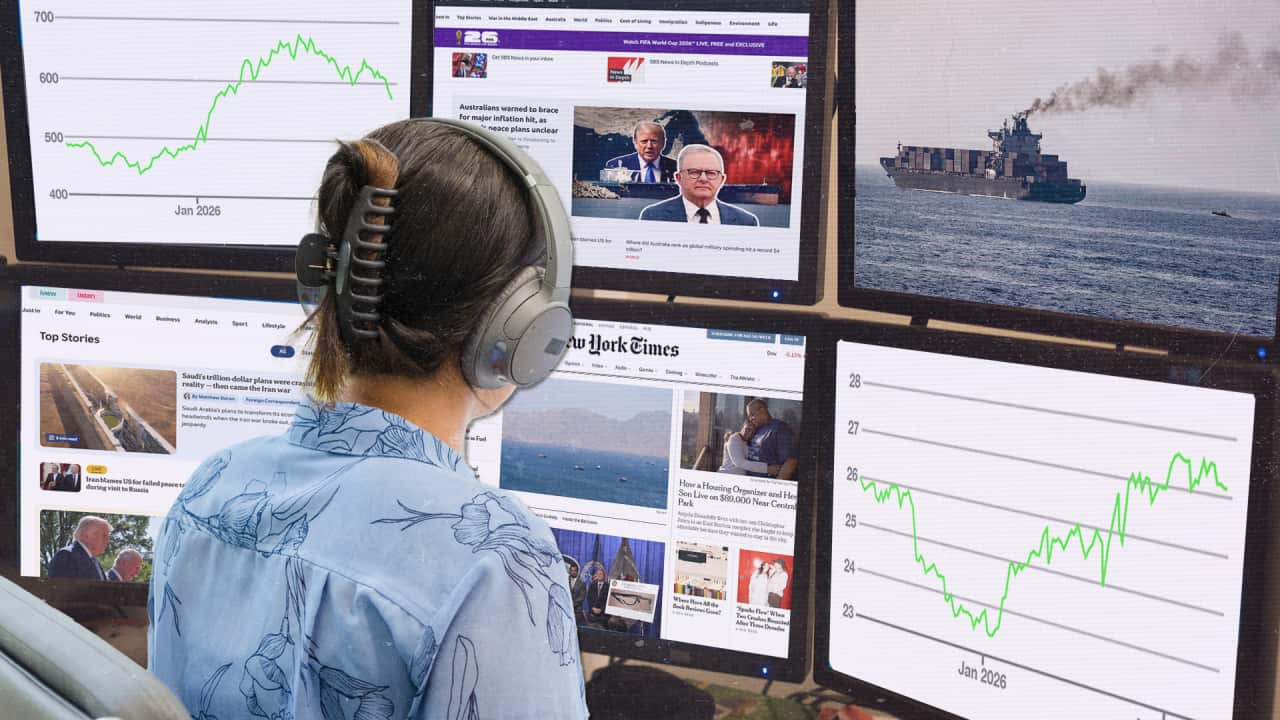
Amid escalating conflicts in the Middle East, social media platforms like TikTok are buzzing with finance creators advocating for strategic investments influenced by wartime dynamics. One prominent creator boldly claims, “This is how you make a fortune from this war.”
On TikTok, various creators utilize meme formats to share their stock picks tailored for wartime scenarios, often bragging about their impressive returns. Meanwhile, Reddit users flock to financial forums, seeking guidance on the best wartime stocks and discussing strategies for investing in prolonged global conflicts.
The ongoing violence has already claimed more than 3,600 lives in US-Israeli attacks on Iran since February 28, per reports from HRANA, a human rights organization. Additionally, over 2,500 fatalities have been reported from Israeli airstrikes in Lebanon. This latest conflict has ignited economic turbulence globally and obstructed key oil supply routes.
Research from Griffith University in Australia predicts that a protracted conflict in the Middle East could trigger a 5% rise in inflation, pushing Australia towards a scenario characterized by stagnant economic growth, high unemployment, and escalating prices—a phenomenon referred to as ‘stagflation.’
Opportunities Amid Crisis
Despite the widespread suffering due to rising living costs, some investors perceive wartime conditions as an opportunity to capitalize on market shifts. Conversations about how to “profit from times of crisis” have become increasingly common, according to Rand Low, an associate professor of quantitative finance at Bond University.
Professor Jagannadha Pawan Tamvada from Kingston Business School observes that “capital flows into sectors expected to benefit from instability.” This has led to the emergence of specialized financial products, such as defense-focused ETFs, which aim to track geopolitical risks and regard escalated conflicts as market indicators.
Ethical Considerations in War Investments
The act of exploiting wartime conditions for financial gain presents ethical dilemmas. Marc Jocum, a senior product and investment strategist at Global X ETFs, states, “It’s disheartening to see people profiting from others’ misfortunes.”
However, Tamvada expresses caution in labeling individual investors as unethical, arguing that the financial system often rewards such behavior, leading to socially undesirable outcomes. He emphasizes a “paradox of incentives,” where investment trends inadvertently support persistent issues rather than solutions.
Key Sectors for Investment During Conflicts
In turbulent times, investors typically gravitate towards defense and energy stocks, as well as commodities like gold and silver. Jocum highlights, “No one desires loss of life, yet some seek to monetize warfare.” He points out that investors aren’t necessarily capitalizing on conflict but strategically adjusting their portfolios towards certain assets.
Defense stocks often witness significant gains during wartime due to increased military spending. Recently, the Australian government announced a historic $53 billion defense budget over the next decade, further bolstering defense investments. Companies like Lockheed Martin and Northrop Grumman have experienced substantial growth since the conflict escalated.
Navigate the Unpredictability of War Investments
Jocum notes that during conflicts, investors often seek ‘safe havens’ such as government bonds and precious metals. However, these investments have underperformed since the onset of the Middle East turmoil, primarily due to fears of inflation overshadowing traditional asset classes.
While gold reached a historic high earlier this year, prices have plummeted by about 20% amidst the ongoing conflict. Low indicates that oil supply disruptions are drawing attention away from the gold market. “You can’t eat gold; you need oil to power your vehicles,” he remarks.
Despite assumptions about predictable investment strategies during geopolitical upheaval, Jocum emphasizes that each conflict is unique. Market responses vary significantly based on the nature and context of individual conflicts, which can lead to unpredictable outcomes.
He concludes that unforeseen events, such as an Iranian conflict impacting global oil supply, exemplify the challenges in forecasting market movements during wartime. The unpredictability of these “black swan” occurrences makes it essential for investors to approach wartime investments with caution and adaptability.
Investing in Uncertain Times: The Dynamics of Financial Trends Amid Global Conflict
With increasing global tensions, particularly in the Middle East, discussions around investing strategies during conflicts have gained traction. Investors are often drawn to specific sectors that historically benefit from instability, leading to a rise in interest among both amateur and seasoned investors.
The Investor’s Perspective: A Dual-Edged Sword
While many face hardships during wartime, a subset of investors sees potential profit in such crises. Financial experts suggest that the unpredictability of conflict can create lucrative opportunities in certain market sectors, prompting discussions on how to capitalize on this volatility.
Shifts in Market Dynamics
Commodity markets frequently respond to geopolitical tensions. Typically, energy stocks and defense-related assets experience marked attention during periods of unrest. Analysts have noted a consistent pattern wherein capital flows toward sectors likely to thrive amidst turmoil, such as defense contractors and energy suppliers.
Ethical Considerations in Conflict Investing
Despite the financial prospects, ethical concerns arise around profiting from human suffering. Experts in finance emphasize the dilemma investors face: balancing the potential for profit with the moral implications of their investments. This duality opens up a robust dialogue about responsibility in investment strategies during crises.
Current Investment Trends: Where to Place Your Bets
During times of conflict, sectors like defense and commodities such as gold and silver often attract attention. Stocks in defense firms have shown resilience due to increased government spending on military capabilities. Furthermore, energy stocks can surge as supply chains are disrupted, emphasizing the volatility of these markets.
Safe Havens and Market Unpredictability
In uncertain climates, investors typically seek ‘safe havens’ like government bonds. However, market reactions can vary significantly depending on specific factors surrounding each conflict. Understanding these nuances is crucial for making informed investment decisions.
Conclusion: Navigating the Market During Conflict
The current global environment underscores the importance of strategic investment in times of crisis. While historical patterns can provide a framework, each conflict unveils unique challenges and opportunities, underscoring the difficulty in predicting precise market movements. Investors must weigh their options carefully, recognizing that the landscape can change rapidly.
