


By Dan Rubinstein
Photo Credit: Chris Roussakis and Northern Nomad
Situated beneath the overhang of Carleton University’s Architecture Building, two innovative wood-framed structures are currently under construction. These energy-efficient tiny houses serve as a blend of research, education, and environmental responsibility, with the Northern Nomad being the standout example.
Second-year Architectural Conservation and Sustainability Engineering student Josh Reinhart, who previously worked as an electrician in Calgary, is actively involved in the creation of this 220-square-foot house. He is focused on mounting a robust inverter charger for the solar equipment, an integral component of the Northern Nomad.
Reinhart’s journey into sustainable housing stemmed from a desire to minimize environmental impact—a passion that led him to pursue formal education at Carleton. “In construction, I witnessed the vast potential for reducing our reliance on fossil fuels,” he remarks. As the electrical lead for a team of around a dozen builders, Reinhart collaborates under the guidance of Professor Scott Bucking from the Departments of Civil and Environmental Engineering as well as the Azrieli School of Architecture and Urbanism.
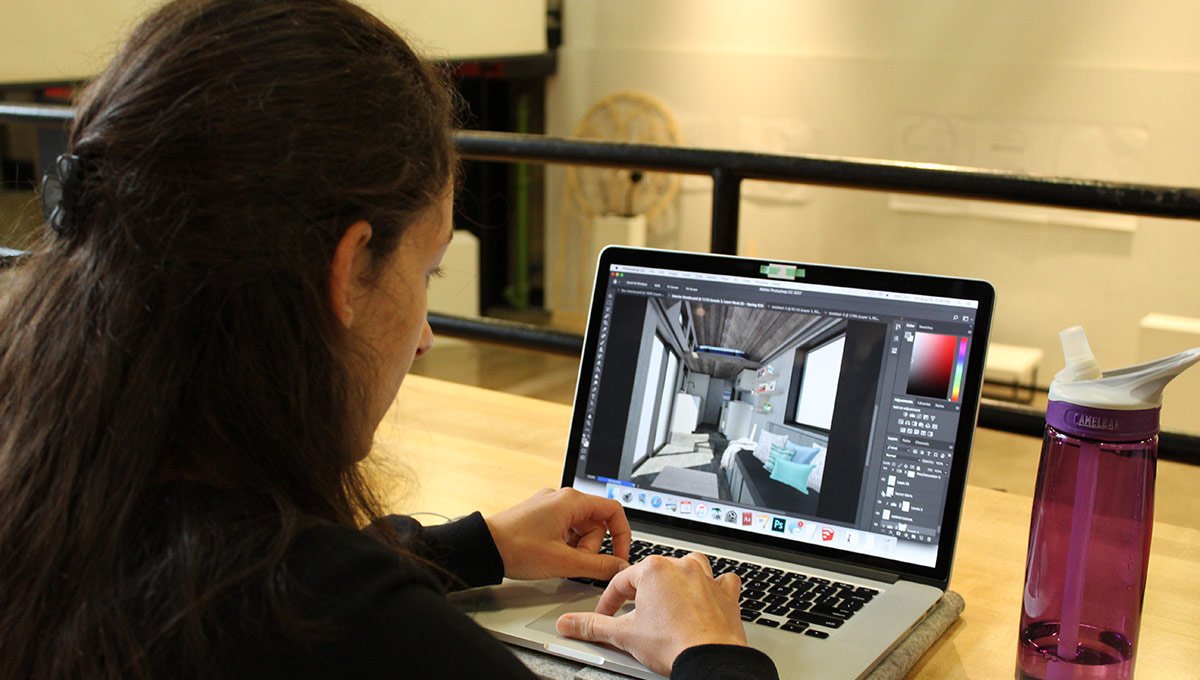
Each student on the Northern Nomad project brings unique skills to the table. Brigitte Martins has crafted architectural renderings and construction drawings, while Seungyeon Hong is modeling the home’s energy use. Eric Ho is implementing smart home technologies, and Sandra Lunn manages the project budget. This diverse skill set resembles a carefully assembled crew, set to complete a groundbreaking construction project with climactic stakes in sustainability.
A Tiny House Promoting Sustainable Design
The Northern Nomad initiative originated as a capstone project last November when a group of five engineering students sought to construct a tiny house that would stretch the limits of sustainable design in Ottawa. Their collective ambition was to reduce greenhouse gas emissions by integrating innovative technologies into their building practices.
In Canada, the building sector accounts for 35% of national greenhouse gas emissions and 33% of energy consumption. The Northern Nomad aims to combat these statistics through the utilization of photovoltaic panels, high-efficiency insulation, and water collection systems designed to convert atmospheric moisture into drinking water. “Our main objective is to create an autonomous house,” Bucking explains, emphasizing the challenge of balancing energy efficiency with water conservation.
“Ultimately, we want people to feel empowered and see that they can make a difference.”
Funding for the project, estimated at $70,000 to $80,000, was secured through the Borealis Foundation, which is dedicated to supporting sustainable initiatives in Ottawa. Janet and Leo Lefebvre from the foundation were thrilled to contribute, recognizing the importance of educating future leaders in sustainability. “We believe that education is a powerful tool for change,” Janet notes, highlighting the synergy between community support and academic research.
Building Momentum and Interest
The Northern Nomad construction has attracted considerable attention from both media and the public, with coverage by major outlets like CBC. As Brigitte Martins shares, enthusiasm surrounding the project has been enthusiastic, drawing inquisitive onlookers from all backgrounds.
By late July, the team began framing the house on its mobile trailer. With walls rapidly constructed, they soon started work on electrical systems and plumbing. “This project is an embodiment of experiential learning,” says Seungyeon Hong. The cross-disciplinary teamwork not only enhances their educational experiences but also prepares them for real-world challenges in the sustainability sector.
Maximizing Energy Efficiency
As of mid-September, students like Connor Ruprecht and Seungyeon Hong worked diligently to enhance the home’s energy efficiency. By attaching charred cedar panels to the exterior, they incorporate both modern techniques and artistry into the design. These design choices reflect not only the technical aspects of energy conservation but also an appreciation for aesthetic values in construction.
The Northern Nomad aims to serve as a living laboratory. It will eventually be monitored for its energy performance, providing valuable data to inform future sustainable housing designs. “This multidisciplinary approach allows us to study trade-offs between architectural beauty and engineering functionality,” Bucking explains, emphasizing the importance of analyzing data to better future projects. Ultimately, the finished house could either be donated or sold, fostering further innovations in sustainable architecture.
By Dan Rubinstein
Photo Credit: Chris Roussakis and Northern Nomad
A Groundbreaking Tiny Home Project at Carleton University
Beneath the overhang of Carleton University’s Architecture Building, an innovative project is underway: the construction of energy-efficient tiny houses. Among them is the Northern Nomad, a remarkable example of sustainable living. This endeavor blends research, education, and environmental consciousness, showcasing the potential of tiny homes in combating climate change.
Hands-On Learning in Sustainable Housing
Standing next to the half-finished shell of the Northern Nomad, Josh Reinhart, a second-year student specializing in Architectural Conservation and Sustainability Engineering, faces the challenge of fitting in solar equipment. With previous experience as an electrician in Calgary, Reinhart returned to academia driven by a passion for sustainable building practices. His involvement in this tiny house project is a turning point in his educational journey.
A Diverse Team for an Innovative Project
Reinhart is just one part of a larger team, composed of students from various disciplines, each contributing unique skills. From architectural drawings to energy modeling and smart home technology, the team reflects a spectrum of expertise. As they collaborate under the guidance of Professor Scott Bucking, they aim to create a structure that not only functions sustainably but serves as a model for future eco-friendly living.
Pushing the Boundaries of Sustainable Design
The initiative, started last November by a group of senior engineering students, intends to push the limits of sustainable architecture. They aim to integrate innovative technologies that lessen greenhouse gas emissions, addressing climate change head-on. By opting for photovoltaic panels, superior insulation, and systems that recycle moisture into drinkable water, Northern Nomad aspires for net-zero energy and water usage.
Community Support and Funding
Funding played a crucial role in the project’s realization. The Borealis Foundation, dedicated to supporting sustainability initiatives, stepped in with a significant contribution. Their mission aligns with Carleton University’s goals of making impactful strides in sustainability while empowering future leaders in engineering and environmental stewardship.
Construction Challenges and Triumphs
As construction commenced, students faced a variety of obstacles—from material shortages due to forest fires affecting Canadian plywood supply to unexpected technical challenges. Yet, these hurdles present real-world learning opportunities, emphasizing the importance of teamwork and adaptability in a practical setting.
Vision for the Future of Tiny Homes
The finished Northern Nomad will not only serve as a proof of concept for eco-friendly housing but will also be used for monitoring and research by later engineering students. Its journey highlights the importance of sustainable development and community-driven initiatives in combating climate change. Carleton University’s project stands as a beacon for future innovations in sustainable architecture.
